

Best overall for a medical need: an indication-specific device selected by your clinician. Best for bookable PEMF wellness sessions in Costa Mesa: Live Superhuman. Best for relaxation alone: an audio tone generator—not a treatment for disease. There is no single best frequency generator for healing across unrelated conditions.
TL;DR
The best frequency generator for healing depends on the intended use, not the size of its frequency library.
Live Superhuman is best for Costa Mesa clients seeking bookable PEMF wellness sessions rather than home equipment.
TENS, prescription bone-growth stimulation, PEMF wellness sessions, and audio generators serve different purposes.
Skip Rife-style devices marketed as cures for cancer, infections, or other diseases.
Why this matters
Searching for a frequency generator in 2026 brings together products that do fundamentally different things. An electrical stimulator delivers current through electrodes; a PEMF device produces pulsed electromagnetic fields; an audio generator produces sound. A shared frequency setting does not make those outputs interchangeable.
The useful question is not which machine has the most settings. It is which device has a clear purpose, appropriate evidence, and instructions that fit your situation. If your goal involves an injury, persistent pain, or another medical concern, start with a qualified clinician rather than a wellness-device comparison.
What makes the best frequency generator for healing?
Use these criteria before comparing equipment or booking sessions. They separate a practical recommendation from a long list of unsupported promises.
Defined purpose: Separate temporary pain management, prescribed bone-growth stimulation, wellness sessions, and relaxation. Do not treat them as equivalent outcomes.
Relevant evidence: Look for research involving the actual device type, intended use, and outcome—not simply a paper mentioning electromagnetic fields.
Delivered output: Check whether the device produces electrical current, electromagnetic fields, or sound. Frequency alone does not describe exposure.
Safety instructions: Read contraindications, placement restrictions, and warnings about implanted electronic devices before use.
Practical fit: Decide whether you want home equipment, a prescribed treatment, or bookable studio sessions. Each creates different responsibilities.
A technical distinction matters here: 1 Hz means 1 cycle per second; 1 kHz means 1,000 cycles per second. These units describe repetition, not healing effectiveness. Matching a number between an audio app and a PEMF machine does not match what reaches your body.
For a 2026 purchase, ask for the intended-use statement before reading the frequency library. A longer menu is not evidence of a better result.
Frequency generators at a glance
The order below prioritizes a defined purpose and appropriate selection. It is not a claim that one technology outperforms every other technology for every person.
Prescription bone-growth stimulator
Best for: A clinician-identified bone-healing indication
Standout distinction: Device selection tied to a specific medical use
Key limitation: Not a general recovery or wellness device
TENS unit
Best for: Temporary pain relief when appropriate
Standout distinction: Electrical stimulation through skin electrodes
Key limitation: Pain relief does not establish tissue healing
Live Superhuman PEMF sessions
Best for: Costa Mesa clients seeking bookable wellness sessions
Standout distinction: Session-based alternative to owning equipment
Key limitation: Wellness sessions do not replace medical treatment
Audio tone generator
Best for: Listening-based relaxation
Standout distinction: Produces sound rather than electrical stimulation
Key limitation: No established disease-healing frequency
Rife-style frequency generator
Best for: No disease-treatment recommendation
Standout distinction: Often marketed around disease-specific frequency lists
Key limitation: Disease-cure claims lack credible clinical support
1. Prescription bone-growth stimulator: best for a defined indication
A prescription bone-growth stimulator belongs in a medical treatment plan, not a general biohacking routine. Some devices use electromagnetic stimulation; others use different technologies, so the product's labeling matters more than the category name.
Best for: Someone whose treating clinician identifies an appropriate bone-healing indication and selects a device for that use.
This category ranks first because the decision begins with a specific condition and intended use. That does not make every device appropriate for every fracture, and it does not justify buying a general-purpose frequency generator instead.
Prescription bone-growth stimulator pros:
Connects device selection to a defined medical purpose.
Provides device-specific instructions rather than a generic frequency list.
Allows the treating clinician to assess progress within the existing care plan.
Prescription bone-growth stimulator cons:
Requires assessment and appropriate prescribing.
Does not transfer automatically to muscle recovery, sleep, or everyday vitality.
Ask your clinician why the particular device fits your situation and how its use integrates with other care. Do not substitute a wellness PEMF product based on similar terminology.
Verdict: Hold until your treating clinician recommends an indication-specific device.
2. TENS unit: best for temporary pain relief when appropriate
Transcutaneous electrical nerve stimulation, or TENS, sends electrical pulses through electrodes placed on the skin. It is used for pain relief, which is a different claim from repairing an injury or treating the underlying cause of pain.
Best for: Someone seeking a home pain-management option after checking that TENS is appropriate for their situation.
A TENS unit is a more relevant category to investigate for this purpose than a generator marketed with an undifferentiated list of healing frequencies. Electrode placement, intensity, and the manufacturer's instructions matter; a frequency setting alone is not a treatment plan.
TENS unit pros:
Has a clearly defined output: electrical stimulation through electrodes.
Supports a specific goal rather than a general healing promise.
Offers a home-use format when the device and circumstances are appropriate.
TENS unit cons:
Does not establish that the cause of pain is resolving.
Requires attention to placement restrictions, contraindications, and skin contact.
In 2026, reject any recommendation that treats reduced pain as proof of repaired tissue. Seek medical assessment for unexplained, persistent, or worsening symptoms rather than using stimulation to postpone care.
Verdict: Hold until suitability and safe electrode placement are clear.
3. Live Superhuman PEMF: best for local wellness sessions
Live Superhuman offers bookable PEMF wellness sessions in Costa Mesa for recovery- and performance-focused clients. The studio also offers hyperbaric oxygen therapy, red light therapy, EWOT, and altitude training; those are separate modalities, not interchangeable frequency treatments.
Best for: Costa Mesa clients who want PEMF wellness sessions rather than responsibility for selecting and owning home equipment.
Live Superhuman PEMF is best for Costa Mesa clients seeking bookable wellness sessions rather than a home frequency generator. That is a service-fit recommendation, not a claim that PEMF treats a medical condition.
Live Superhuman PEMF pros:
Offers a session-based option instead of an equipment purchase.
Serves a defined local audience in Costa Mesa.
Places PEMF within a recovery- and performance-focused wellness offering.
Live Superhuman PEMF cons:
Requires attending a studio rather than using equipment at home.
Does not replace an indication-specific medical device or prescribed care.
Before booking, ask about the equipment used, session instructions, and contraindications relevant to you. The PEMF and BEMER provider guide provides a related starting point for comparing session-based options.
Verdict: Hold until session suitability is confirmed; choose this format for local wellness, not disease treatment.
4. Audio tone generator: best for relaxation without stimulation equipment
An audio tone generator produces sound through a speaker or headphones. It does not become a PEMF device, TENS unit, or medical treatment because its controls display a frequency in hertz.
Best for: Someone who wants a listening-based relaxation practice without purchasing body-contact stimulation equipment.
Choose an audio tool for the listening experience, not a promise that a particular tone repairs cells or treats disease. Comfortable volume and personal preference are more useful selection criteria than a disease-to-frequency chart.
Audio tone generator pros:
Has a straightforward purpose when used for listening or relaxation.
Does not require electrical electrodes on the body.
Keeps the activity separate from medical treatment when described honestly.
Audio tone generator cons:
Has no established universal healing frequency.
Sound exposure still requires sensible volume control.
A tone that feels relaxing is not evidence of a biological repair effect. Keep that distinction clear when evaluating testimonials or deciding whether to buy additional equipment.
Verdict: Buy only for its audio features; skip disease-healing claims.
5. Rife-style frequency generator: best left out of disease care
Rife-style generators are marketed around the idea that selected frequencies can target diseases or pathogens. Those disease-treatment claims do not have credible clinical evidence sufficient to replace established care.
Best for: No recommended disease-treatment use in this guide.
This category appears because shoppers encounter it under the same search term—not because it earns a treatment recommendation. A list containing many named diseases is not evidence that a device treats any of them.
Rife-style frequency generator pros:
A published manual allows you to inspect the claimed intended use.
Disclosed output specifications allow technical scrutiny.
Written safety warnings are more useful than an unexplained frequency list.
These are documentation qualities to demand, not proof of health benefit.
Rife-style frequency generator cons:
Disease-specific frequency lists do not establish clinical effectiveness.
Using one instead of effective treatment risks delaying necessary care.
Testimonials cannot determine whether the device caused an outcome.
For a 2026 buying decision, reject cancer-cure, infection-cure, and cure-all claims. Do not interpret a disclaimer as evidence that the accompanying promises are sound.
Verdict: Skip for diagnosing, treating, or curing disease.
How to choose without chasing frequency numbers
Use this sequence before buying equipment or arranging a wellness session. It keeps your goal separate from a seller's terminology and makes unlike options easier to compare.
Define the goal. Write down whether you want relaxation, temporary pain relief, local wellness sessions, or care for a diagnosed condition.
Identify the output. Establish whether the option delivers sound, electrical current, or electromagnetic fields. Do not compare hertz alone.
Check the evidence. Match the claimed result to the actual device type and intended use. Separate testimonials from clinical research.
Check suitability. Read the instructions and discuss relevant conditions, pregnancy, or implanted electronic devices with a qualified clinician.
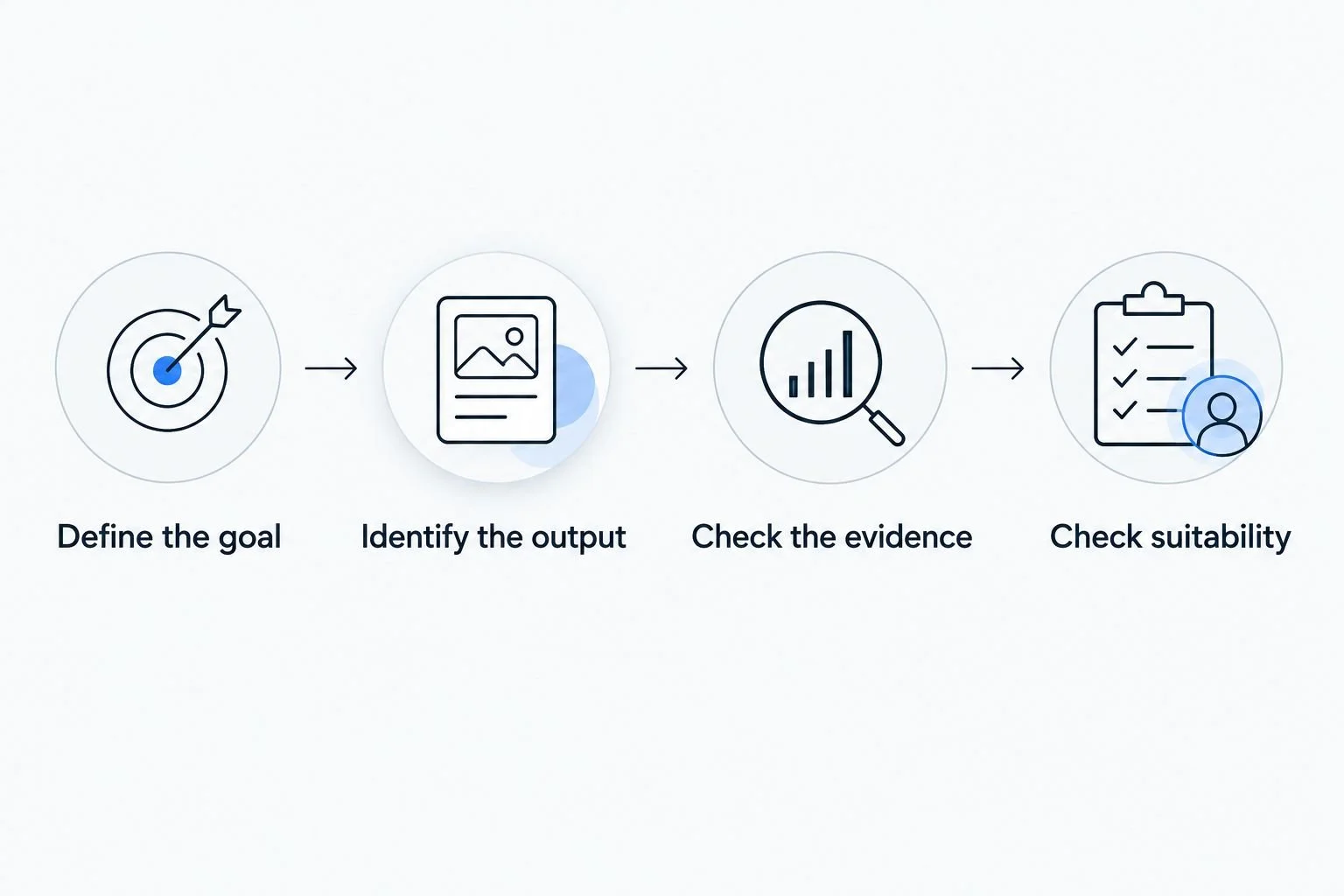
Identify what the device delivers before comparing its frequency settings.
Do not copy a protocol from an unrelated device. Field strength, waveform, electrode placement, and exposure instructions are not interchangeable merely because two displays show the same frequency.
How the ranking works
The 2026 ranking follows the criteria above: defined purpose, relevant evidence, delivered output, safety instructions, and practical fit. Medical devices are separated from wellness services and audio tools because comparing them as equivalent healing products would mislead you.
No ranking position represents a head-to-head clinical trial. The recommendation is to choose the appropriate category first, then assess a specific device or session against its actual intended use.
Which frequency generator should you choose?
For a medical concern, choose assessment before equipment. A clinician-selected device for a defined indication is the appropriate starting point—not a machine promising to cover unrelated conditions.
For wellness, choose the format you will actually use. Live Superhuman fits local clients seeking PEMF sessions; a home device requires a separate equipment decision. For relaxation alone, an audio tool avoids confusing listening preferences with medical treatment.
The default for an undecided buyer is simple: wait until you can name the intended outcome and explain why the chosen category fits it.
FAQ
What's the best frequency generator for healing?
There is no single best frequency generator for healing across unrelated conditions. Choose an indication-specific medical device with your clinician, or select a wellness or relaxation option without treating it as disease care.
Is PEMF the same as a Rife machine?
No. PEMF describes pulsed electromagnetic fields, while Rife-style products are associated with disease-specific frequency claims; neither label alone establishes a particular device's effectiveness.
Is a TENS unit a healing device?
TENS is used for pain relief, which does not establish tissue healing. Check suitability and electrode placement before using a TENS unit.
What frequency heals the body?
There is no established universal frequency that heals the body. A frequency value does not identify the output, exposure, appropriate use, or clinical result.
Can I book PEMF instead of buying a generator?
Yes. Live Superhuman offers bookable PEMF wellness sessions in Costa Mesa, providing a session-based option rather than home equipment ownership.
Can I use a frequency device with a pacemaker?
Do not assume a frequency device is compatible with a pacemaker. Ask your treating clinician and the relevant device manufacturers about the exact equipment before use.
Are more frequency settings better?
More frequency settings do not establish better health outcomes. Intended use, relevant evidence, output specifications, and safety instructions are more useful comparison criteria.
One last thing
Ask the seller one question before discussing settings: What does this device deliver to my body, and what evidence supports this exact use? A clear answer should distinguish the output from the promised outcome.
If the answer is only a frequency number or a testimonial, stop there. You have not yet received the information needed to make a sound choice.