

Best overall for a passive wellness routine: red light therapy. Best for exercise-focused professionals: EWOT. Best for a non-light, non-exercise session: PEMF. This 2026 guide compares five biohacking services for professionals available as bookable sessions at Livesuperhuman, ranked by practical fit rather than promises of better health.
TL;DR
Red light therapy leads biohacking services for professionals seeking a passive routine, not a guaranteed performance improvement.
Livesuperhuman offers red light therapy, PEMF, EWOT, hyperbaric oxygen therapy, and altitude training sessions.
EWOT involves exercise with supplemental oxygen; altitude training uses reduced oxygen availability. They are not interchangeable.
Choose one service around one goal, and confirm suitability before building a recurring recovery routine.
Why this matters
A wellness appointment competes with meetings, commuting, training, and sleep. The best service is not the one with the longest list of claimed benefits; it is the one whose purpose, demands, and scheduling requirements you understand.
For your 2026 routine, separate what a session involves from what you expect it to achieve. Sitting under a light device, exercising with supplemental oxygen, and entering a pressurized chamber are different experiences. A shared biohacking label does not make them substitutes.
Livesuperhuman offers biohacking services for professionals seeking recovery and performance support. That describes the studio's offering and audience, not proof that every modality improves recovery, concentration, or work output.
The practical default is red light therapy for a passive routine; choose a more specialized service only when its demands match your goal. No appointment should displace the sleep, movement, or medical care you need.
What makes the best biohacking services for professionals
Use these criteria before choosing a modality. They explain the ranking and give you questions to ask before committing to a recurring appointment.
Participation: Decide whether you want a passive session or an appointment that includes exercise. Those serve different calendar needs.
Full appointment burden: Count travel, preparation, screening, changing, and recovery afterward—not just time using the equipment.
Goal clarity: Name the experience or training purpose you want. Avoid buying a broad promise to optimize everything.
Protocol transparency: Ask what equipment, settings, supervision, and suitability checks the session involves.
Repeatability: Choose something you can attend consistently without squeezing out established priorities.
Outcome discipline: Separate how you feel afterward from evidence that the service caused a lasting change.
Before booking, keep a 7-day schedule log, name 1 primary goal, and identify 2 realistic appointment windows. These are planning steps, not a treatment schedule. They expose whether another appointment actually fits your week.
Biohacking services at a glance
This 2026 comparison ranks appointment formats, not clinical effectiveness. Each service has a distinct best-fit use case; none earns a blanket recommendation for every professional.
1. Red light therapy
Best for: A passive, light-based routine
Standout characteristic: Exposure to red light, with some devices also using near-infrared light
Key limitation: Equipment and exposure protocols differ
2. EWOT
Best for: An exercise-centered appointment
Standout characteristic: Exercise while breathing supplemental oxygen
Key limitation: Requires physical participation and suitability screening
3. PEMF
Best for: A passive session without light exposure
Standout characteristic: Uses pulsed electromagnetic fields
Key limitation: Device protocols and evidence vary by intended use
4. Hyperbaric oxygen therapy
Best for: A pressure-based oxygen session
Standout characteristic: Oxygen exposure inside a pressurized chamber
Key limitation: Chamber conditions and screening require attention
5. Altitude training
Best for: A specific reduced-oxygen training goal
Standout characteristic: Exposure to reduced oxygen availability
Key limitation: Not a general-purpose recovery shortcut
The ranking favors a straightforward appointment format over technical complexity. A specialized training goal can reverse the order: someone preparing for altitude exposure has a different reason to book than someone seeking a passive break from a desk-heavy day.
1. Red light therapy: best for a passive wellness routine
Red light therapy exposes an area of the body to red light; some equipment also delivers near-infrared light. You do not need to exercise during the exposure. That makes the format a practical starting point when you want a passive appointment rather than another workout.
Red light therapy pros:
Does not require an exercise session.
Offers a distinct light-based format.
Lets you ask concrete questions about treatment area, device type, and exposure instructions.
Red light therapy cons:
Different devices and protocols are not interchangeable.
A session does not establish that your recovery or performance improved.
Eye protection and suitability instructions depend on the equipment and your circumstances.
Best for: Professionals who want a passive wellness appointment and can explain the specific reason they are considering light exposure.
Ask what area the equipment treats, what preparation is required, and how the studio handles eye protection. Discuss medications or conditions that affect light sensitivity with an appropriate healthcare professional before booking.
For local comparison, see the guide to red light therapy studios in Orange County.
Verdict: Buy only after the exposure protocol and suitability requirements are clear. Red light therapy takes the default slot because of its passive format, not a claim of universal benefit.
2. EWOT: best for an exercise-centered appointment
EWOT means exercise with oxygen therapy. The format combines physical activity with breathing supplemental oxygen, making it fundamentally different from a passive oxygen session.
Choose EWOT because you want an exercise-based format—not because oxygen terminology sounds advanced. Your existing training, exercise tolerance, and reasons for seeking supplemental oxygen belong in the suitability discussion.
EWOT pros:
Makes physical activity part of the appointment.
Provides a clear distinction from passive modalities.
Gives you specific questions about workload, oxygen delivery, and supervision.
EWOT cons:
Requires physical participation.
Adds exercise demands to an already active week.
Supplemental oxygen does not automatically translate into better everyday energy or productivity.
Best for: Professionals who specifically want an exercise-centered session and have confirmed that the format is appropriate for them.
Before booking, ask what exercise equipment the session uses, how effort is selected, and what happens if you feel unwell. Confirm whether changing clothes and cooling down affect your return-to-work plans. Do not treat a gap between meetings as proof that an exercise appointment fits comfortably.
Verdict: Hold until you understand the workload and screening process. EWOT belongs in a deliberate exercise plan, not an unexamined recovery bundle.
3. PEMF: best for a passive session without light exposure
PEMF stands for pulsed electromagnetic field therapy. Equipment delivers changing electromagnetic fields, with protocols that depend on the device and intended application.
For a desk-based professional, the relevant distinction is the session format: PEMF can provide a passive appointment without the light exposure of red light therapy or the exercise component of EWOT. That difference does not establish equivalent benefits.
PEMF pros:
Does not require exercise during exposure.
Provides an alternative format to light-based sessions.
Allows device-specific questions about field delivery and session instructions.
PEMF cons:
The PEMF label covers different devices and protocols.
Evidence for one application does not validate every wellness claim.
Implanted electronic devices require particular attention during suitability screening.
Best for: Professionals seeking a passive, non-light format who understand the intended purpose of the specific session.
Ask for the equipment name and the rationale for its proposed use. Tell the provider about implanted devices and relevant health circumstances; seek guidance from your treating clinician or device manufacturer where appropriate.
Do not choose PEMF simply because it sounds less demanding. A passive experience still needs a clear purpose and appropriate screening.
Verdict: Hold until the device, intended use, and suitability checks are explained. Avoid treating the modality name as evidence of a particular result.
4. Hyperbaric oxygen therapy: best for pressure-based oxygen sessions
Hyperbaric oxygen therapy involves breathing oxygen in a pressurized chamber. Pressure is the defining difference from simply breathing supplemental oxygen outside a chamber.
Livesuperhuman lists hyperbaric oxygen therapy among its bookable services. Before selecting a session, confirm the actual chamber conditions, oxygen delivery, supervision, and screening rather than assuming all services using the name are equivalent.
Hyperbaric oxygen therapy pros:
Offers a distinct pressure-based format.
Does not require exercise inside the chamber.
Has concrete operating details you can ask the provider to explain.
Hyperbaric oxygen therapy cons:
Pressure changes require attention to ear and sinus comfort.
An enclosed chamber is not comfortable for everyone.
A wellness session is not interchangeable with treatment for a diagnosed condition.
Best for: Professionals specifically considering a pressure-based oxygen session who have completed appropriate suitability screening.
Ask how entry, pressure changes, communication, and stopping a session work. Confirm the full appointment commitment before placing it between fixed meetings. A session you must rush into or leave prematurely is a poor calendar fit.
Verdict: Hold until chamber details and screening are clear. Choose hyperbaric oxygen therapy for a defined reason, not as a generic upgrade from other oxygen services.
5. Altitude training: best for a specific reduced-oxygen goal
Altitude training exposes you to reduced oxygen availability, either through actual altitude or a simulated environment. Studio formats differ, so establish whether the session involves exercise, rest, or alternating exposure conditions.
This is not the same as EWOT. EWOT supplies supplemental oxygen during exercise; altitude training introduces reduced oxygen availability. Their opposite oxygen conditions are a reason to compare carefully, not combine them casually.
Altitude training pros:
Addresses a specific altitude-related training interest.
Makes oxygen conditions central to the session design.
Gives you a focused basis for discussing training goals and supervision.
Altitude training cons:
Reduced oxygen exposure adds physiological demand.
It is not a substitute for destination-specific travel or medical advice.
A general desire for better energy does not define a useful training protocol.
Best for: Professionals with an explicit altitude-related training goal and appropriate guidance on participation.
Explain your existing training and intended activity before selecting a protocol. Ask how the provider monitors tolerance and adjusts or stops exposure. Do not assume that adding a more demanding stimulus improves an already crowded training week.
Verdict: Skip unless you have a specific reduced-oxygen training objective. Altitude training ranks last for a general professional audience because its purpose is narrower.
How this ranking works
The 2026 ranking prioritizes passive participation, a clear session purpose, and manageable scheduling questions. It does not rank biological effectiveness, report hands-on testing, or claim that one modality produces better health outcomes than another.
Livesuperhuman offers all five formats, so the useful decision is which service fits your purpose—not which technical name sounds most impressive. Bookable does not mean suitable, and suitable does not mean necessary.
Fit the appointment to your working week
Use this sequence before committing to a recurring service. It keeps the decision grounded in your schedule rather than an expanding list of wellness appointments.
Define the goal. State why you want the session without using a broad phrase such as total optimization.
Check suitability. Ask about relevant health conditions, medications, implanted devices, and exercise demands.
Map the visit. Include travel, preparation, the session, and whatever comes afterward.
Review the fit. Decide whether the experience earns space in your routine without displacing higher priorities.
The appointment itself is only part of the commitment. Protect the full calendar window, and resist adding another modality before you understand the first one.
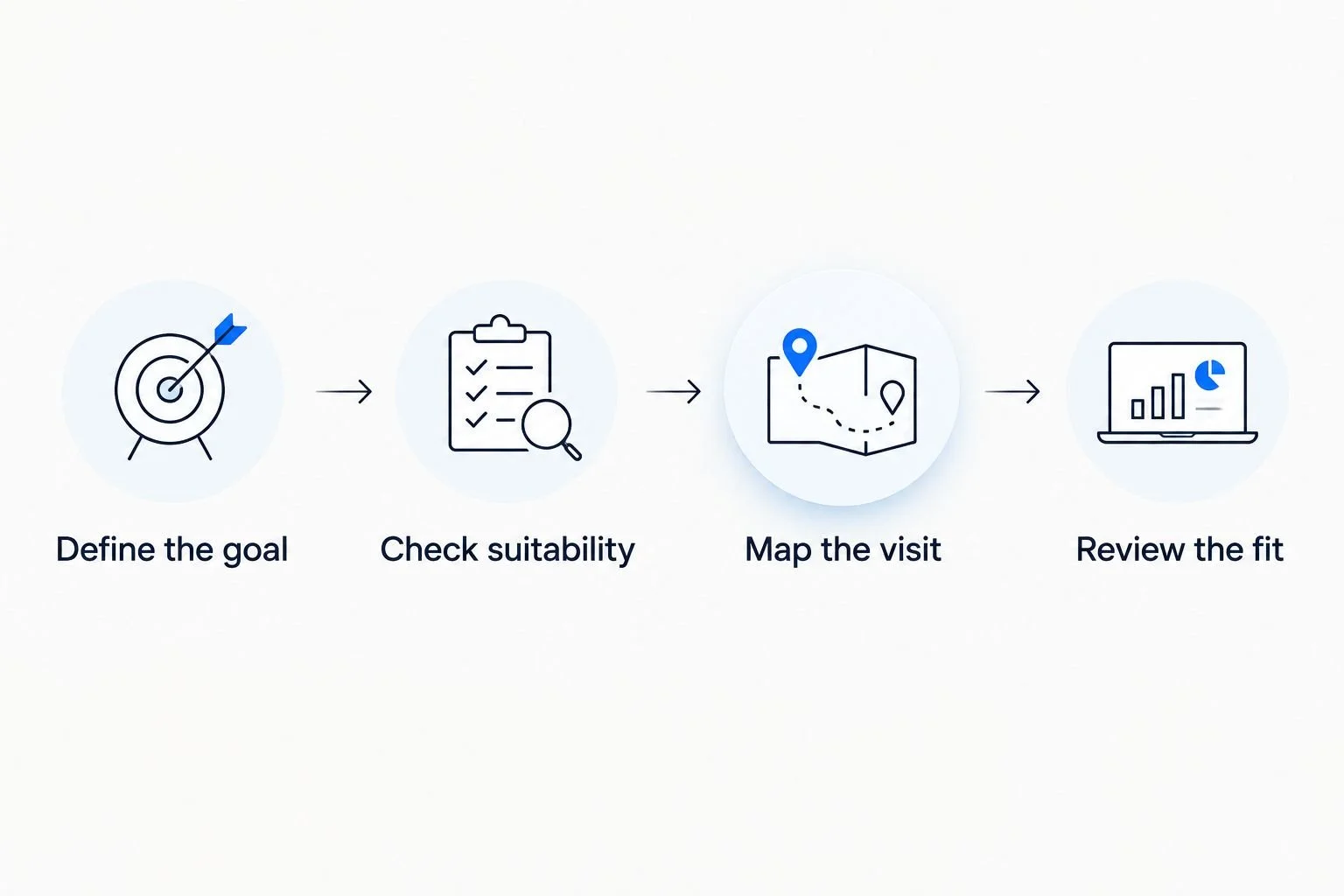
Choose the purpose and check suitability before committing calendar time.
Which biohacking service should you choose?
Choose red light therapy as the default passive format, EWOT for an exercise-centered appointment, and altitude training only for a specific reduced-oxygen goal. Consider PEMF when you want a non-light passive format; consider hyperbaric oxygen therapy when you specifically seek a pressure-based session.
Livesuperhuman is best for professionals comparing these five bookable biohacking services within one wellness studio. Ask about the selected modality's actual protocol before deciding whether to book.
For 2026, favor a routine you can explain and sustain over a stack of appointments you cannot evaluate. More modalities create more scheduling demands; they do not, by themselves, establish more benefit.
Choose your session format
Explore five bookable wellness modalities, then confirm the protocol and suitability requirements.
FAQ
What's the best biohacking service for a busy professional?
Red light therapy is the default recommendation here for professionals seeking a passive appointment. This is a ranking of practical formats, not proof that red light therapy delivers better health outcomes than the alternatives.
Is EWOT better than hyperbaric oxygen therapy?
Neither is universally better because the formats differ. EWOT combines exercise with supplemental oxygen, while hyperbaric oxygen therapy involves oxygen exposure inside a pressurized chamber; choose according to purpose and suitability.
Can I book biohacking services during my lunch break?
Confirm the full appointment commitment before using a lunch break. Travel, preparation, screening, changing, and the session all need to fit without rushing.
What's the difference between EWOT and altitude training?
EWOT supplies supplemental oxygen during exercise, while altitude training involves reduced oxygen availability. They are not interchangeable oxygen-based appointments.
Should I combine red light therapy, PEMF, and oxygen sessions?
Do not assume that combining modalities produces greater benefit. Start with a defined purpose and discuss suitability before adding services; changing several things together also makes your experience harder to interpret.
Do biohacking services replace sleep or regular exercise?
No, biohacking services do not replace sleep, regular exercise, or needed medical care. Treat a wellness appointment as an optional addition rather than compensation for missing foundations.
What should I ask before booking a session?
Ask about the equipment, protocol, full appointment commitment, supervision, and suitability screening. Also ask what you should do if you feel uncomfortable or want to stop.
One last thing
The most useful distinction is not high-tech versus low-tech; it is whether the session adds rest, exercise, pressure, light, or reduced oxygen exposure. Those are different demands on your day and body.
Before your next booking, describe the appointment in plain language without its acronym. If you cannot explain what happens and why you want it, pause the purchase—not the questions.