Yes—BEMER is a brand of pulsed electromagnetic field therapy, or PEMF, not a separate therapy category. It differs from other PEMF systems through its device design and electromagnetic signal, but “standard PEMF” does not identify one universal device or setting. A different signal does not, by itself, establish better recovery or performance results.
TL;DR
Is BEMER PEMF? Yes. BEMER is a PEMF brand, not a separate therapy category.
Compare the exact devices, intended uses, and supporting evidence—not BEMER against an undefined standard.
Live Superhuman offers bookable PEMF wellness sessions; ask which device your session uses.
Different electromagnetic settings do not automatically mean better recovery or athletic performance.
Why this matters
If you are comparing recovery sessions in 2026, the equipment name is only the beginning. You need to know what the session involves, what the device is intended to do, and whether the evidence matches your goal.
The practical question is not whether a branded system sounds more advanced. It is whether a specific session fits your needs without promising outcomes the evidence does not establish. For a sport-focused starting point, see the PEMF therapy guide for combat sports athletes.
Is BEMER PEMF different?
BEMER belongs within PEMF; it does not sit outside it. PEMF describes the use of pulsed electromagnetic fields. BEMER identifies a branded system within that broader category.
That distinction changes the comparison. “BEMER versus PEMF” compares a brand with its category, while “BEMER versus another named PEMF device” compares equipment you can actually evaluate.
What the name identifies
BEMER: A branded PEMF system
Other PEMF systems: A category containing different manufacturers and devices
Main comparison advantage
BEMER: A named system gives you a concrete starting point
Other PEMF systems: You can compare different designs against your needs
Main comparison limitation
BEMER: The brand name alone does not establish effectiveness for your goal
Other PEMF systems: The category name alone reveals little about a particular device
Settings and application
BEMER: Check the exact model and instructions
Other PEMF systems: Check each model and its instructions
Evidence to request
BEMER: Evidence matching the BEMER device and claimed outcome
Other PEMF systems: Evidence matching the particular device and claimed outcome
Best for
BEMER: Someone specifically evaluating a BEMER session or device
Other PEMF systems: Someone comparing named PEMF systems before choosing
Neither column is an effectiveness ranking. The useful takeaway is that both require a model-level check before you draw conclusions about benefits, suitability, or session design.
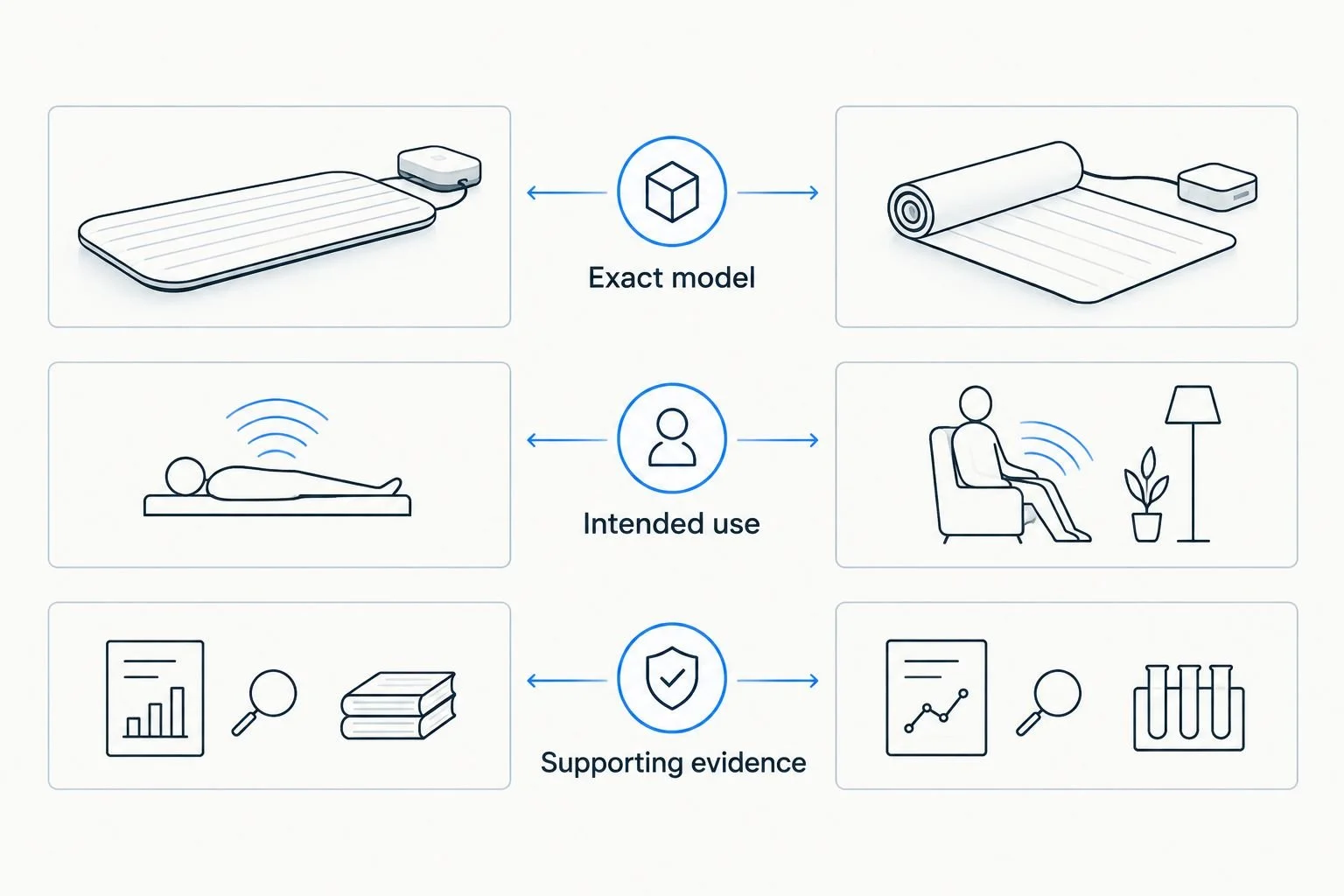
Compare named devices against the same criteria rather than treating a brand and a category as alternatives.
What makes a BEMER session different?
A BEMER session uses equipment from that brand. Beyond that, your comparison needs the exact model, applicator, settings, and instructions; the name alone does not describe every detail of the experience.
For a 2026 booking decision, ask the provider to identify the equipment rather than relying on a broad service label. A session advertised as PEMF does not automatically mean BEMER, and a BEMER session should not be treated as interchangeable with every other PEMF session.
Separate the equipment question from the outcome question. Knowing which machine is used tells you what you are booking. It does not tell you how much your recovery, comfort, or performance will change.
Best for: Someone who specifically wants to evaluate BEMER equipment and can review its instructions and relevant evidence.
Limitation: Brand recognition is not a substitute for evidence about the outcome you want.
What does “standard PEMF” actually tell you?
“Standard PEMF” is too broad to support a meaningful device comparison. It does not identify the manufacturer, electromagnetic field characteristics, applicator, or intended use.
Different PEMF systems use different technical designs. That means a finding about one device cannot automatically become a claim about every device carrying the PEMF label.
Ask the provider to replace the general phrase with a model name and a clear session description. You should be able to understand what will happen without needing to interpret technical marketing language.
Best for: Someone beginning a comparison across named PEMF systems rather than searching for one particular brand.
Limitation: A category-level description leaves too many details unresolved to predict the experience or judge a benefit claim.
Why PEMF sessions vary
PEMF equipment does not become equivalent simply because it shares a category name. These technical and practical differences belong in your comparison:
Signal characteristics: Frequency, pulse shape, and timing describe different aspects of the electromagnetic signal. A single specification does not summarize them all.
Field strength: The stated strength is a device characteristic, not a standalone measure of effectiveness. Measurement conditions matter when comparing specifications.
Applicator design: The applicator determines how the device is positioned and used. Ask which applicator your session includes.
Intended use: Evaluate a device against the use described in its instructions, not every benefit associated with PEMF online.
Session instructions: Duration, positioning, and operating settings should follow the particular equipment’s instructions. Do not transfer directions from another device.
These factors explain why sessions differ; they do not establish that one option wins. Choose by a documented fit between the device, your goal, and its appropriate use—not by the longest specification list.
How do you read PEMF specifications?
Start by separating frequency from magnetic field strength. They measure different things, and comparing them as though they describe the same property creates confusion.
Frequency describes repetition. 1 Hz means 1 cycle per second, while 1 kHz equals 1,000 Hz. Neither value tells you the magnetic field strength or proves a recovery benefit.
Magnetic flux density is commonly expressed using tesla-based units. 1 mT equals 1,000 µT; a larger-looking number in microtesla does not necessarily represent a stronger field than a smaller number in millitesla.
When reviewing specifications in 2026, first put like measurements into the same units. Then ask how the measurement was obtained and whether the evidence applies to that device’s actual use. Correct arithmetic prevents a misleading comparison, but it does not turn specifications into outcome evidence.
Does a stronger field mean better results?
A stronger field does not, by itself, establish better results. Field strength is one characteristic within a complete device design and usage pattern.
Ask for evidence connecting the particular device and session to the outcome being claimed. “Stronger” is a technical comparison; “better for your recovery” is a separate claim requiring support.
Does a different waveform prove BEMER is better?
A different waveform establishes a technical difference, not an automatic advantage. To establish a better outcome, a comparison must assess that outcome under relevant conditions.
If a provider presents waveform information, ask what conclusion the supporting research actually allows. A description of how a signal works is not the same as evidence that you will recover faster.
How should you compare sessions before booking?
Use the same questions for every provider. A consistent comparison keeps a familiar brand name from receiving less scrutiny than an unfamiliar one.
Name the device. Ask for the manufacturer and exact model. Confirm whether the session is BEMER or another PEMF system.
State your goal. Explain whether you are exploring a wellness experience, supporting your recovery routine, or asking about a specific concern. Do not let those goals become interchangeable.
Check the claim. Ask what evidence supports the benefit being described and whether it concerns the same device and outcome.
Review suitability. Read the device-specific warnings and discuss relevant health circumstances before booking. Seek qualified medical guidance when a health concern affects your decision.
Define your next decision. Decide what would make you repeat, change, or stop sessions. Do not treat purchasing additional sessions as proof that the first one worked.
For your 2026 comparison, keep the answers together in a short note. If one provider supplies detailed equipment information and another offers only broad promises, you have identified an information gap—not proven which treatment performs better.
What evidence should influence your decision?
Look for a match between the claim and the research. Relevant details include the equipment studied, the people included, the comparison used, and the outcome measured.
A study about one health condition does not establish an athletic performance benefit. Likewise, a laboratory finding does not automatically establish a noticeable change during your training week.
Testimonials describe individual experiences. They do not separate the session’s contribution from sleep, training adjustments, other recovery practices, or expectations. Use them to understand what someone reported, not to forecast your own result.
Keep the claim no broader than the evidence. If the evidence concerns a specific device and outcome, the conclusion should stay attached to that device and outcome.
Where does a studio PEMF session fit?
Live Superhuman is a fit for people seeking bookable PEMF wellness sessions rather than a home-device purchase. The studio’s stated services include PEMF; confirm the equipment used before assuming that means BEMER.
Live Superhuman also offers hyperbaric oxygen therapy, red light therapy, EWOT, and altitude training. Those are separate services, not interchangeable names for PEMF, and their presence does not establish which electromagnetic device a PEMF session uses.
The practical advantage of considering a studio session is that you can evaluate a bookable service instead of choosing equipment to own. The limitation is that the service description alone does not answer model-specific questions or establish your likely results. Ask those questions through the contact page before choosing a session.
Ask about your PEMF session
Confirm the device used, what the session involves, and the suitability information to review.
FAQ
Is BEMER PEMF or something different?
BEMER is PEMF: it is a branded system within pulsed electromagnetic field therapy. Its equipment and signal distinguish it from other devices, not from the category itself.
Is BEMER better than regular PEMF?
The phrase regular PEMF is too vague to establish whether BEMER is better. Compare exact devices and evidence for the same intended outcome rather than treating the entire category as one alternative.
Does a higher PEMF frequency mean better recovery?
A higher PEMF frequency does not by itself establish better recovery. Frequency describes repetition; effectiveness requires evidence tied to the device, its use, and the outcome claimed.
Can I assume a PEMF studio uses BEMER?
No. A studio advertising PEMF has identified a therapy category, not necessarily the BEMER brand. Ask for the manufacturer and exact model before booking.
Does Live Superhuman offer PEMF sessions?
Live Superhuman offers bookable PEMF wellness sessions. Confirm the current equipment and session details directly rather than assuming a particular manufacturer from the service name.
How do I know whether PEMF is suitable for me?
Review the specific device’s warnings and suitability information before a session. Discuss relevant health circumstances with the provider and seek qualified medical guidance when needed.
What should I ask before booking a BEMER session in 2026?
Ask which BEMER model is used, what the session involves, and what evidence supports the benefit you want. Also review device-specific warnings before deciding whether to book.
One last thing
The most useful comparison question is often the simplest: “Which exact device are you comparing it with?” If the answer is just “standard PEMF,” the comparison is unfinished.
For a 2026 recovery decision, get the model name before debating signal claims. That single detail lets you check instructions, evaluate relevant evidence, and ask better questions without confusing a brand with a therapy category.
Related guides
By Kelley Gast