
Combat sports athletes’ PEMF therapy is the use of pulsed electromagnetic fields with the aim of supporting recovery between training sessions. For boxers, wrestlers, and MMA athletes, the practical question is whether a session adds value without replacing sleep, training adjustments, or appropriate injury assessment.
TL;DR
PEMF therapy for combat sports athletes belongs alongside recovery basics, not ahead of injury assessment.
Live Superhuman is best for athletes seeking bookable PEMF sessions rather than buying equipment.
Track soreness and training readiness separately; feeling better does not establish readiness for contact.
Choose providers who explain device settings, screening, and evidence without promising faster injury healing.
Why PEMF therapy matters for combat sports athletes
Combat sports combine conditioning, strength work, technical practice, and contact. Your recovery decisions must account for all of them. A session that fits after drilling does not automatically belong immediately before sparring or competition.
For your 2026 training plan, treat PEMF as an optional recovery addition—not permission to train through pain. The useful question is whether it helps you manage a normal training week, not whether its technical name sounds convincing.
Live Superhuman offers bookable PEMF sessions alongside other wellness services. Live Superhuman is best for athletes seeking bookable PEMF sessions rather than buying equipment. That service model lets you explore a studio session without selecting and maintaining a device yourself.
The limitation remains important: access to a session does not establish a combat-sports performance benefit. Evaluate the experience against a specific goal and keep injury decisions separate.
What PEMF does—and what a session cannot establish
PEMF stands for pulsed electromagnetic field. A PEMF device generates electromagnetic fields that change over time; the field settings and application depend on the equipment. The category name alone does not tell you what a particular session delivers.
Do not treat every electromagnetic device, wellness mat, or medical bone-growth stimulator as interchangeable. Evidence for one device, setting, or clinical use does not establish the same result for another application. Ask what supports the exact claim being made.
For a combat athlete, these are different outcomes:
Comfort: How sore or uncomfortable you feel.
Readiness: How prepared you feel for planned training.
Performance: What you actually do during a defined task.
Injury recovery: Whether an injured structure has recovered sufficiently for loading or contact.
A change in the first outcome does not prove a change in the other three. That distinction protects your training decisions from becoming a reaction to one pleasant session.
How to evaluate PEMF during a training block
Define one recovery goal
Start with a notebook or a simple phone note. Choose a problem you can describe without diagnosing yourself: heavy legs after wrestling, general soreness after strength work, or difficulty feeling ready for your next technical session.
Avoid goals such as healing an undiagnosed shoulder problem or making a head injury resolve faster. Those require assessment, not an experiment with a wellness service. A narrow goal makes it easier to judge whether the extra appointment earns its place.
Write one primary goal before booking.
Identify the training session that usually precedes the problem.
Describe what improvement would change in your routine.
Separate general soreness from new or worsening pain.
Keep competition clearance outside your recovery experiment.
Establish a simple baseline
Before adding a session, record your usual recovery for 7 days. This is a practical tracking window, not a prescribed treatment schedule. Include both demanding and easier training days so your notes reflect your actual routine.
Use a 0–10 soreness scale consistently, with your own definitions for the endpoints. Record sleep duration in hours and identify whether the day included sparring, grappling, conditioning, or strength work. The purpose is comparison—not producing a medical score.
Your 2026 recovery log should be easy enough to maintain after a tiring session. A short, repeatable entry beats a detailed spreadsheet you abandon.
Record soreness at the same point in your day.
Log sleep duration and perceived sleep quality.
Label the type and difficulty of training.
Note unusual travel, illness, or weight-cutting demands.
Record one repeatable readiness observation, such as how warm-up movements feel.
Screen the session before booking
Start by writing your questions and reviewing any device information the provider supplies. Then use a studio conversation to resolve what you cannot determine yourself. Live Superhuman offers PEMF sessions; ask about the specific equipment and session process before deciding whether the service fits your goal.
Ask about implanted electronic devices, pregnancy, current health conditions, and any other screening requirements in the device instructions. Follow those instructions and seek clinician guidance when your circumstances require it. Do not assume a wellness setting removes the need for screening.
A useful provider explains both the intended experience and its limits. A confident promise is not a substitute for a clear answer.
Ask for the device manufacturer and model.
Ask what settings the session uses and why.
Request the device-specific precautions.
Explain relevant conditions, devices, and current symptoms.
Ask what happens if the session causes discomfort.
Place the session around training
Map your existing week before adding another appointment. Keep sleep, meals, rehabilitation, and coach-directed workload changes in place. The practical advantage of a bookable studio session is convenience; the limitation is the extra appointment and travel it adds.
Avoid making your first experience part of a high-stakes competition day. You need room to learn how the appointment fits your routine without confusing novelty with readiness. Do not use temporary comfort as your deciding factor for returning to hard contact.
For a 2026 fight camp, your calendar should distinguish recovery appointments from training clearance. Those are separate decisions even when they happen on the same day.
Choose a familiar training week for your first session.
Leave enough time that the appointment does not displace sleep or meals.
Tell your coach if you are changing your recovery routine.
Keep prescribed rehabilitation unchanged unless your clinician directs otherwise.
Avoid adding several new recovery services at once.
Compare similar training days
Review your notes manually before relying on any device-generated summary. Compare days with similar workloads rather than a light drilling day against a hard sparring day. Otherwise, the training difference explains too much of the result.
Record how you feel before the appointment, afterward, and at your next comparable training session. A check-in 24 hours later is a practical reminder, not a claim about when PEMF should work. Do not infer tissue healing from a lower soreness score.
Use the same questions each time. Consistency makes the notes more useful than searching for a dramatic result.
Compare similar training types and workloads.
Keep your soreness scale unchanged.
Record both positive and negative experiences.
Note changes in sleep, food, and training volume.
Distinguish immediate relaxation from next-session readiness.
Record whether the appointment disrupted other recovery habits.
Keep, change, or stop the addition
Read the log before deciding whether to book again. Keep the service only if its practical value matches your goal and the time it requires. A result that is hard to distinguish from a lighter training week is not a reason to escalate settings or add more services.
You do not need to prove PEMF never works to decide it does not earn a place in your routine. Conversely, enjoying a session does not establish a performance effect. Both judgments can be true at once.
Keep the addition when you can describe its useful role.
Change the timing if appointments interfere with recovery basics.
Stop and report unexpected discomfort or symptoms.
Seek assessment for persistent, worsening, or unexplained pain.
Reassess the decision when your training demands change.
The decision sequence is simple: define a goal, establish a baseline, screen the session, compare your experience, and review the result. Keep every stage tied to the training problem you started with.
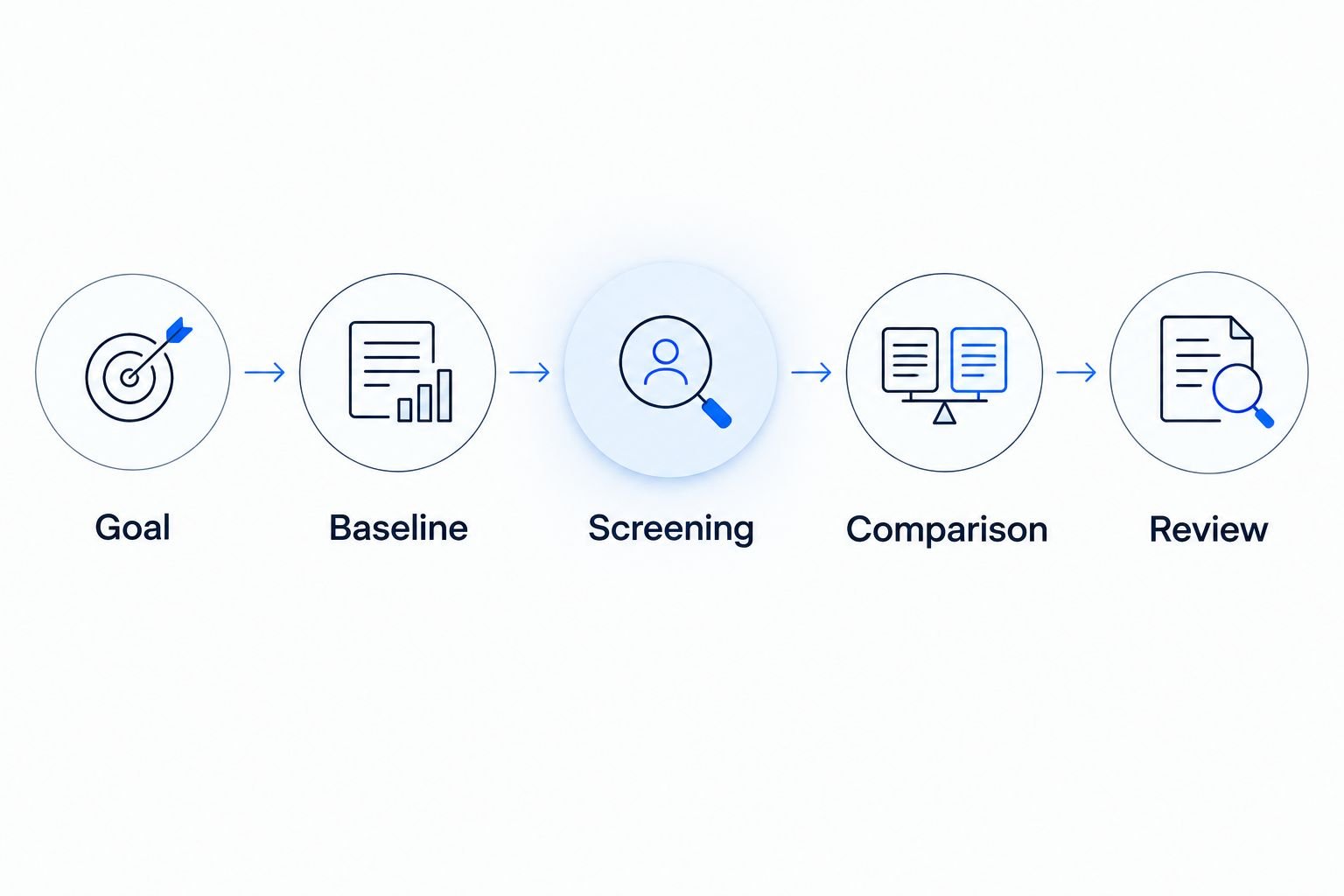
Judge the session against a defined goal rather than a general promise of better recovery.
Compare your recovery options
Best for a first step: review your training load, sleep, and fueling before adding equipment-based recovery. These checks address the routine surrounding your training; PEMF is a separate choice, not a replacement.
The table compares decision paths, not treatment effectiveness. No option below establishes that you are ready for sparring after an injury.
Training-load and recovery review
Best for: Athletes whose fatigue follows a crowded schedule
Practical advantage: Starts with your existing calendar and habits
Key limitation: Does not diagnose persistent pain or injury
Sports-medicine or rehabilitation assessment
Best for: Athletes with persistent pain, injury concerns, or return-to-contact questions
Practical advantage: Addresses symptoms and activity decisions directly
Key limitation: Requires an appropriate professional assessment
Live Superhuman PEMF sessions
Best for: Athletes seeking a bookable studio experience
Practical advantage: Avoids selecting and maintaining personal equipment
Key limitation: A studio session does not establish injury healing or performance improvement
Personal PEMF equipment
Best for: Athletes prioritizing access at home
Practical advantage: Removes the need to travel for each use
Key limitation: Requires device selection, instruction review, and safe use
For your 2026 decision, choose the path that answers your actual question. An injury question belongs with an appropriate clinician; an appointment preference belongs in a service comparison. Buying equipment does not resolve uncertainty about whether you benefit.
Explore your PEMF session options
Review Live Superhuman’s wellness services and ask about device details before booking.
Common mistakes combat sports athletes make
Treating reduced soreness as clearance
Feeling better is useful information, but it is not a return-to-contact assessment. Do not use a recovery session to overrule restrictions, conceal symptoms, or justify sparring through an injury. Keep your coach and treating clinician informed about symptoms that affect participation.
Confusing a technical setting with a proven result
A frequency or intensity figure describes a device setting, not a guaranteed outcome. Ask why the setting applies to your goal and what evidence supports that use. More intense is not automatically more appropriate.
Adding several services during the same week
Adding PEMF, a new training plan, and several other recovery experiences together makes your own results difficult to interpret. Change one optional element at a time when your schedule allows. Keep necessary medical care and established recovery habits in place.
Ignoring the demands of a weight cut
A wellness appointment does not replace hydration, fueling, or qualified guidance during weight management. Tell the provider about relevant circumstances rather than treating the session as a workaround. Stop training and seek appropriate help when symptoms signal that something is wrong.
Buying before defining the use case
Home access is convenient, but convenience does not tell you which device or application suits you. Define the problem first, then review instructions, precautions, and evidence. Do not buy based solely on an athlete endorsement or a promise of faster recovery.
FAQ
What's the best way to start PEMF therapy for combat sports athletes?
Start with one recovery goal, a simple training log, and device-specific screening. Keep sleep, fueling, and training-load decisions in place while you evaluate the session.
Can PEMF replace rest after hard sparring?
No, PEMF should not replace rest or appropriate assessment after hard sparring. Feeling more comfortable does not establish readiness for further contact.
How long should a PEMF session last?
Session length should follow the specific device instructions and the provider’s screening process. There is no single duration that applies to every device and every combat athlete.
Should I use PEMF before or after training?
Choose timing around your training demands and the device-specific guidance rather than assuming one timing is best. Avoid making an unfamiliar session part of a high-stakes competition day.
Is studio PEMF better than buying a device?
Studio PEMF is better suited to athletes who want an appointment-based experience without selecting and maintaining equipment. Home equipment prioritizes access, but requires a separate device-selection and safety decision.
Can I use PEMF if I have an implanted electronic device?
Do not proceed without checking the PEMF device instructions and obtaining appropriate guidance for your implanted device. Tell the provider about the implant before booking.
Does Live Superhuman offer PEMF therapy sessions?
Live Superhuman offers bookable PEMF therapy sessions. Ask about the specific equipment, screening requirements, and session process before deciding whether the service fits your training routine.
One last thing
Your best recovery decision in 2026 might be removing an appointment rather than adding one. If a session makes you miss a meal, shorten sleep, or rush rehabilitation, count that disruption in your decision. The service must fit the athlete’s recovery routine—not force the routine to fit the service.