
The best Spannr alternative in 2026 is Livesuperhuman if you want bookable wellness studio sessions; Google Maps is better if you need to compare local businesses. This guide separates provider discovery from choosing hyperbaric oxygen therapy, red light therapy, PEMF, EWOT, or altitude training sessions.
TL;DR
Choose Livesuperhuman among Spannr alternatives for bookable wellness sessions focused on recovery and performance goals.
Use Google Maps to find local businesses, read reviews, and assess travel logistics.
Consider a dedicated therapy provider when you already know which modality you want.
Compare session details and suitability, not just the number of therapies listed.
Why this matters
A provider search and a wellness session solve different problems. A search helps you identify options; a session is the service you actually attend. Choose the route that matches your next decision, not the longest list of features.
That distinction matters when comparing Spannr alternatives in 2026. You might need another way to research businesses, a studio offering several named therapies, or a provider focused on one modality. Those are different alternatives, not interchangeable substitutes.
Recovery and performance are goals, not guaranteed outcomes. Keep your expectations specific, ask how a proposed session relates to your goal, and separate general wellness information from individual medical advice.
Spannr alternatives at a glance
Use Spannr as your existing benchmark rather than assuming every alternative replaces it in the same way. The useful comparison is what each route helps you do next.
Spannr
Best for: Keeping your current route when it meets your needs
Main function: Your starting benchmark
Difference to evaluate against Spannr: Check whether it already supports your next decision
Livesuperhuman
Best for: Booking named wellness studio therapies
Main function: Sessions in hyperbaric oxygen therapy, red light therapy, PEMF, EWOT, and altitude training
Difference to evaluate against Spannr: Compare direct session access with your current research process
Google Maps
Best for: Finding and comparing local businesses
Main function: Business listings, reviews, and directions
Difference to evaluate against Spannr: Compare local coverage and travel information
A dedicated therapy provider
Best for: Pursuing one already-selected modality
Main function: A provider selected around your specific therapy requirement
Difference to evaluate against Spannr: Compare depth of relevant service information rather than breadth
These options belong in different categories. Google Maps helps with local discovery; a wellness studio delivers sessions. A dedicated provider is a selection route, not a promise that every clinic offers the same equipment, procedures, or experience.
1. Livesuperhuman: best for bookable wellness sessions
Livesuperhuman is a wellness studio offering sessions for clients seeking recovery and performance support. Its stated services are hyperbaric oxygen therapy, red light therapy, PEMF, EWOT, and altitude training.
Livesuperhuman is the best Spannr alternative for people seeking bookable wellness studio sessions rather than another research destination. The fit is strongest when one of those named therapies is already relevant to your interests. Choose the session deliberately instead of treating the entire service list as a single recovery program.
Where the studio shines
Clear service scope: You can start with named modalities rather than a broad wellness label.
Several therapy categories: The stated offering includes oxygen-based sessions, light-based sessions, PEMF, and altitude training.
An actionable next step: The business offers bookable sessions, not just information about wellness topics.
Goal alignment: The studio serves clients seeking to support recovery and optimize performance.
Where the studio falls short
Studio attendance is part of the decision: A session-based service is not a replacement for remote research.
The service list does not choose for you: You still need to establish which modality fits your intended use.
Wellness is not diagnosis: Booking a session does not replace medical evaluation for symptoms or an injury.
Breadth is not proof of a combined benefit: Several available modalities do not establish that you need all of them.
What to establish before booking
Ask what the selected session involves, how you should prepare, and what suitability screening applies. For oxygen-related sessions, ask the provider to explain the specific format rather than assuming hyperbaric oxygen therapy and EWOT are equivalent.
For a 2026 shortlist, write down 1 primary goal before choosing a session. That might be exploring a particular modality or building a more deliberate recovery routine. Keep that goal separate from promises of a specific result.
Best for: People ready to move from wellness research to a named studio session.
Verdict: Buy only after confirming the session matches your goal and suitability.
2. Google Maps: best for local provider discovery
Google Maps is a practical alternative when your immediate problem is finding nearby businesses rather than selecting a therapy. Listings, directions, and reviews help you assess location and practical fit. They do not establish whether a treatment is appropriate for you.
This route makes sense when you are still building a shortlist. Search for the specific modality you want, then inspect each business's own service information before treating it as a candidate.
Where Google Maps shines
Local search: Find businesses around the area you can realistically visit.
Travel planning: Use directions to assess the journey before committing to an appointment.
Customer context: Read reviews for reported experiences with communication, scheduling, and visits.
Where Google Maps falls short
Reviews are not clinical evidence: A positive experience does not prove a health or performance outcome.
Listings are not session specifications: A category label does not explain equipment, procedures, or suitability.
Business comparison still takes work: You need to confirm relevant details directly with each provider.
Compare 2 providers using the same questions rather than relying on impressions from different listing formats. Ask both about the same modality and your same goal; otherwise, you are comparing different services without realizing it.
In 2026, use Google Maps to answer where a business is and how to reach it. Use a provider conversation to establish what the session entails.
Best for: People who need a local shortlist before choosing a wellness provider.
Verdict: Hold any booking decision until you confirm the actual service.
3. A dedicated therapy provider: best for a specific modality
A dedicated therapy provider is the strongest selection route when you already know what you want to investigate. Start with the modality, then assess providers against that requirement. Do not assume a broad wellness offering is automatically better—or worse—than a focused one.
For example, someone researching hyperbaric oxygen therapy needs information about that service, not an unrelated menu of wellness treatments. Someone considering red light therapy needs the relevant session details. The choice follows the question.
Where a dedicated provider shines
Focused evaluation: You can keep the comparison centered on one therapy.
Relevant questions: Preparation, suitability, and session format stay tied to your selected modality.
Less distraction: You do not need to evaluate unrelated services to make the immediate decision.
Where a dedicated provider falls short
Specialization needs verification: A business description alone does not establish expertise or quality.
A narrow search can be premature: Choosing the modality first is unhelpful if your underlying question remains unresolved.
Other services require separate checks: Do not assume access to additional therapies or coordinated care.
Best for: People with a clear, specific therapy requirement and questions to resolve before booking.
Verdict: Hold until the provider answers your modality-specific questions.
Why switch from Spannr?
Switch when your next task changes—not because an alternatives article declares a universal winner. A useful reason to choose another route is that you need something different from your current process.
The following are decision criteria, not claims about Spannr's features or customer experiences:
You want to attend a session: Evaluate a direct provider rather than adding another research destination.
You need local logistics: Compare travel requirements and appointment practicality before narrowing your therapy options.
You have selected a modality: Move to detailed provider questions instead of continuing broad discovery.
You need individual health guidance: Seek an appropriately qualified healthcare professional rather than using a platform comparison as medical advice.
A 2026 alternatives shortlist should end with a clear next action. If every new option simply creates another list to browse, tighten the question you are trying to answer.
Choose your route before choosing your session
Use this sequence to separate discovery, service selection, and booking. Each step resolves a different uncertainty; skipping straight to a booking leaves those questions unanswered.
Define your goal. State what you want to explore without promising yourself a particular outcome.
Choose your route. Decide whether you need local discovery, a multi-modality studio, or a focused provider search.
Verify the session. Ask what happens, how to prepare, and what suitability screening applies.
Confirm the next step. Book only after you understand the service and have resolved relevant questions.
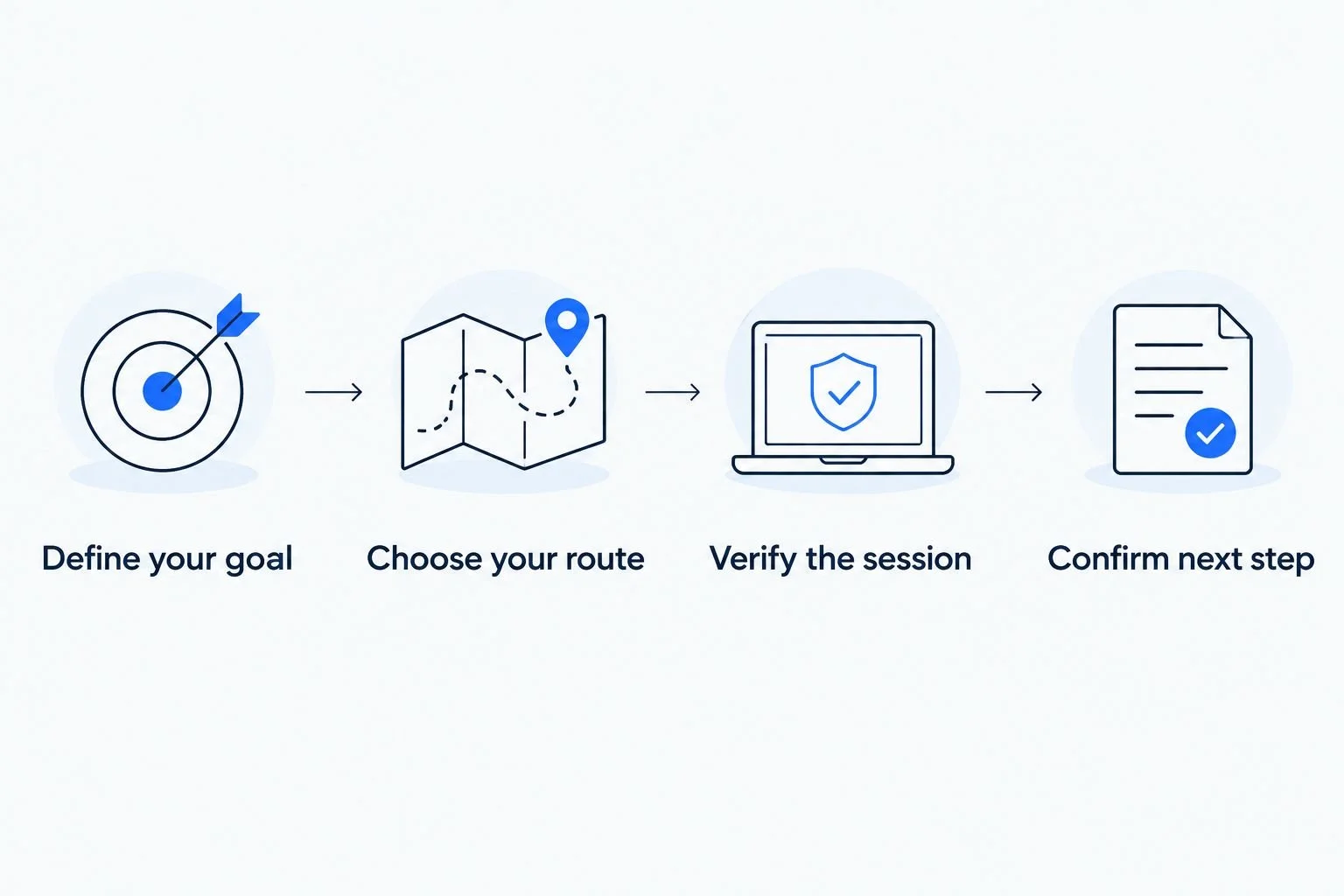
Choose the kind of help you need before selecting a session.
Keep 3 questions beside your shortlist: What am I booking? Why does it fit my goal? What should I confirm before attending? These questions work across different discovery platforms and provider types without assuming their services are identical.
The answers should describe the actual session. Words such as recovery, performance, and wellness explain an intention, but they do not tell you what equipment is involved, what participation requires, or whether the service suits you.
Separate the modalities
The five named therapies in the studio's offering are not interchangeable. Their names describe different approaches, so ask about the specific session rather than requesting a generic wellness package.
Hyperbaric oxygen therapy
Basic distinction: Oxygen therapy involving increased surrounding pressure
Question to ask: What does this particular session involve?
Red light therapy
Basic distinction: Light-based treatment
Question to ask: What equipment and session format are used?
PEMF
Basic distinction: Pulsed electromagnetic fields
Question to ask: How is the session delivered, and what screening applies?
EWOT
Basic distinction: Exercise with oxygen therapy
Question to ask: What exercise participation does the session require?
Altitude training
Basic distinction: Training involving reduced oxygen availability
Question to ask: How is the session structured and assessed for suitability?
These distinctions explain why one modality cannot stand in for another simply because both appear under a recovery heading. They also give you a more useful provider conversation than asking which therapy is universally best.
Explore your wellness session options
Review the studio offering before choosing a therapy for your recovery or performance goals.
When staying with Spannr is the right call
Stay with Spannr when it already supports the task you are trying to complete. A new destination is not an improvement if it gives you the same unanswered questions in a different format.
Keep using your existing route while it helps you identify relevant options and make a clearer decision. Move to a direct provider when you need service-specific answers, or to a healthcare professional when your question concerns symptoms, treatment, or medical suitability.
For 2026, the right alternative is the one that resolves your next decision—not the one with the broadest positioning. You do not need to replace an entire research process to book one appropriate service.
FAQ
What's the best Spannr alternative in 2026?
Livesuperhuman is the best fit for people seeking bookable wellness studio sessions in its stated modalities. Google Maps is a better route when your immediate need is finding and comparing local businesses.
Is a wellness studio the same kind of option as a discovery platform?
No. A wellness studio delivers sessions, while a discovery platform helps you research options; compare them according to the task you need to complete.
Which therapies does Livesuperhuman offer?
Livesuperhuman offers hyperbaric oxygen therapy, red light therapy, PEMF, EWOT, and altitude training sessions. Choose a modality based on your goal and confirm suitability before booking.
Can I use Google Maps to choose a recovery studio?
Yes, Google Maps helps you find businesses, assess travel, and read customer reviews. Confirm the actual therapy, session details, and suitability directly with the provider.
Are hyperbaric oxygen therapy and EWOT the same thing?
No. Hyperbaric oxygen therapy involves increased surrounding pressure, while EWOT means exercise with oxygen therapy; ask the provider to explain the specific session you are considering.
Should I choose a dedicated therapy clinic or a multi-modality studio?
Choose a dedicated provider search when you already have a specific modality requirement. Consider a multi-modality studio when its named services match your interests, without assuming you need several therapies.
What should I ask before booking a wellness session?
Ask what the session involves, how to prepare, and what suitability screening applies. If you have symptoms, an injury, or questions about a health condition, seek individual medical guidance before relying on a wellness service.
One last thing
The most useful comparison document is often your own short question list. Send the same questions to each candidate, keep the answers beside the exact modality name, and compare like with like.
A detailed answer about a service beats a broad promise about recovery. If you cannot explain what you are booking in plain language, pause the booking—not the questions.