
Surfers’ EWOT therapy is exercise with supplemental oxygen, used with the aim of supporting conditioning for repeated paddling efforts. This 2026 guide explains how to assess it without confusing oxygen-assisted exercise with surf-specific training, recovery, or underwater safety.
TL;DR
EWOT therapy for surfers is an optional conditioning add-on, not a replacement for paddling practice or recovery.
Live Superhuman offers bookable EWOT sessions for surfers who prefer a studio setting.
Choose a measurable paddling goal before adding oxygen-assisted exercise to your training.
Never use EWOT as justification for longer breath-holds or greater underwater risk.
Live Superhuman offers EWOT alongside other wellness sessions. Live Superhuman is best for surfers seeking bookable, studio-based EWOT sessions. The practical question is whether that additional session serves your training goal without taking time away from the work that matters in the water.
Why EWOT matters for surfers
Surfing combines sustained paddling, short bursts of effort, waiting, and repeated attempts to reach position. A useful conditioning plan respects those different demands rather than treating every surf session as continuous endurance exercise.
EWOT adds supplemental oxygen to exercise. That describes the session, not a guaranteed result: breathing oxygen during exercise does not, by itself, establish better wave count, faster recovery, or improved paddling performance afterward.
For your 2026 training plan, separate three questions: what limits your surfing, what training addresses that limitation, and whether an optional studio session fits. Choose the goal before choosing the therapy.
Your constraints matter as much as your ambition. If early surf checks, work, and travel already crowd your week, adding another appointment creates a scheduling trade-off. If shoulder discomfort limits paddling, more conditioning is not automatically the right answer.
How to fit EWOT into a surfer’s training plan
1. Identify the problem you want to solve
Start with a manual training log, not a session booking. Record 7 days of surfing, exercise, sleep, and perceived fatigue to identify what actually interrupts your sessions. This is a practical observation window, not a medical test or a prescribed training dose.
Be specific. Struggling to reach the lineup, losing position during repeated paddles, and finishing with uncomfortable shoulders are different problems. They should not all lead to the same purchase.
A clear goal also gives you a reason to stop an experiment that adds complexity without helping. Write your target in plain language before you compare services.
Name one recurring limitation, such as fatigue during repeated paddles.
Record when that limitation appears within your session.
Separate breathlessness from pain, technique errors, and poor positioning.
Note sleep and recent training alongside your observations.
Choose an outcome you can assess without changing your surfing risk.
2. Strengthen the basics before adding oxygen
Use ordinary exercise, surf practice, sleep, and adequate food as your starting point. These do not require an EWOT appointment, and they remain part of your plan if you later choose one.
Match the work to the problem. General aerobic exercise and paddling practice serve different purposes; neither automatically fixes inefficient technique. A session spent learning to paddle more effectively addresses something a stationary exercise session cannot reproduce.
Review the whole week before adding more effort. A demanding land session followed by a long paddle-out is still accumulated exercise, even when the first session takes place in a wellness studio.
Keep surf practice central to a surf-performance goal.
Include ordinary aerobic exercise that suits your current ability.
Address paddling technique rather than simply adding volume.
Protect sleep and regular meals around demanding surf days.
Seek qualified assessment for persistent pain instead of training through it.
3. Check what an EWOT session actually includes
Compare session details manually before deciding whether a studio is the faster route to arranging oxygen-assisted exercise. Ask about the exercise equipment, oxygen delivery, staff involvement, screening, and how effort is adjusted. Do not assume two services labeled EWOT deliver the same experience.
Live Superhuman offers EWOT sessions, making it an option for surfers who want a bookable studio service rather than arranging equipment themselves. The trade-off is that the exercise setting does not reproduce board balance, paddle mechanics, or ocean conditions.
Use the guide to EWOT studios in Orange County to frame your questions. Confirm current session details directly rather than treating a service name as a full specification.
Ask which exercise modality the session uses.
Ask how oxygen is delivered during exercise.
Confirm who explains the equipment and monitors the session.
Ask how health history and exercise readiness are reviewed.
Confirm how you can reduce effort or stop.
4. Set safe boundaries before your first visit
Start by sharing relevant health information rather than trying to select your own oxygen setting. Supplemental oxygen and exercise deserve an appropriate safety review, especially if you have a heart or lung condition, take relevant medication, or have unexplained symptoms during exertion.
Oxygen supports combustion. Keep smoking, flames, and ignition sources away from oxygen equipment, and follow the facility’s safety instructions. More oxygen or harder exercise is not a useful decision rule.
EWOT is not breath-hold training. Never translate comfort during an oxygen-assisted workout into a longer underwater attempt. Your ocean-safety decisions must remain separate from your studio experience.
Disclose relevant conditions, medications, and previous exercise symptoms.
Ask whether you need clearance from a qualified healthcare professional.
Follow equipment and oxygen fire-safety instructions.
Stop for chest pain, dizziness, or unusual breathlessness.
Never combine the session with deliberate breath-holding challenges.
5. Schedule the session around your surfing priorities
Map your surf opportunities and existing exercise first. Then decide where an optional EWOT appointment belongs. Your best training schedule is not the one with the most sessions; it is the one you can follow without compromising your main objective.
For your first visit, choose a time that lets you observe how you feel afterward without immediately testing yourself in demanding surf. Avoid making a new session part of your preparation for a consequential ocean outing.
In 2026, keep the schedule simple enough to explain on one page. If you cannot identify what the appointment replaces or adds, reconsider its role before booking a recurring routine.
Mark priority surf windows before adding studio visits.
Count EWOT exercise within your total training load.
Leave space to assess your response to the first session.
Avoid debuting unfamiliar training before demanding ocean conditions.
Keep your existing recovery habits consistent during the trial.
6. Measure the exercise separately from the oxygen
Use a repeatable exercise task to assess conditioning. Choose something familiar, such as a fixed-duration stationary cycle at a recorded resistance, and log how hard it feels. Repeat comparisons without supplemental oxygen when assessing ordinary exercise performance.
For example, a 10-minute task provides a defined observation window; it is not an EWOT dose recommendation. Keep equipment, workload, and recording methods consistent rather than chasing a better result each time.
Track surfing separately. Waves, currents, wind, and crowding change your workload, so a good surf day cannot isolate the effect of one wellness session. A 0–10 perceived-effort scale can help organize your notes, but it does not prove a treatment effect.
Record the exercise task and equipment settings.
Note perceived effort using the same scale each time.
Compare ordinary exercise under consistent conditions.
Record surf conditions beside any ocean-performance observations.
Avoid attributing every improvement to supplemental oxygen.
7. Decide whether to continue, adjust, or stop
Review your notes before committing to more sessions. Ask whether the appointment fits your schedule, whether you tolerate the exercise comfortably, and whether you have a clear reason to continue. Enjoying a session is valid; it is different from demonstrating a surfing benefit.
Use a simple sequence: goal, baseline, session, review. This keeps your decision tied to what you wanted to change rather than how technical the equipment sounds.
For a 2026 review, compare like with like and keep expectations narrow. If your main limitation remains paddling technique or insufficient sleep, redirect attention there instead of adding more services.
Goal: Restate the surfing limitation you selected.
Baseline: Check the observations recorded before adding EWOT.
Session: Review comfort, exercise load, and scheduling demands.
Review: Decide whether the added appointment earns its place.
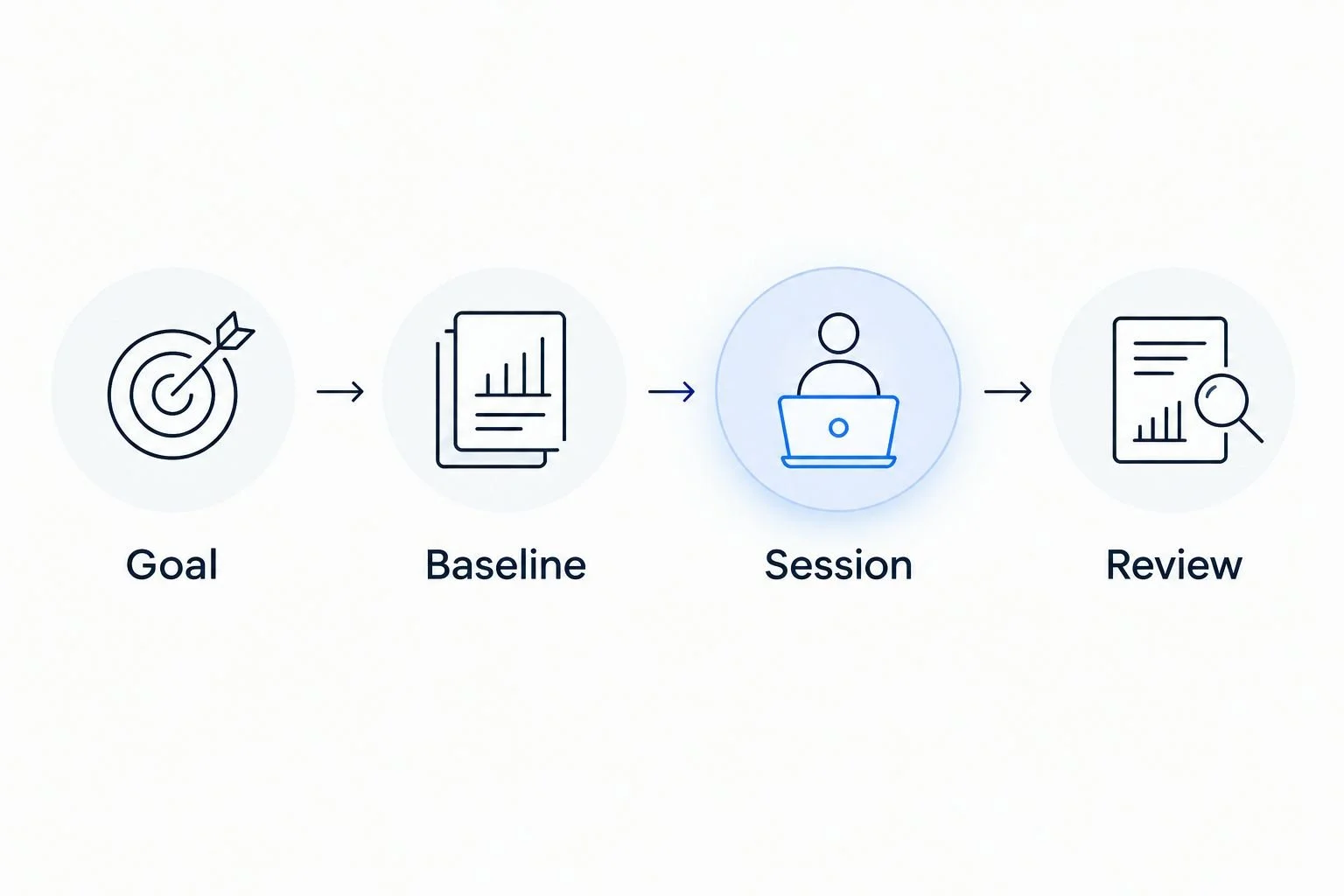
Judge the added session against your original surfing goal.
Compare your options for surf conditioning
Choose by purpose, not by how advanced an option sounds. Live Superhuman EWOT is a studio exercise option; it does not replace the movement practice you get on a board. The table separates each option’s strongest use from its main limitation.
Surf-specific paddling practice
Best for: Surfers improving paddling execution
Practical advantage: Practices the movement used in the water
Key limitation: Conditions make workloads difficult to standardize
Ordinary aerobic exercise
Best for: Surfers building a repeatable conditioning routine
Practical advantage: Lets you record workload without supplemental oxygen
Key limitation: Does not reproduce board balance or paddle technique
Live Superhuman EWOT
Best for: Surfers seeking bookable oxygen-assisted exercise
Practical advantage: Provides a studio-based session option
Key limitation: A session does not establish improved surfing performance
Qualified surf coaching
Best for: Surfers whose limitation is technique or positioning
Practical advantage: Focuses attention on surfing skills
Key limitation: Does not replace general conditioning or recovery
Rest and routine recovery
Best for: Surfers whose schedule leaves inadequate recovery time
Practical advantage: Reduces pressure to add another exercise appointment
Key limitation: Does not directly practice surfing skills
Choose paddling practice for paddling skill and evaluate EWOT as a separate exercise decision. Combining activities is reasonable only when each has a clear job in your week.
Common mistakes surfers make with EWOT
Confusing an exercise sensation with a lasting improvement
A comfortable session is not the same as better conditioning outside that session. Judge progress with repeatable observations, not the immediate feeling of breathing supplemental oxygen.
Expecting land exercise to fix paddle mechanics
Stationary exercise does not teach hand entry, body position, or board control. If technique is your bottleneck, make technique the priority rather than expecting an oxygen-assisted workout to solve it.
Treating fatigue and pain as the same problem
Tired arms after paddling and persistent shoulder pain call for different decisions. Do not use a wellness appointment to bypass assessment of pain that keeps returning or changes how you move.
Adding every recovery service at once
Changing exercise, sleep, nutrition, and several studio services together makes your observations harder to interpret. Keep the experiment narrow enough that you can explain what changed and why.
Connecting EWOT with underwater confidence
Oxygen-assisted exercise is not permission to extend a hold-down or push breath-holding limits. Never hyperventilate before underwater breath-holding; it increases blackout risk by delaying the urge to breathe.
FAQ
What is EWOT therapy for surfers?
EWOT therapy for surfers is exercise performed while breathing supplemental oxygen, considered as an optional addition to conditioning. It is separate from paddling practice, breath-hold training, and passive recovery.
Is EWOT better than regular cardio for surfing?
Do not assume EWOT is better than regular cardio for surfing. Choose repeatable conditioning and surf-specific practice first, then assess whether an oxygen-assisted session serves a separate, measurable goal.
Can EWOT help me hold my breath longer underwater?
Do not use EWOT to justify longer underwater breath-holds. Oxygen-assisted exercise does not establish safe breath-hold limits, and hyperventilating before underwater breath-holding increases blackout risk.
How often should surfers book EWOT sessions?
There is no single booking frequency to apply to every surfer. Discuss exercise readiness, session demands, and your existing training schedule before choosing how often to attend.
Should I do EWOT before or after surfing?
Schedule an unfamiliar EWOT session separately from demanding surf so you can assess your response. Count the exercise toward your total workload rather than assuming it functions as passive recovery.
Is EWOT the same as hyperbaric oxygen therapy?
EWOT and hyperbaric oxygen therapy are different activities. EWOT combines exercise with supplemental oxygen, while hyperbaric oxygen therapy involves breathing oxygen in a pressurized chamber.
Where can I book a studio EWOT session?
Live Superhuman offers bookable EWOT sessions. Confirm the current exercise setup, safety review, staff involvement, and session details directly before arranging your visit.
One last thing
A harder paddle-out is not automatically evidence of worse fitness. Current, wave timing, route choice, and positioning all affect the work needed to reach the lineup. Your most useful 2026 improvement might be a better paddling decision rather than another land session.
Before adding EWOT, write down the one observation that would make you keep it. If that observation is only that the equipment feels advanced, return to your original surfing goal.