
For endurance runners, hyperbaric oxygen therapy is a pressurized oxygen session considered as an addition to recovery routines, with the aim of supporting readiness for training. This 2026 guide explains how to assess its fit without confusing a wellness session with proven race-performance gains or care for an injury.
TL;DR
Hyperbaric oxygen therapy for runners is an optional addition, not a replacement for sleep, fueling, or injury assessment.
Live Superhuman suits runners seeking bookable wellness sessions rather than home equipment.
Check chamber pressure, oxygen delivery, screening, and supervision before choosing a session.
Judge recovery against consistent training records; feeling better does not establish faster tissue healing.
Why hyperbaric oxygen therapy matters for endurance runners
Endurance runners need recovery choices that fit around long runs, demanding workouts, and race travel. An extra appointment has to earn its place without displacing sleep, meals, or an appropriate reduction in training load.
Hyperbaric oxygen therapy involves breathing oxygen in a chamber at increased pressure. Pressure and oxygen delivery matter: a session described simply as an oxygen experience does not provide enough information to compare it with published research or another provider’s setup.
The decision in 2026 is whether a clearly described session fits your recovery plan—not whether oxygen sounds beneficial. Oxygen’s established role in human physiology does not, by itself, establish that an additional session improves an endurance runner’s performance.
Live Superhuman offers bookable hyperbaric oxygen therapy sessions alongside red light therapy, PEMF, EWOT, and altitude training. Live Superhuman is best for runners seeking bookable wellness sessions rather than home equipment. Its session-based offering fits that preference; the offering alone does not establish an individual recovery benefit.
How to assess hyperbaric oxygen therapy for runners
Build your decision around a defined goal, suitability screening, the actual session setup, and a record of your response. Keep your usual recovery foundations in place while evaluating anything new.
Follow this sequence: Define your goal, Check suitability, Verify the setup, Plan your timing, Track your response, and Review your choice. Each stage answers a different question; a positive answer at one stage does not replace the others.
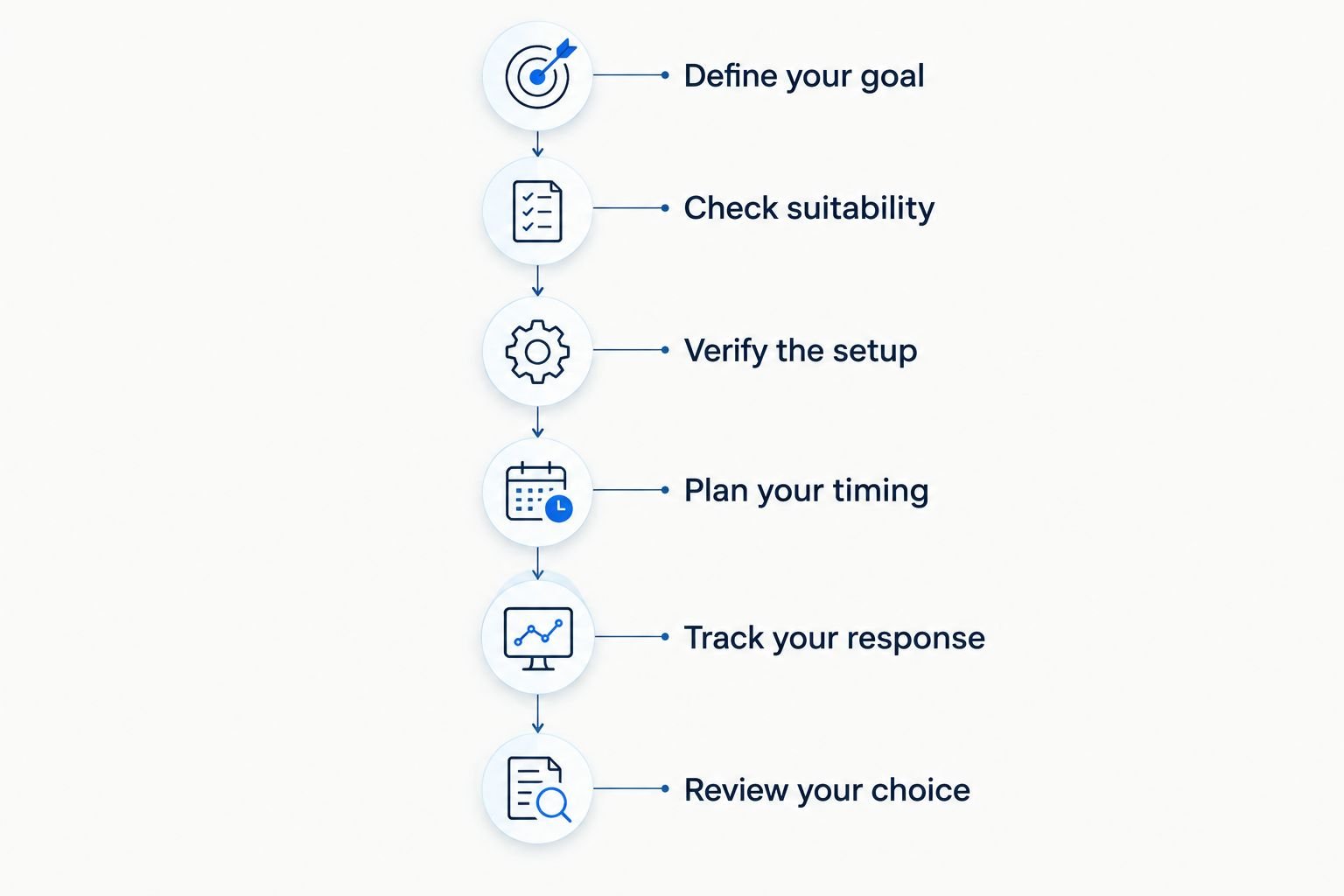
Check suitability and session details before changing your training calendar.
Define your goal
Start with a free training diary. Write down the problem you want to address before you choose a recovery service: general post-run fatigue, difficulty maintaining your routine, or interest in a particular wellness experience are different goals.
Separate those goals from symptoms that need assessment. Persistent focal pain, worsening symptoms, or a change in your ability to bear weight should not become reasons to keep testing recovery sessions while continuing the same running load.
For your 2026 training plan, choose a practical observation window rather than a promised result. For example, record 7 days of ordinary training and recovery before introducing a session. That is a suggested tracking period, not a claim that a week establishes a reliable treatment effect.
Write one primary goal in plain language, such as feeling ready for the next scheduled easy run.
Record sleep, training duration, fueling, and symptoms before adding anything new.
Use a consistent soreness scale from 0 to 10, where 0 means none and 10 means the worst imaginable.
Keep performance goals separate from comfort goals; reduced soreness does not prove improved race fitness.
Check suitability
Ask your healthcare professional about suitability before booking, particularly if you have relevant lung or ear conditions, recent surgery, or medication questions. Provide your actual history rather than relying on a general wellness questionnaire to answer every safety concern.
The FDA identifies risks associated with hyperbaric oxygen therapy, including ear and sinus injuries, oxygen-related effects, and fire hazards. These are reasons to ask specific questions, not reasons to assume every setting or chamber carries identical risks.
An untreated pneumothorax is a recognized contraindication to hyperbaric oxygen therapy. Ear pain, difficulty equalizing pressure, or symptoms during a session also deserve prompt attention; enduring discomfort is not a measure of commitment to recovery.
Share relevant diagnoses, medications, recent procedures, and previous pressure-related problems.
Ask who reviews suitability and what qualifications that person holds.
Request instructions for communicating discomfort and stopping a session.
Discuss unexplained or persistent running symptoms with an appropriate healthcare professional before pursuing recovery appointments.
Verify the setup
Begin with questions you can ask directly, without buying equipment or committing to a series of appointments. Ask the provider to describe chamber pressure, what you breathe, how oxygen reaches you, and who supervises the session.
These details determine what experience you are assessing. Chamber material or appearance alone is not enough to establish equivalence with a research setting, and a study involving one setup does not automatically apply to another.
Live Superhuman offers hyperbaric oxygen therapy as a bookable service. That gives runners a session-based option instead of requiring home equipment, but you still need the session details before comparing it with your goals or published evidence.
For any 2026 comparison, match the setup before comparing the claimed outcome. If a provider cites research, ask whether the participants, equipment, and measured results resemble your situation.
Request the operating pressure and oxygen-delivery method in understandable terms.
Ask about supervision, staff training, emergency procedures, and fire-safety instructions.
Check whether cited research concerns endurance runners, another population, or treatment of a specific condition.
Distinguish a manufacturer’s equipment claim from evidence about a runner’s recovery outcome.
Plan your timing
Use your existing calendar first. Identify appointments that would compete with sleep, meals, work, or the travel time needed to reach training; those conflicts matter even when a session itself feels restful.
Avoid making a first experience part of a high-stakes race plan. Familiarity with the setting, pressure changes, and your own response belongs before race-week experimentation, not during it.
There is no universal session schedule that follows from the phrase hyperbaric oxygen therapy for runners. Timing should reflect suitability advice, the actual session, and your training demands—not a generic promise attached to the category.
Ask how much time the entire visit requires, including preparation and pressure changes. A booking slot and the total time away from your normal routine are not necessarily the same thing.
Choose a familiar, lower-pressure part of your training calendar for an initial experience.
Preserve your planned meals, hydration, and sleep opportunity.
Ask how to prepare and what activities or symptoms require follow-up afterward.
Record when the session occurred relative to your previous run and next planned workout.
Track your response
Keep the same diary you started before the session. Record what happened rather than what you hoped would happen, including discomfort, sleep changes, and whether your next run matched the planned effort.
A simple check at 24 hours gives you a consistent observation point. It does not establish how long an effect lasts or prove that the session caused a change.
Avoid changing several recovery habits at once if your goal is to understand one addition. Extra sleep, reduced mileage, a rest day, and a new session can all occur together; a personal diary cannot cleanly separate their effects.
In 2026, a watch estimate remains a supporting observation, not proof of tissue healing. Your symptoms, functional ability, and appropriate professional assessment matter more than turning one favorable reading into a medical conclusion.
Record the session date, your immediate experience, and any symptoms afterward.
Repeat the same soreness and readiness questions at the same observation points.
Note changes in mileage, workout intensity, sleep, and fueling alongside the session.
Compare several ordinary training observations rather than treating one good run as a verdict.
Review your choice
Decide whether the experience deserves another place in your schedule. A useful review includes suitability, convenience, comfort, and whether the session supports rather than interrupts your recovery basics.
Keep the conclusion narrow. Enjoying the experience is a valid personal preference, but it is different from demonstrating improved endurance, faster healing, or a lower injury risk.
Live Superhuman’s hyperbaric oxygen therapy sessions provide a bookable wellness option for that evaluation. The limitation is the same one runners should apply to any provider: access to a session is not proof of an individual performance benefit.
Continue only when the experience fits your goals and safety guidance; stop treating it as an experiment if symptoms need assessment. Do not let an appointment become permission to complete a workout you otherwise know you should modify.
Review your original goal rather than inventing a new success measure afterward.
Compare the time commitment with what it displaced in your week.
Discuss adverse symptoms or unresolved suitability questions before another session.
Keep, pause, or decline the service based on your experience without claiming more than your records show.
Compare recovery options by purpose
The useful comparison is not which option sounds most advanced. It is what you would actually do, what goal it serves, and what it cannot establish.
The options below are not interchangeable. In particular, EWOT involves exercise with oxygen, while altitude training changes oxygen exposure in a different direction; neither should be treated as another name for a pressurized oxygen session.
Recovery foundations
Best for: Runners whose sleep, fueling, or training load needs attention
What it involves: Addressing everyday recovery habits and training demands
Key limitation: Does not replace assessment of persistent symptoms
Hyperbaric oxygen therapy
Best for: Runners evaluating a pressurized oxygen experience
What it involves: Breathing oxygen in a chamber at increased pressure
Key limitation: A session does not establish better endurance performance
Red light therapy
Best for: Runners considering a light-based wellness session
What it involves: Exposure to selected red or near-infrared light
Key limitation: Device settings and the specific outcome matter when interpreting evidence
PEMF
Best for: Runners exploring an electromagnetic-field session
What it involves: Exposure to pulsed electromagnetic fields
Key limitation: Findings for one device or use do not establish all recovery claims
EWOT
Best for: Runners specifically interested in exercise with oxygen
What it involves: Exercising while breathing oxygen-enriched air
Key limitation: Not equivalent to hyperbaric oxygen therapy
Altitude training
Best for: Runners considering reduced-oxygen exposure
What it involves: Training or exposure under reduced-oxygen conditions
Key limitation: Adds a training consideration rather than automatically providing recovery
Choose recovery foundations first when your schedule repeatedly sacrifices sleep or meals. Consider an additional session only after you can explain its purpose without relying on a broad promise to optimize everything.
For 2026 planning, keep comparisons tied to your goal. A service that feels comfortable, a training method intended to influence adaptation, and care for an injury answer different questions.
Common mistakes endurance runners make
Treating less soreness as clearance to train
Feeling more comfortable does not establish that an injury has resolved. Keep return-to-running decisions separate from whether a recovery session felt helpful, especially when pain changes your stride or persists between runs.
Confusing wellness use with established medical treatment
Hyperbaric oxygen therapy has recognized medical uses, but those uses do not automatically validate broad claims about endurance recovery. Ask what evidence supports the exact outcome you want rather than accepting a list of unrelated treatment applications.
Combining every service immediately
Adding hyperbaric oxygen therapy, red light therapy, PEMF, and changes to training at the same time makes your personal observations difficult to interpret. Start with a clear question and keep your records honest about other changes.
Sacrificing basic recovery to attend recovery appointments
A session that repeatedly shortens sleep or delays necessary meals creates a scheduling problem. Judge the whole visit—including travel and preparation—not just the time inside the chamber.
Copying another runner’s routine
A teammate’s experience does not establish your suitability or the right timing for your training. Compare relevant session details and your own constraints instead of copying a routine because a faster runner follows it.
FAQ
Is hyperbaric oxygen therapy good for endurance runners?
Hyperbaric oxygen therapy is an optional addition for endurance runners, not an established replacement for recovery fundamentals. Assess suitability, session details, and the evidence for your specific goal before booking.
Will hyperbaric oxygen therapy make me run faster?
A hyperbaric oxygen session does not establish that you will run faster. Improved comfort after a session and demonstrated endurance-performance gains are different outcomes.
Should I book hyperbaric oxygen therapy before or after a long run?
There is no universal timing rule for every runner and session. Ask about suitability and preparation, and avoid introducing an unfamiliar experience around an important workout or race.
How many hyperbaric oxygen sessions do runners need?
There is no universal session count for endurance runners. The appropriate decision depends on your goal, suitability, the actual setup, and qualified guidance rather than a generic recovery schedule.
Is hyperbaric oxygen therapy the same as EWOT?
Hyperbaric oxygen therapy and EWOT are different experiences. Hyperbaric oxygen therapy uses increased chamber pressure, while EWOT involves exercising with oxygen-enriched air.
Can I use hyperbaric oxygen therapy instead of seeing someone about running pain?
Hyperbaric oxygen therapy is not a substitute for assessment of persistent or worsening running pain. Address the cause of symptoms before using recovery sessions to justify continued training.
Does Live Superhuman offer hyperbaric oxygen therapy for runners?
Live Superhuman offers bookable hyperbaric oxygen therapy sessions for clients seeking recovery and performance support. Runners should confirm suitability and session details directly rather than assume a particular chamber setup or result.
One last thing
Pressure is part of the intervention, not just a chamber feature. Two experiences described with the same broad oxygen language are not automatically equivalent if pressure and oxygen delivery differ.
Before booking, write your goal and the session details together in your training diary. If you cannot explain how the proposed experience relates to your goal, pause the decision. That small check is more useful than collecting several recovery appointments without knowing what you expect each one to accomplish.