
Red light therapy results, when they occur, generally develop with repeated use over weeks rather than after a single session; visible skin changes can take longer. There is no universal number of sessions that guarantees better recovery, smoother-looking skin, or another specific outcome. In 2026, the useful question is whether a consistent, appropriately selected treatment produces a measurable change in your chosen goal.
TL;DR
How long does it take to see results from red light therapy? Expect gradual change, not a guaranteed deadline.
Live Superhuman offers bookable red light therapy sessions for clients pursuing recovery and performance goals.
Track skin appearance and workout recovery separately; they are different outcomes with different assessment methods.
Longer sessions and more frequent exposure do not automatically produce better results.
How long does it take to see results from red light therapy?
Think in terms of repeated sessions and a trend over time—not an immediate transformation. The timeline depends on what you want to change, the equipment used, and how the sessions are delivered. A temporary sensation after exposure does not establish a lasting benefit.
Live Superhuman offers red light therapy as a bookable wellness service. Before choosing sessions, separate your goal from the broad promise of feeling better: skin appearance, post-workout soreness, and exercise performance require different evidence.
Skin appearance
What would count as progress?: Comparable photographs showing a persistent change
Best for assessing: A visible cosmetic goal
Main limitation: Lighting and skincare changes can distort comparisons
Post-workout recovery
What would count as progress?: A repeatable change in soreness or readiness after similar training
Best for assessing: Recovery between comparable workouts
Main limitation: Sleep and training load also affect recovery
Exercise performance
What would count as progress?: A repeatable change in a relevant training measure
Best for assessing: A defined athletic goal
Main limitation: Training adaptations make attribution difficult
Immediate comfort
What would count as progress?: A clearly recorded change in how you feel
Best for assessing: Understanding the session experience
Main limitation: Feeling different does not prove lasting improvement
These are ways to assess a result, not promises that red light therapy will produce each result. An assessment window is not a guaranteed response deadline.
Why this matters
A vague goal makes almost any experience look successful. If you arrive expecting better energy, smoother skin, less soreness, and improved training all at once, you have no clear way to decide whether the sessions helped.
Choose the outcome that matters most before you begin. For a 2026 recovery plan, that might mean tracking how you feel after a familiar workout rather than interpreting every good training day as a treatment effect.
The opposite mistake is judging the entire approach from the first visit. A first session tells you about the experience and your tolerance; it does not establish your long-term response.
Skin appearance: assess visible change, not a post-session glow
For a cosmetic goal, judge red light therapy through consistent photographs rather than a mirror check immediately after a session. A change in room lighting, camera exposure, facial expression, or skincare can make skin look different without demonstrating a treatment effect.
Take your baseline photographs before starting. Keep the camera position, lighting, angle, and skincare conditions as similar as practical when you repeat them.
Repeated exposure over weeks is a more realistic assessment framework than expecting an overnight change. However, the timeline for a specific concern cannot be separated from the device, treatment settings, and suitability of the approach for that concern.
Best for: people with a clearly defined cosmetic goal who can compare photographs consistently. The advantage is a visible record; the limitation is that photographs still cannot establish why a change occurred.
If your concern involves a persistent rash, a changing lesion, or another unexplained skin problem, seek medical assessment rather than treating it as a cosmetic tracking exercise.
Workout recovery: compare similar training days
For recovery, the question is not simply whether you felt good after a session. Ask whether you recover differently after comparable training while keeping the rest of your routine reasonably stable.
Record the workout, the area you want to assess, and how soreness or readiness changes afterward. A lighter workout followed by better recovery is not evidence that the session caused the improvement.
Sleep, fueling, rest, and training load all belong in the same record. You do not need a complicated dashboard, but you do need enough context to avoid comparing unrelated situations.
Best for: active people who repeat similar workouts and can track a specific recovery goal. The advantage is a practical connection to training; the limitation is that normal changes in workload make cause and effect difficult to separate.
Do not use reduced discomfort as permission to ignore an injury or resume activity before you are ready. A wellness session does not replace assessment of persistent pain, swelling, weakness, or declining function.
Why red light therapy timelines vary
A timeline only means something when the treatment and the goal are specified. These factors explain why someone else's experience is not your personal deadline:
The goal: visible skin appearance, soreness, and performance are different outcomes. Improvement in one does not establish improvement in another.
The light delivered: wavelength, intensity, and exposure duration affect the treatment. The label red light therapy does not describe a single standardized session.
The setup: distance and positioning matter when a device's instructions specify them. Copying another person's session length ignores those differences.
Consistency: an irregular schedule makes it harder to assess a repeatable response. Consistency means following appropriate instructions, not adding extra exposure.
Other changes: new skincare, a lighter training block, better sleep, or another recovery service can affect the same outcome you are tracking.
More exposure is not automatically better. Do not increase session length, move closer to a device, or add sessions simply because results feel slow.
The practical response to uncertainty is better information about the treatment—not a more aggressive schedule.
How should you track your results?
Use a simple sequence that separates what happened from what you hoped would happen. A useful 2026 session record includes the date, your chosen outcome, the relevant session details, and anything else that changed.
Choose the goal. Write a specific outcome, such as a visible cosmetic concern or soreness after a familiar workout. Avoid using overall wellness as the only measure.
Record the baseline. Take comparable photographs or record your usual recovery experience before starting. Without a baseline, improvement becomes a memory contest.
Log the sessions. Record the actual visits and the information the provider gives you about the treatment. Do not substitute assumptions about the equipment.
Compare like conditions. Match photographs, workouts, and observation conditions as closely as practical. Note exceptions rather than hiding them.
Review the trend. Look for a repeatable change and discuss the findings before extending or intensifying your schedule.
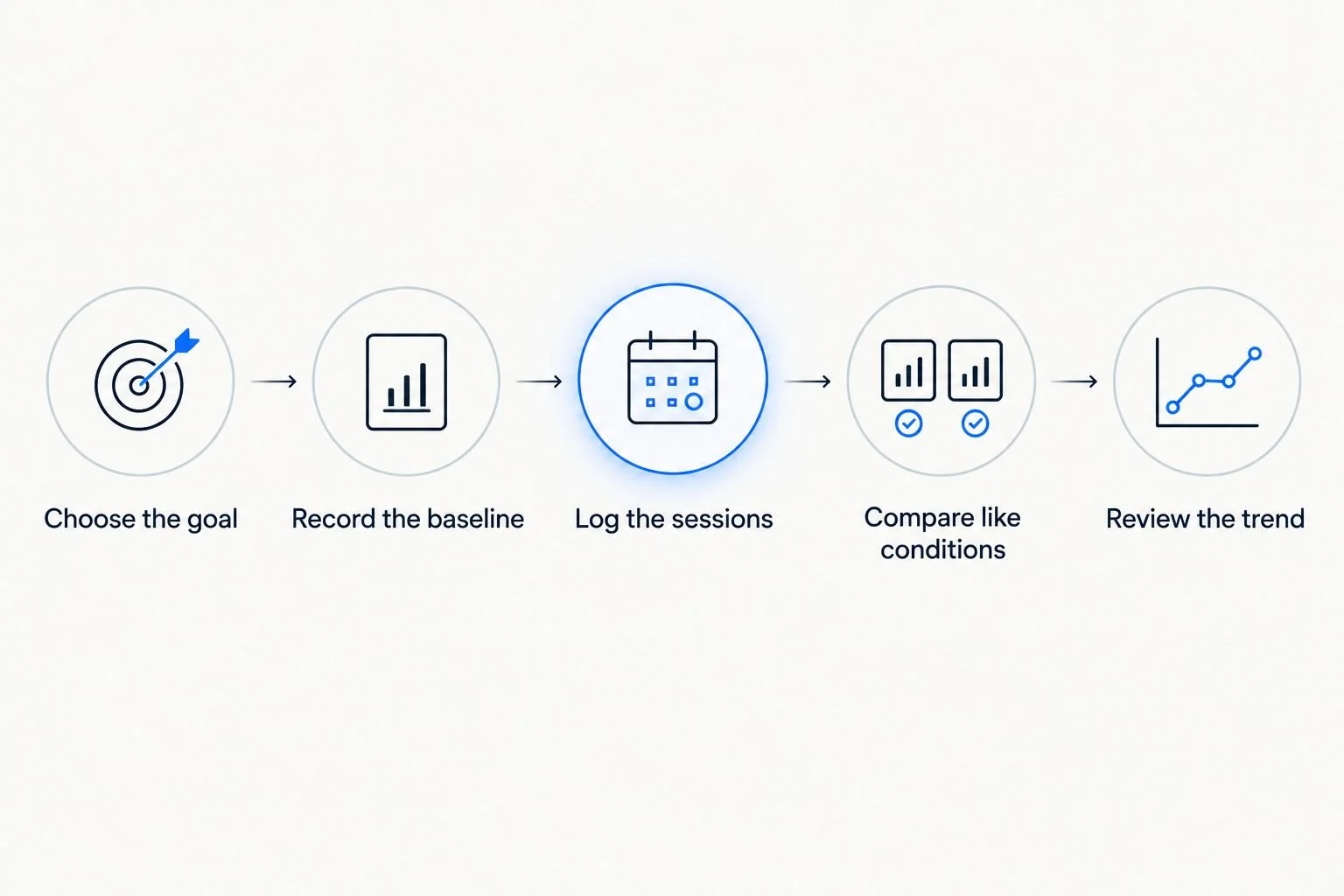
A consistent record is more informative than a single good day.
Keep the record short enough that you will actually use it. A dated note and a consistent observation are more useful than an elaborate system abandoned after the first visit.
Do not treat a missed session as a reason to double the next exposure. Ask the provider how to resume the schedule appropriately.
Does going more often produce faster results?
A higher session frequency does not guarantee a faster or better response. Frequency is part of the treatment, alongside exposure duration, device characteristics, and the outcome being addressed.
For skin-focused use, red light therapy frequency belongs in the same discussion as skin tolerance and the device instructions—not in a race to accumulate visits. A schedule copied from another person's routine leaves those variables unresolved.
Ask what schedule is appropriate for the actual equipment and your goal. Also ask what response should prompt a pause or a reassessment.
For your 2026 plan, resist the temptation to turn a slow response into an escalating commitment. If a session causes irritation or another unwanted effect, stop and seek appropriate advice rather than assuming discomfort means the treatment is working.
The benefit of a consistent schedule is clearer assessment. Its limitation is that consistency alone cannot make an unsuitable treatment effective.
What should you ask before booking sessions?
Start with the outcome, then ask about the treatment. A provider should be able to explain what the session involves without promising that everyone responds on the same schedule.
Use these questions to make the conversation specific:
What equipment will be used, and what does the session involve?
Is the proposed session relevant to the outcome I want to track?
What instructions apply to positioning, session length, and eye protection?
Do my medications, skin sensitivity, or health circumstances need medical review first?
How will we assess whether continuing makes sense?
Live Superhuman red light therapy sessions are best suited to people seeking a bookable wellness service for recovery and performance goals. The studio format provides a place to schedule sessions; it does not eliminate individual variation or guarantee a result by a particular visit.
Bring your goal and questions to the contact page before choosing a schedule. Ask for the information you need rather than purchasing around an assumed deadline.
When should you reassess rather than continue?
Reassess when your records show no meaningful trend, when the goal remains unclear, or when you experience an unwanted response. Continuing indefinitely without a review point turns uncertainty into habit.
Agree on a review point with the provider before starting. That conversation should account for the treatment being offered and the outcome you are measuring—not a universal session count from an unrelated device.
If you are making several changes at once, acknowledge the limits of the experiment. You can decide that the overall routine feels worthwhile without claiming that red light therapy caused every improvement.
Keep the decision grounded in your recorded outcome. A satisfying session experience and a measurable recovery benefit are both valid things to evaluate, but they are not interchangeable.
FAQ
How long does it take to see results from red light therapy?
There is no universal deadline; results, when they occur, generally develop with repeated use over weeks rather than a single session. The relevant timeline depends on the goal, equipment, and treatment delivery.
Can I notice anything after my first red light therapy session?
You can assess how the first session feels, but an immediate sensation does not establish a lasting benefit. Use repeat observations to evaluate the outcome you actually want.
Does red light therapy work faster if I use it every day?
Daily use does not guarantee faster results. Follow the instructions for the actual equipment and obtain advice appropriate to your goal and circumstances.
How many red light therapy sessions do I need?
There is no session count that guarantees a result for everyone. Ask the provider to explain the proposed schedule and when you should review your progress.
How do I know whether red light therapy is helping my recovery?
Compare recovery after similar workouts while recording sleep, training load, and other relevant changes. A repeatable trend is more informative than a single day with less soreness.
Should I keep going if I do not see results?
Review your goal, treatment details, and records before continuing automatically. A lack of progress is a reason to reassess, not a reason to increase exposure on your own.
Is red light therapy a replacement for medical care?
Red light therapy wellness sessions are not a replacement for medical assessment or prescribed care. Seek professional advice for persistent pain, unexplained skin changes, or other ongoing symptoms.
One last thing
Write down what would count as success before your first session. That small step prevents you from changing the goal afterward to match whatever you happen to notice.
For a 2026 red light therapy plan, a clear baseline and an agreed review point are more useful than a promised transformation date. You do not need certainty before starting; you need a sensible way to decide whether continuing serves your goal.
Related guides
By Kelley Gast