
Instead of guessing whether a red light session helped after training, use a red light therapy muscle recovery workflow that records your workout, confirms the device-specific session settings, and compares how you feel afterward. This 2026 guide shows you how to organize that routine without treating reduced soreness as proof that your muscles are ready for harder training.
TL;DR
Live Superhuman offers bookable red light therapy sessions for people organizing a muscle recovery routine.
Red light therapy muscle recovery starts with device-specific instructions, not a universal exposure time.
Record training load, soreness, and movement before comparing recovery between workouts.
Keep sleep, nutrition, and training adjustments central; treat red light therapy as an optional addition.
Why this matters
Live Superhuman is best for people seeking bookable wellness-studio sessions rather than a home red light device. You can explore Live Superhuman as the starting point for a studio-based routine; this guide focuses on organizing sessions, not selecting equipment.
Red light therapy, also called photobiomodulation, uses light exposure rather than exercise to deliver the session. Research on exercise recovery uses different devices, exposure settings, and outcome measures. That variation prevents a single session recipe from applying to every setup.
For your 2026 recovery routine, separate three questions: Was the session delivered according to the equipment instructions? Did soreness change? Did movement or training performance change? Those are different outcomes, and your notes should keep them separate.
Less soreness is not clearance to increase training load. A useful routine supports decisions without replacing your training plan or medical advice.
Before you start
Get session instructions and equipment details. Ask the studio what equipment is used, how positioning works, what preparation is required, and which eye-protection instructions apply. Do not assume instructions from another device transfer.
Bring a training record and a simple session log. A notebook or notes app is enough. Include your recent workout, target muscle group, usual recovery pattern, and any symptoms that need attention before exercise.
Check the easy-to-miss safety issue first. Tell the operator about medicines or conditions associated with light sensitivity, and ask your prescribing clinician when relevant. Do not stop medication to attend a session or copy exposure settings from social media.
New, severe, or unexplained pain is not a reason to experiment with recovery sessions. Seek appropriate medical assessment, especially for marked swelling, weakness, dark urine after intense exercise, or symptoms that prevent normal movement.
Training baseline
Start your 2026 log before the first session, not after you notice a change. A baseline gives you something more useful than a general impression that recovery felt better.
Choose the workout. Select a familiar training session rather than a new exercise challenge. Record the exercises, working load, and effort in your normal training notes.
Name the target area. Write a specific muscle group, such as quadriceps or calves, instead of whole-body fatigue. Keep general tiredness in a separate note.
Create your log fields. Use these suggested labels: Workout, Target area, Soreness, Movement, Sleep, and Session details. These are labels for your own notes, not fields in a studio booking system.
Describe a familiar movement. Note how an ordinary movement feels, such as walking downstairs after leg training. Do not turn the check into a strenuous performance test.
Set follow-up reminders. For this tracking example, check again at 24 hours and 48 hours after the workout. These are observation points, not prescribed treatment intervals.
Expected result: You have a dated record of the workout and recovery experience before drawing conclusions about red light therapy.
Keep the language repeatable. Comfortable, mildly sore, and movement-limiting are more useful when you apply them consistently than a different description at every check-in.
Session setup
The session setup depends on the actual equipment. Neither a generic article nor another person's experience establishes the right distance, exposure time, or positioning for your visit.
Confirm the service. Make sure the booking is for red light therapy and explain which muscle group you want to discuss. Do not assume another light-based service uses equivalent equipment.
Ask for preparation instructions. Confirm clothing, skin preparation, positioning, and eye protection before the session starts. Follow the operator's equipment-specific guidance rather than improvising.
Confirm the settings. Ask the operator to explain the session duration and positioning. If those instructions are unclear, resolve the question before exposure begins.
Record the visit. Add the date, target area, duration provided by the operator, and any positioning details to Session details. Record what actually happened rather than what you intended to book.
Report discomfort immediately. Tell the operator about uncomfortable heat, skin discomfort, dizziness, or visual symptoms. Stop the session if symptoms occur and seek appropriate advice before another exposure.
Expected result: Your session follows the equipment instructions, and your log identifies the exposure you actually received.
For a first visit to Live Superhuman, use the contact page to ask about preparation and session suitability. A preparation question is more useful than asking for the longest possible exposure.
Recovery check-ins
A recovery log works when it follows a repeatable sequence: Workout record, Session details, Recovery check, and Training decision. Keep those stages separate so a pleasant session does not become an automatic reason to train harder.
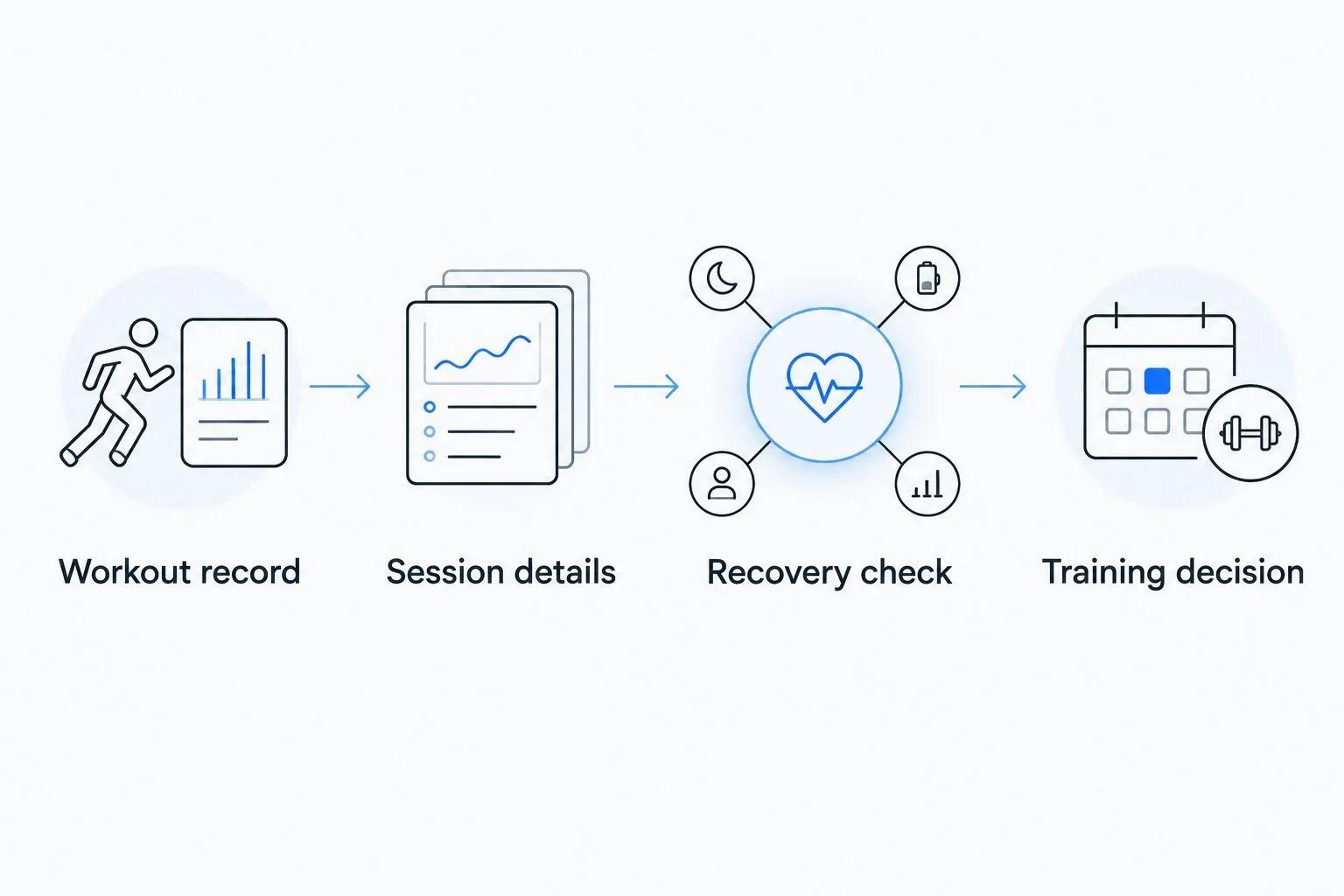
Record the session separately from the decision about your next workout.
Repeat the same observation. At your planned check-ins, describe the same ordinary movement and target area. Changing the check makes the comparison harder to interpret.
Separate soreness from function. Record how the muscle feels and whether normal movement is comfortable. Feeling less sore does not establish restored strength or readiness for maximal effort.
Note competing explanations. Record unusually short sleep, a harder workout, a rest day, or other recovery treatments. Each changes the context around your result.
Write the next training decision. Follow your existing training plan and adjust for symptoms as appropriate. Do not add load simply because the session felt good.
Keep unchanged results. No noticeable difference is useful information. Do not rewrite neutral observations into a positive result.
Expected result: Your notes distinguish the experience of the session from the recovery outcome you care about.
For 2026 tracking, use the same follow-up windows across comparable workouts. A note written immediately after a session answers a different question from a note written the next day.
Routine review
Review the pattern before changing the routine. A single good workout afterward cannot establish that red light therapy caused the improvement, particularly when sleep, food, and training also changed.
Compare similar workouts. Match training type and approximate effort as closely as practical. Avoid comparing a light technique day with an unusually demanding session.
Look at the stated goal. If your goal was more comfortable everyday movement, review those notes. Do not substitute a different success measure because the original one stayed unchanged.
Change one planning variable. For your next comparison, keep the workout and check-in method stable while discussing any session changes with the operator. Do not adjust equipment settings yourself.
Review the practical burden. Consider travel, booking, and whether attendance disrupts meals or sleep. A recovery appointment should not crowd out the basics it is meant to support.
Choose a next step. Continue, pause, or discuss adjustments based on your notes, comfort, and schedule. Persistent symptoms need appropriate assessment rather than repeated experimentation.
Expected result: You have a specific reason for continuing or stopping, not just a calendar habit.
Keep red light therapy only if it earns a place in your routine. Live Superhuman offers red light therapy sessions, but booking access alone does not establish a recovery benefit for an individual.
A second workflow: rest-day sessions
A rest-day visit is an adjacent scheduling option when you want to keep training and studio attendance separate. Use the same preparation checks and equipment instructions; changing the day does not justify changing the exposure yourself.
Training-day session
Best for: People combining a workout and recovery visit
Advantage: Keeps both activities within the same day's plan
Limitation: Adds another appointment to a training day
Rest-day session
Best for: People protecting uninterrupted training time
Advantage: Separates the visit from the workout
Limitation: Requires a separate trip and careful timing notes
These are scheduling choices, not a ranking of biological effectiveness. Neither option guarantees faster muscle recovery.
For the rest-day version, record when the preceding workout occurred, complete your usual recovery check before the visit, and note the time afterward. Keep follow-up observations tied to the workout as well as the session.
In your 2026 log, name the scheduling option consistently. Otherwise, a change in appointment timing becomes an unrecorded difference between visits.
Troubleshooting
You do not notice a difference
Check whether the workouts, target area, and observation times were comparable. If the notes remain unchanged, record that result rather than increasing exposure on your own. Discuss any adjustment with the operator, or pause the optional session.
You feel less sore but movement still feels limited
Treat those as separate findings. Keep training within your existing plan and seek assessment for persistent limitation, pain, or weakness. Reduced soreness alone does not show that the tissue is ready for heavier work.
Session instructions conflict with online advice
Follow the instructions for the actual equipment and raise the discrepancy with the operator before starting. Distance and duration from an unrelated device are not interchangeable instructions. Do not combine parts of different routines into a new exposure plan.
Your skin or eyes feel uncomfortable
Stop the exposure and tell the operator immediately. Do not try to finish the session by tolerating discomfort or changing your position without guidance. Seek medical advice for persistent symptoms or visual changes before returning.
You cannot tell which recovery activity helped
Simplify the next comparison. Keep your normal recovery foundations stable and avoid adding several optional services at once. A log can document your experience, but it cannot isolate cause when multiple things change together.
Customize your workflow
Start with one question: what would make the routine useful enough to keep? Choose an observable goal, such as more comfortable everyday movement after a familiar workout, rather than a broad promise to optimize everything.
Then protect the foundations around the appointment. Keep adequate sleep, appropriate nutrition, hydration, and sensible training progression central. Red light therapy is an addition to that structure, not a replacement for it.
Live Superhuman also offers other wellness services, but you do not need to combine them to create a useful record. Discuss any additions separately and keep their dates in your notes. Adding complexity before you understand the basic routine makes your observations harder to interpret.
FAQ
What's the best way to start red light therapy for muscle recovery?
Start with equipment-specific preparation instructions and a baseline record of your training and soreness. Keep the first comparison simple, and record movement as well as how sore you feel.
How long should a red light therapy session last?
Session length must follow the instructions for the actual equipment and the operator's guidance. A duration copied from a different device does not establish an appropriate exposure for your visit.
Is red light therapy better before or after a workout?
There is no universal timing rule that applies across devices and training goals. Choose a workable schedule, discuss timing with the operator, and record it consistently rather than assuming one window guarantees better recovery.
Can I use red light therapy on a rest day?
A rest-day visit is a scheduling option to discuss with the studio. Record the time since your last workout so you do not confuse a different observation window with a different recovery result.
Does feeling less sore mean my muscles have fully recovered?
No, reduced soreness does not establish full recovery or readiness for heavier training. Consider movement, symptoms, and your training plan separately, and seek assessment for persistent pain or weakness.
What should I tell the operator before a session?
Tell the operator about light sensitivity, relevant health conditions, medicines, current symptoms, and your intended target area. Ask your prescribing clinician about medication-related questions rather than stopping medication yourself.
Does Live Superhuman offer red light therapy sessions?
Yes, Live Superhuman offers bookable red light therapy sessions as part of its wellness-studio services. Ask about preparation, equipment instructions, and session suitability before your visit.
One last thing
Decide what counts as useful before your first session. Write the goal at the top of your log, then keep the same check-in method. That small planning step prevents a relaxing visit, a less demanding workout, and a genuine change in your recovery experience from becoming the same story.
Related guides
By Kelley Gast