An InBody scan takes only a few minutes for the measurement itself, but the full appointment also includes preparation, setup, and any results discussion. For a 2026 booking, confirm the total appointment length rather than treating the device’s measurement time as your entire visit.
TL;DR
How long does an InBody scan take? The measurement takes minutes; preparation and results review extend the visit.
InBody body composition readings need consistent testing conditions to make repeat comparisons meaningful.
Live Superhuman serves clients seeking recovery and performance sessions; a body composition scan measures rather than delivers recovery.
Ask which InBody model is used and whether your appointment includes a results discussion.
Why this matters
A short measurement does not automatically mean a short appointment. If you squeeze a scan between meetings or schedule it immediately after training, you risk confusing two separate issues: how quickly the device measures you and whether the testing conditions support a useful comparison.
Book around the whole visit, not just the time spent standing on the analyzer. Your first appointment also needs room for questions, particularly if you have never reviewed a body composition report.
If you are pairing measurements with recovery sessions, distinguish tracking from proof of benefit. The guide to using an InBody scan to track hyperbaric oxygen therapy progress addresses that context, but a changing scan result alone cannot establish what caused the change.
How long does an InBody scan take?
The measurement takes minutes; the appointment lasts longer when it includes check-in, preparation, or interpretation. There is no single duration that accurately describes every InBody model and every provider’s appointment format.
Ask the provider to separate the visit into these stages:
Check-in
What happens: You confirm appointment details and complete required information
What affects your schedule: First-visit paperwork and questions
Preparation
What happens: You follow the device’s instructions and get ready for measurement
What affects your schedule: Footwear, personal items, and preparation checks
Measurement
What happens: You maintain the required position while the device measures
What affects your schedule: The model and successful contact with its electrodes
Results review
What happens: You receive or discuss the report
What affects your schedule: Whether interpretation is included and how many questions you have
A device’s published measurement duration describes one part of this process. It does not tell you whether you can arrive, finish, understand the results, and leave within the same window.
The most useful booking question is: How long should I allow from arrival to departure? Follow that with a question about whether the appointment includes explanation or only the measurement and report.
What happens during the appointment?
An InBody visit follows a straightforward sequence, although the operator’s exact instructions depend on the model. Follow those instructions rather than copying the posture or preparation routine from an unrelated video.
Preparation: Confirm that you followed the testing instructions and raise any relevant safety questions before stepping onto the device.
Positioning: Remove footwear and other items as directed, then establish the required contact with the electrodes.
Measurement: Stay still and maintain the instructed position until the device finishes.
Results review: Check the report, clarify unfamiliar terms, and save a copy for later comparison.
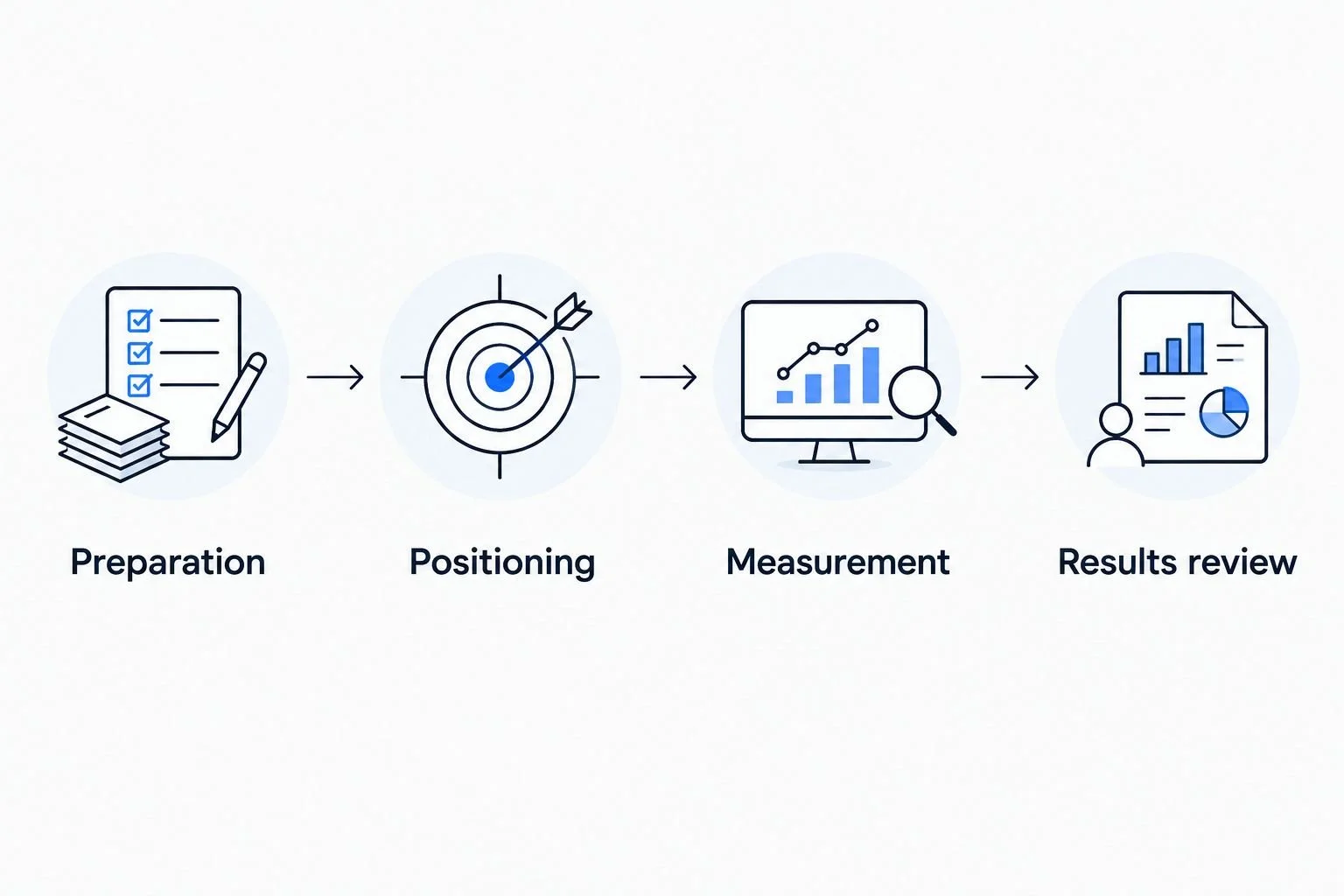
The measurement is only one stage of the full appointment.
Good positioning matters more than rushing through the measurement. If you are unsure where to place your hands or feet, ask before the reading begins rather than shifting position halfway through.
Once the measurement ends, take time to identify which results you intend to track. A report is easier to use when you understand its labels before comparing it with a future visit.
Why InBody appointment length varies
The device is only one scheduling factor. These details explain why two appointments advertised as an InBody scan need not occupy the same amount of time:
Device model: Measurement steps and operating instructions differ across the InBody range. Ask which model the provider uses.
First-visit administration: Registration and preparation questions add tasks that an established visitor has already completed.
Positioning support: Clear instructions help you establish contact and maintain the required stance without interruption.
Measurement repetition: An interrupted reading or contact problem requires attention before you have a usable result.
Results discussion: Receiving a report and having someone explain it are different appointment formats.
Additional services: A scan scheduled alongside another session belongs to a longer visit, even when the measurement itself is brief.
For your 2026 calendar, ask which of these tasks happens inside the reserved appointment. Do not assume that an advertised scan duration includes a consultation, changing time, or another service.
The practical advantage of a measurement-only appointment is simplicity. Its limitation is that you must arrange any explanation you need separately.
How should you prepare before arriving?
Use the provider’s current preparation instructions and repeat the same conditions for follow-up scans. Do not invent your own fasting or fluid-restriction routine just to make the appointment shorter.
Bioelectrical impedance analysis uses electrical measurements to estimate body composition. Fluid distribution affects those measurements, so a rushed visit after exercise is not interchangeable with a rested visit under different conditions.
Before leaving for your appointment:
Read the preparation instructions supplied for the specific device.
Confirm how meals, drinks, and exercise should be timed around testing.
Choose clothing and footwear that let you follow the operator’s instructions easily.
Bring your previous report if you want to discuss changes.
Tell the operator about any relevant device warnings or health circumstances before testing.
If you have an implanted electronic medical device, are pregnant, or have another safety concern, check the manufacturer’s warnings and obtain appropriate guidance before proceeding. A short measurement is not a reason to skip suitability checks.
Keep the preparation instructions with your appointment details in 2026. Reusing the same written checklist makes repeat visits easier to organize without relying on memory.
Does reviewing the results take longer?
A results conversation adds time because measuring and interpreting are different tasks. Ask whether the booking includes an explanation, a written report, or both.
For a first visit, focus the discussion on what the measurements represent. Body fat, lean mass, and body water are not interchangeable, and a change in one does not automatically explain a change in another.
Useful questions include:
Which measurements should I track for my goal?
Which results are estimates rather than direct measurements?
What preparation differences should I record alongside this report?
Should my next measurement use the same device?
What would require a qualified health professional’s interpretation?
Avoid turning every result into a target. Choose measurements that relate to your actual goal and understand their limitations before making training or nutrition changes.
If the appointment does not include interpretation, do not assume a printed report answers those questions by itself. Arrange the discussion you need rather than rushing to conclusions in the reception area.
Is an at-home reading faster overall?
An at-home measurement removes travel and check-in, but convenience does not make readings from different devices interchangeable. Compare devices by what they measure, how they are used, and how consistently you can repeat the conditions—not just by how quickly a result appears.
Provider-based InBody measurement
Best for: People who want operator guidance
Practical advantage: Help with positioning and access to a report discussion when included
Limitation: Travel, appointment scheduling, and the provider’s visit format
At-home body composition device
Best for: People prioritizing convenient repeat measurements
Practical advantage: No journey or appointment required
Limitation: Features vary, and readings should not be treated as equivalent to another device’s results
The same comparison rule applies to at-home body composition analyzers: a faster routine is useful only when you understand what the device estimates and can reproduce the testing conditions.
Use one consistent measurement setup for tracking rather than combining unrelated readings into a single trend. Changing devices can introduce a measurement difference that looks like a body composition change.
If you switch devices during 2026, label that change in your records. Keep the earlier reports, but avoid treating the first reading on the new device as a precise continuation of the old series.
Can you combine a scan with recovery sessions?
You can organize measurements and recovery appointments within the same schedule, but ask the provider how to order them. Exercise, sweating, and changes in hydration complicate comparisons, so consistency matters more than fitting everything into the smallest possible window.
Live Superhuman is a wellness studio for clients seeking recovery and performance sessions. Its stated services include hyperbaric oxygen therapy, red light therapy, PEMF, EWOT, and altitude training; those sessions serve a different purpose from a body composition measurement.
Do not assume that a wellness booking includes an InBody scan or a results consultation. Confirm the service, timing, and preparation requirements through the contact page before arranging a combined visit.
A scan also cannot prove that one recovery session caused a change in body composition. Training, food intake, hydration, and measurement conditions all matter when you interpret a series of reports.
What should you ask before booking?
Send a short message that asks for the information needed to plan your day:
How long should I allow from arrival to departure? Which InBody model do you use, what preparation do you require, and does the appointment include a results discussion?
That question is more useful than asking only how long the device runs. It separates measurement time from the service surrounding it without assuming that every provider includes the same support.
For a repeat visit, also ask whether you can use the same device and arrange similar testing conditions. Keep a note of anything that differs, including recent exercise or a different appointment time.
If you are booking around a firm commitment, explain that constraint before confirming. Choose a slot that accommodates the provider’s stated visit length rather than relying on the shortest duration you find online.
FAQ
How long does an InBody scan take from start to finish?
The measurement takes minutes, while the full visit also includes preparation, check-in, and any results review. Ask the provider for arrival-to-departure timing for the specific appointment.
Is an InBody scan appointment the same length everywhere?
No. The device model, first-visit requirements, positioning support, and included results discussion affect the appointment length.
Can I go straight to an InBody scan after a workout?
Follow the provider’s preparation instructions rather than scheduling a scan automatically after training. Exercise and changes in hydration affect the conditions used for body composition estimates.
Will I need extra time to understand my InBody results?
A results discussion takes time beyond the measurement itself. Confirm whether interpretation is included, especially if this is your first report.
Should I use the same InBody device for repeat scans?
Using the same device supports a more consistent comparison. Keep preparation, timing, and testing conditions as similar as practical, and record any changes.
Does a faster body composition scan mean a less accurate result?
Measurement speed alone does not establish accuracy. The device, correct use, testing conditions, and limitations of its estimates matter more than appointment speed.
Does Live Superhuman include an InBody scan with every session?
Do not assume an InBody scan is included with a Live Superhuman wellness session. Confirm the specific services and appointment details before booking.
One last thing
A shorter appointment does not make a better baseline. The most useful scan is one you can compare with a later measurement taken under similar conditions—not simply the one you can finish fastest.
For your next 2026 visit, save the report alongside a brief note about preparation, exercise, and testing time. That context helps you interpret a change without mistaking every fluctuation for progress or a setback.
Related guides
By Kelley Gast