Get an InBody scan every 2–4 weeks when you’re actively tracking changes in body composition; InBody’s published testing guidance recommends this interval for monitoring progress. Keep testing conditions consistent, because hydration, meals, and recent exercise can change the reading without reflecting a lasting change in muscle or fat.
TL;DR
How often should you get an InBody scan? InBody recommends every 2–4 weeks for tracking body-composition changes.
Compare scans taken under similar conditions; hydration and recent exercise affect bioelectrical impedance measurements.
Use trends alongside strength, measurements, and training performance—not a single body-fat estimate.
LIVE Superhuman® offers wellness recovery sessions; a body-composition scan does not prove that a session caused a change.
Why this matters
More scans do not automatically give you better information. A useful schedule gives your training and nutrition changes time to produce a measurable trend while keeping feedback regular enough to guide decisions.
For your 2026 recovery plan, separate measurement from the activities you’re evaluating. A scan estimates body composition; it does not directly measure workout readiness, fitness, or the effectiveness of a recovery session.
LIVE Superhuman® offers wellness sessions that can form part of a broader recovery routine. Keep that role separate from the role of a body-composition assessment: each answers a different question.
How often should you get an InBody scan?
Every 2–4 weeks is the manufacturer’s general recommendation for tracking body-composition changes. Use that as a starting point, not a requirement to test whenever the calendar allows.
InBody’s published testing guidance concerns repeated body-composition assessments. It does not establish a universal schedule for every health condition, training plan, or individual. For 2026 planning, the useful distinction is whether you’re actively changing your routine, maintaining it, or following individualized professional advice.
Every 2–4 weeks
Best for: Tracking an active training or nutrition change
Advantage: Provides recurring feedback without testing after every workout
Limitation: Inconsistent preparation still makes comparisons difficult
Less frequent checkpoints
Best for: Maintenance without an active body-composition goal
Advantage: Keeps testing tied to a useful decision
Limitation: Gives you fewer observations of the trend
Testing after each workout
Best for: Not recommended for judging muscle gain or fat loss
Advantage: Produces frequent readings
Limitation: Recent exercise and fluid shifts complicate interpretation
An individualized schedule
Best for: Following professional guidance
Advantage: Connects testing to your circumstances
Limitation: Requires advice beyond a generic article
Choose a schedule you can repeat under similar conditions. A consistent appointment is more informative than a convenient appointment taken after a very different day.
What makes the interval useful?
The interval creates space between measurements. That matters because a scan taken immediately after changing your routine cannot establish whether that routine has produced a lasting change.
Before booking, identify the decision the next result will support. You might be checking whether body-composition estimates are moving alongside improved strength, or whether your current nutrition approach matches your goal. Testing without a decision invites overreaction to small fluctuations.
Active body-composition goals: every 2–4 weeks
Best for: tracking a deliberate change in training or nutrition. Start with a baseline, record what you’re changing, and use the same testing conditions at the next assessment.
The benefit of a recurring check-in is continuity. You get a record that connects your actions with measurements over time, rather than relying on memory or appearance alone.
The limitation is that an estimate still needs interpretation. A higher skeletal muscle estimate does not, by itself, establish that every increase represents newly built muscle tissue. Body water influences the measurement.
For a useful 2026 tracking routine, keep a short note beside each result:
Your goal: State what you’re trying to change.
Your routine: Record meaningful training or nutrition adjustments.
Your preparation: Note anything different about food, fluid intake, or exercise before testing.
Your other evidence: Include strength, body measurements, or how your clothes fit.
Do not change your entire routine because a single result disappoints you. First check whether the scan was comparable with your baseline and whether other indicators tell the same story.
Maintenance: test when the result will guide a decision
Best for: people who are not actively trying to change body composition. If your habits and goals are stable, you do not need to turn every calendar checkpoint into another scan.
The advantage of less frequent testing is focus. You can use an assessment when you begin a different training phase, revise your nutrition approach, or want to review a longer-term trend.
The trade-off is a less detailed record. With fewer measurements, you have less context for explaining when a change happened or which part of your routine accompanied it.
Choose the next checkpoint before you leave the current appointment. Tie it to a review of your goal rather than a promise that your body must change by a particular date.
Why your InBody scan schedule varies
Your goal determines the schedule; your preparation determines how useful the comparison is. These factors deserve more attention than simply finding the earliest appointment:
Goal: Active body-composition changes call for recurring feedback; maintenance does not require the same cadence.
Training phase: A meaningful change in your routine gives you a reason to establish a fresh baseline.
Testing consistency: A familiar appointment time helps you repeat meal, fluid, and exercise conditions.
Hydration changes: Unusual fluid intake, sweating, or other changes in fluid balance affect interpretation.
Professional guidance: An individualized recommendation takes priority over a general wellness schedule.
How you use feedback: If results drive abrupt restrictions or constant retesting, review the tracking approach rather than increasing frequency.
Use the shortest schedule that supports a real decision—not the shortest schedule available. The point is to improve your understanding, not to accumulate result sheets.
How to make repeat scans comparable
InBody uses bioelectrical impedance to estimate body composition. Because electrical impedance relates to body water, changing your preparation changes the context of the result.
Follow the preparation instructions for the specific device and testing location. The practical goal is repeatability, not manipulating your routine to produce a more flattering result.
Start consistently
Use the same device when possible and arrange a similar time of day. Record your baseline under conditions you can realistically repeat.
Different devices and measurement methods are not interchangeable benchmarks. If you change testing methods, treat the transition carefully instead of reading the difference as a confirmed body change.
Match preparation
Follow the device’s guidance on meals, hydration, bathroom use, and exercise. Keep your usual preparation consistent rather than deliberately dehydrating yourself or drinking unusually large amounts of water.
Record exceptions. A note about a hard workout or an unusual day helps explain why a result deserves caution.
Record context
Keep your training and nutrition notes beside your scan history. Add relevant context such as recent travel, a changed routine, or a noticeable difference in hydration.
You do not need an elaborate tracking system. A brief, repeatable record is easier to maintain and easier to interpret than scattered screenshots without dates or context.
Compare trends
Read the new result alongside earlier scans and other measures of progress. Look for agreement rather than demanding that every indicator improve at the same time.
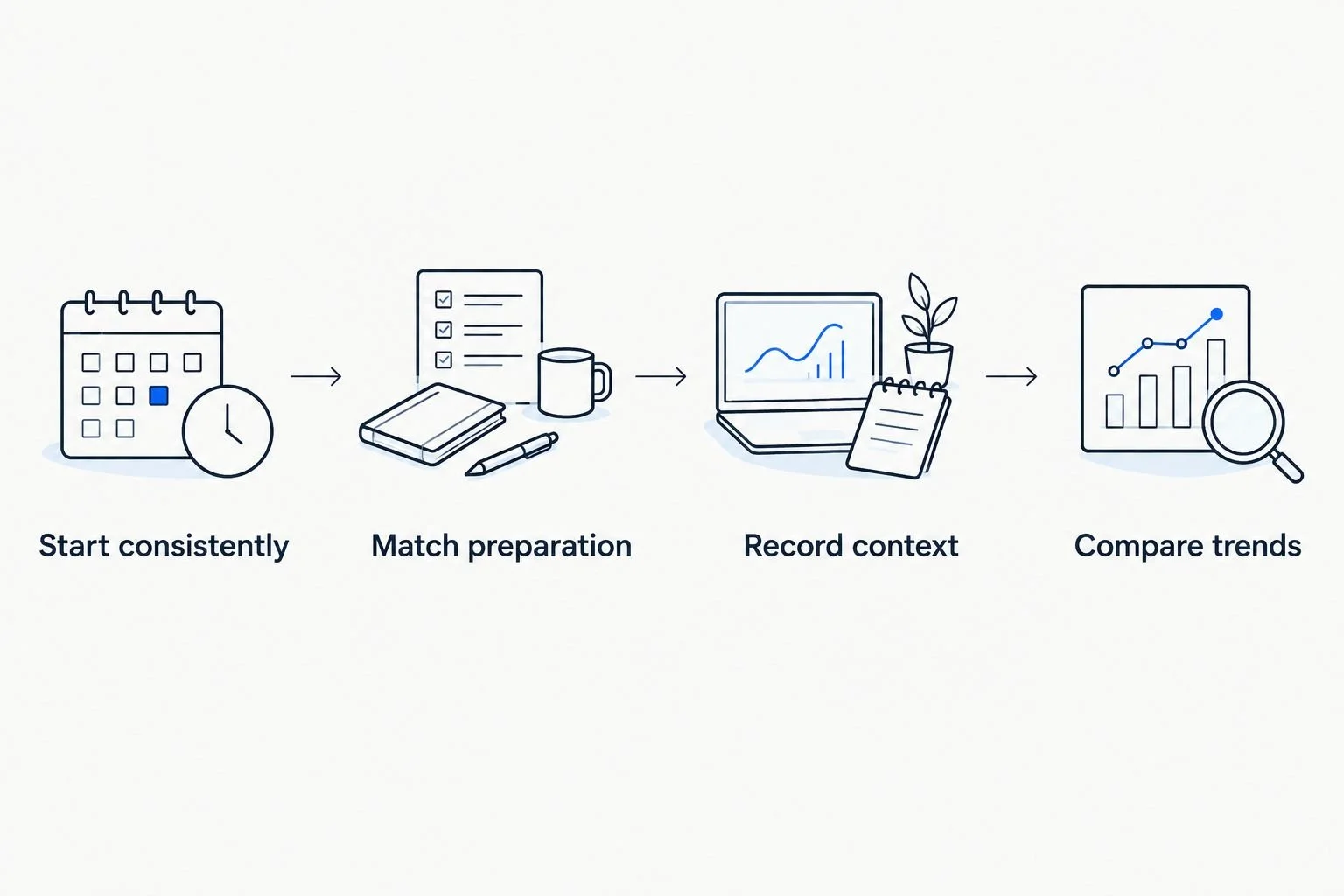
Repeatable preparation makes the comparison more useful than testing more often.
A consistent setup does not eliminate measurement uncertainty. It removes avoidable differences so you have a better basis for interpreting the trend.
What should you compare on your result sheet?
Read body fat, skeletal muscle, body water, and weight together. Treat them as related estimates, not independent scores that each prove success or failure.
Body weight supplies context, but it does not tell you how much change comes from fat, muscle, or fluid. An InBody result adds estimates of those components, with the limitations of its measurement method.
Skeletal muscle estimates deserve the same caution as body-fat estimates. A change that appears alongside an unusual fluid reading calls for context before you revise your training or eating habits.
For your 2026 progress review, ask whether the scan agrees with the outcomes you actually want. Better strength and consistent training matter even when a body-composition estimate moves less than you expected.
What should trigger a review?
A persistent trend that conflicts with your goal deserves attention. Review your routine, preparation, and other measurements before deciding what to change.
An unexpected result accompanied by unexplained symptoms belongs in a conversation with a qualified healthcare professional. Do not use a wellness scan to diagnose the cause.
Should you get an InBody scan every week?
Every 2–4 weeks is InBody’s general progress-tracking recommendation, so weekly testing is not necessary as a default. More frequent readings increase the need to distinguish short-term fluid changes from the longer-term trend you want to understand.
If a qualified professional requests a different schedule, ask what question that frequency answers. A useful testing plan has a purpose beyond producing another number.
Should you scan before or after a workout?
Scan before exercise rather than using a post-workout reading to judge progress. Exercise changes sweating, fluid distribution, and other testing conditions that influence bioelectrical impedance measurements.
Follow the device-specific preparation instructions rather than assuming that arriving before your next workout resolves every preparation issue. Your activity earlier in the day still belongs in the context.
Can an InBody scan show whether recovery sessions work?
An InBody scan cannot establish that a recovery session caused a body-composition change. Training, nutrition, hydration, and the testing conditions all affect how you interpret the result.
Live Superhuman’s wellness recovery sessions include hyperbaric oxygen therapy, red light therapy, PEMF, EWOT, and altitude training. Those offerings do not make a body-composition scan a direct measure of session effectiveness.
If you track scans alongside sessions, keep the purpose clear. The guide to using an InBody scan alongside hyperbaric oxygen therapy provides related reading; a shared timeline still does not establish cause and effect.
When should you postpone a comparison?
Postpone interpreting a scan as progress when the conditions are substantially different from your baseline. You can keep the result in your record without treating it as a verdict on your routine.
Examples include testing after strenuous exercise when your baseline was taken before activity, or testing with an unusual fluid intake. Mark the difference and return to your normal preparation for the next useful checkpoint.
If you have an implanted electronic device, are pregnant, or have a condition affecting fluid balance, check the device’s safety instructions and ask a qualified healthcare professional about suitability. A generic testing schedule does not replace those instructions.
FAQ
How often should you get an InBody scan for fat loss?
Every 2–4 weeks is InBody’s general recommendation for tracking body-composition changes. Compare results taken under similar conditions and review the trend alongside your habits and other measurements.
How often should you get an InBody scan when building muscle?
Every 2–4 weeks is the manufacturer’s general progress-tracking interval. Read skeletal muscle estimates alongside training performance, because body water influences the scan.
Is getting an InBody scan every day useful?
Daily InBody scans are not a useful default for judging muscle gain or fat loss. Short-term changes in fluid balance make frequent readings harder to interpret as lasting progress.
Should I drink extra water before my InBody scan?
Do not deliberately change your fluid intake to influence an InBody result. Follow the specific device’s preparation instructions and aim for conditions you can repeat.
Can I compare scans from different machines?
Treat comparisons between different machines cautiously. Use the same device when possible, and do not assume a difference between measurement methods represents a confirmed body change.
Does a higher muscle reading mean I gained muscle?
A higher muscle estimate does not by itself confirm new muscle tissue. Review body water, preparation, earlier scans, and training performance before drawing that conclusion.
Can an InBody scan measure how well I recovered?
An InBody scan is not a direct test of recovery or readiness to train. It estimates body composition and should not replace an assessment of your actual performance or symptoms.
One last thing
Write down the decision before you book the scan. If you cannot explain what you would do differently with the result, another measurement is unlikely to solve the problem.
For your 2026 plan, choose repeatable preparation over a perfect-looking result. Whether you book Live Superhuman wellness recovery sessions or follow another routine, consistent records help you separate observation from assumption.
Related guides
By Kelley Gast