A decompression chamber and a hyperbaric chamber use the same basic principle—pressure above normal atmospheric pressure—but the names do not guarantee the same service. A chamber used for diving-related recompression is not interchangeable with a bookable wellness hyperbaric oxygen therapy session; your reason for seeking one determines where you should go.
TL;DR
Searching decompression chamber near me? Separate urgent diving care from planned hyperbaric oxygen therapy before choosing a provider.
Live Superhuman is a fit for people seeking bookable wellness hyperbaric oxygen therapy, not a substitute for emergency care.
In 2026, compare the session’s purpose, oxygen delivery, screening, and oversight—not just the chamber’s pressure.
A higher ATA number describes greater absolute pressure, not a guaranteed recovery or performance benefit.
Is a decompression chamber the same as a hyperbaric chamber?
The equipment categories overlap; the intended use and care setting can differ substantially. In diving, people often say decompression chamber when they mean a chamber used for recompression treatment. Hyperbaric chamber describes an enclosure that operates above normal atmospheric pressure.
Hyperbaric oxygen therapy adds another distinction: the person breathes oxygen under increased pressure. The chamber name alone does not tell you the oxygen concentration, delivery method, clinical purpose, or staff qualifications.
For a planned wellness visit, the first hyperbaric visit guide provides a starting point for questions to ask before booking.
Diving-related recompression care
Best for: People directed to specialist care after a suspected diving injury
Main advantage: Connects chamber treatment with evaluation of a diving-related problem
Main limitation: A general wellness listing does not establish this capability
Medical hyperbaric oxygen therapy
Best for: People evaluated for a specific medical indication
Main advantage: Connects treatment decisions with a medical assessment
Main limitation: Requires condition-specific evaluation; it is not a general performance promise
Wellness hyperbaric oxygen sessions
Best for: People seeking a planned wellness experience after appropriate screening
Main advantage: Offers a scheduled setting for an elective session
Main limitation: Does not replace emergency care or establish treatment effectiveness for a medical condition
These categories describe purposes, not a ranking. A chamber that suits a planned wellness appointment is not automatically appropriate for an injured diver, and a medical chamber’s capabilities cannot be inferred from its appearance.
Why this matters
A search for decompression chamber near me combines very different needs. One person wants a recovery-focused appointment; another needs assessment after a dive. Choosing by distance alone ignores the difference that matters most.
If you have symptoms after diving, seek urgent medical assessment rather than booking a wellness session. Tell emergency responders about the dive, including when it happened and when symptoms began. Call 911 for severe symptoms such as difficulty breathing, collapse, or new weakness.
For a nonurgent search in 2026, start with your goal and then verify the provider’s service. Search results, directory categories, and chamber photos are not evidence that a facility treats diving injuries or provides a particular level of medical oversight.
What does “decompression chamber” actually tell you?
The phrase points toward pressure-related equipment, but it leaves important questions unanswered. In diving care, recompression raises pressure as part of treatment, followed by a controlled reduction in pressure. That is different from simply entering a chamber for a scheduled wellness visit.
The wording can also create confusion with spinal decompression, which refers to a different type of service. A search result using “decompression” without explaining the equipment or purpose is not specific enough to guide your decision.
Before comparing providers, establish what the listing actually offers:
Diving care: Evaluation and treatment related to a suspected diving injury.
Medical treatment: Hyperbaric oxygen therapy considered for a medical reason after assessment.
Wellness session: An elective appointment centered on a wellness or recovery goal.
Those descriptions are not interchangeable. Ask the provider to state the service plainly, especially when a directory uses broader language than the provider’s own information.
What does a hyperbaric chamber’s ATA number mean?
ATA means atmospheres absolute. It describes total pressure relative to standard atmospheric pressure, not oxygen concentration or treatment quality. 1 ATA is standard atmospheric pressure; a chamber operating above that pressure is hyperbaric.
The distinction between absolute pressure and added pressure matters. A reading of 2.0 ATA means twice standard atmospheric pressure in total, not twice standard pressure added on top of the surrounding atmosphere.
Pressure is only one part of a session. You also need to understand what you will breathe, how it is delivered, how the session is supervised, and whether the experience suits your health history.
1.6 ATA: a pressure setting, not an outcome claim
A 1.6 ATA setting identifies the chamber’s absolute pressure during that session. It does not, by itself, establish oxygen concentration, session length, or an expected recovery result.
Use the number to ask a better question: why is this setting being considered for your visit? Do not treat it as a score that tells you whether a session is effective or appropriate.
2.0 ATA: greater pressure, not an automatic upgrade
A 2.0 ATA setting is higher than 1.6 ATA. That difference does not prove that the session is better for your goal or that you should select it without screening.
Greater pressure also changes the pressure exposure you must tolerate, including during equalization. Ask how the provider assesses suitability and responds if your ears or sinuses become uncomfortable.
Why chamber experiences vary
Two listings can both say “hyperbaric” while describing different experiences. Compare these factors during your 2026 search rather than assuming the shared label means equivalent service:
Purpose: A planned wellness session and treatment for a medical condition answer different needs.
Pressure: The ATA setting describes exposure but does not establish the full session’s suitability.
Oxygen delivery: Ask what you breathe and whether oxygen reaches you through the chamber environment or a separate delivery system.
Screening: Your health history, current symptoms, medications, and ability to equalize pressure affect the discussion before a session.
Oversight: Ask who monitors you, how you communicate, and what happens if you need assistance.
Session structure: Confirm how preparation, pressurization, time at pressure, and depressurization fit into the visit.
A provider should explain these details in understandable language. An equipment specification cannot answer a question about supervision, and a recovery-focused description cannot establish that a particular outcome will follow.
How do I find the right chamber near me?
Use a purpose-first search rather than a distance-first search. The process below separates urgent care needs from ordinary appointment decisions without assuming that every chamber listing offers the same service.
Identify urgency. Symptoms after diving belong in a medical assessment pathway, not an online wellness booking process. Do not delay urgent care while comparing chambers.
Define your goal. State whether you want a planned wellness visit or have been advised to seek medical hyperbaric treatment. Describe the goal without assuming the chamber will deliver a specific result.
Verify the service. Ask whether the location actually offers the type of care or session you need. A directory label is not enough.
Check suitability. Explain relevant health history and current symptoms before confirming the appointment. Ask who reviews that information and when.
Confirm the visit. Establish the pressure setting, oxygen delivery, supervision, preparation requirements, and communication method before you arrive.
The order matters. Checking appointment logistics first creates unnecessary work if the provider does not offer the service you need.
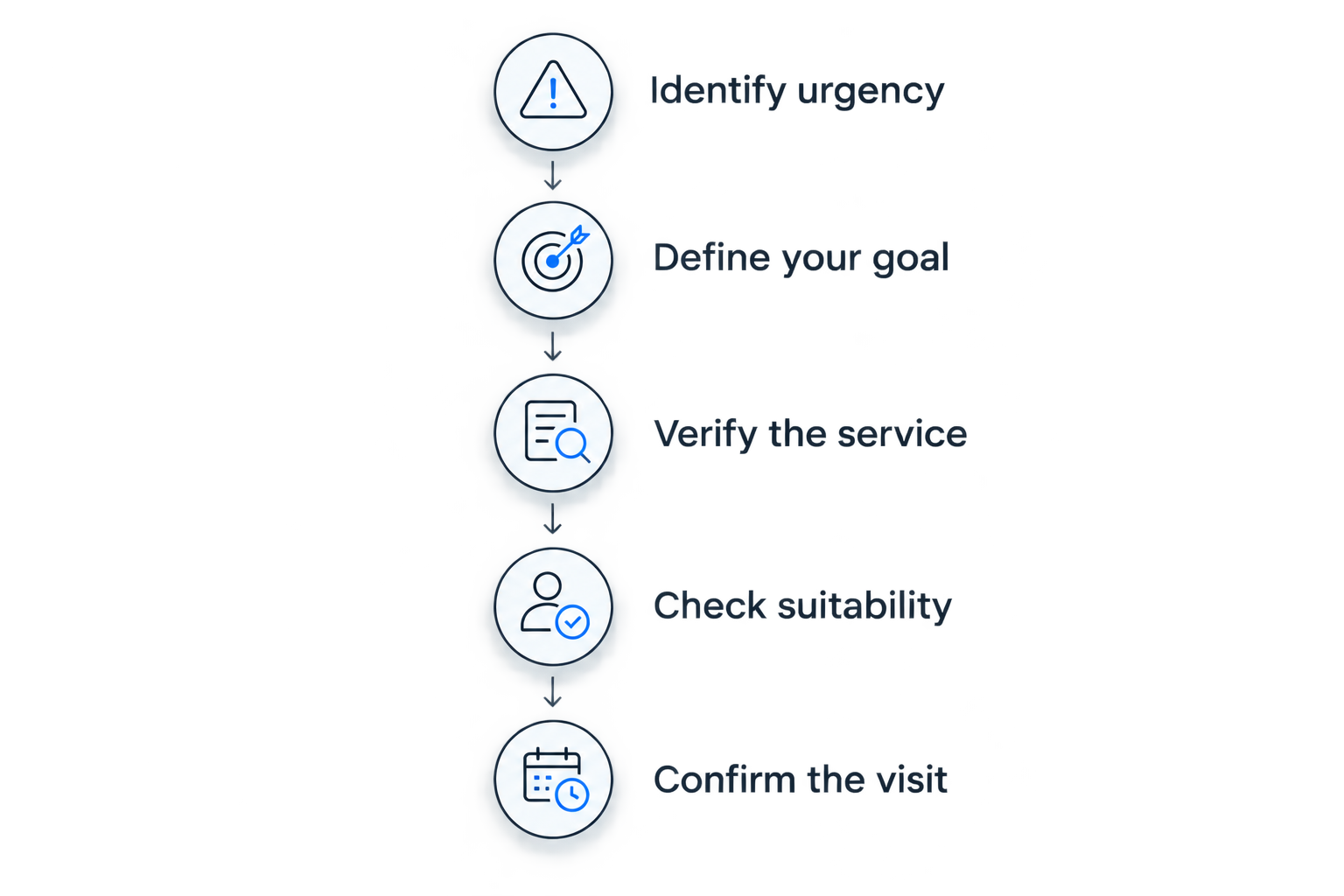
Match the service to your reason for seeking a chamber before comparing appointment details.
Where does Live Superhuman fit?
Live Superhuman is a fit for people seeking bookable wellness hyperbaric oxygen therapy sessions. The studio describes its services around recovery and performance goals and offers chamber options at 1.6 ATA and 2.0 ATA.
The practical advantage is a defined wellness service you can discuss before scheduling. The boundary is equally important: a wellness offering does not establish that a studio provides emergency diving care or treatment for your particular medical condition.
For a planned 2026 visit, use the contact page to ask which session matches your stated goal, what screening comes first, and how the chamber options differ. Do not select a pressure setting solely because its number is higher.
Ask about your first HBOT visit
Discuss your wellness goal, chamber options, and pre-session screening before scheduling.
What should I ask before entering a chamber?
Ask questions that require a concrete explanation. “Is this good for recovery?” is too broad to tell you what will happen during the appointment or whether the session suits you.
Start with these:
What pressure is planned, and why is that setting being considered?
What will I breathe, and how will it be delivered?
Who reviews my health information before the session?
How do I communicate with staff while inside?
What should I do if I cannot equalize my ears comfortably?
How does staff respond if I feel unwell or need the session stopped?
You should also disclose current ear or sinus problems, relevant lung history, and medications during screening. Do not assume a previous comfortable session means a new symptom is irrelevant.
The provider’s answers should distinguish the experience offered from any benefit being discussed. A clear description of a session is not proof of a recovery result. Keep those two questions separate when deciding whether to book.
Can a wellness chamber treat the bends?
Suspected decompression sickness requires urgent medical assessment, not a self-selected wellness appointment. A wellness chamber listing does not establish the equipment, staffing, or treatment capability needed for a diving-related injury.
Tell the medical team that you have been diving. Let the evaluating professionals determine whether recompression treatment is needed and where it should take place.
Is 2.0 ATA better than 1.6 ATA?
2.0 ATA is higher pressure than 1.6 ATA, not proof of a better result. The appropriate setting depends on the purpose of the session, the complete exposure, and your screening.
For a wellness appointment, ask for an explanation tied to your visit rather than choosing from the numbers alone. Pressure is a specification, not a benefit rating.
Does “near me” mean the closest chamber is best?
The closest chamber is suitable only if it offers the service you need. A short drive does not compensate for a mismatch between urgent medical care and an elective wellness visit.
After confirming service fit and screening, compare practical details such as appointment logistics and travel. Keep location behind suitability in your decision order.
FAQ
What should I search for instead of decompression chamber near me?
For a planned wellness visit, search for hyperbaric oxygen therapy and verify what the provider offers. For symptoms after diving, seek urgent medical assessment rather than relying on local wellness search results.
Are decompression and recompression chambers the same thing?
In diving discussions, people often use decompression chamber to mean a chamber used for recompression treatment. Ask about the actual service because informal wording does not establish a facility’s capabilities.
Does every hyperbaric chamber use the same oxygen delivery?
No, the term hyperbaric chamber alone does not identify the oxygen delivery method. Ask what you will breathe, how it reaches you, and what pressure is planned.
What does 1 ATA mean?
1 ATA means standard atmospheric pressure. ATA describes absolute pressure, not the oxygen concentration you breathe or the benefit you should expect.
Can I choose a higher-pressure chamber for faster recovery?
A higher-pressure chamber does not establish faster recovery. Discuss the purpose, screening, oxygen delivery, and pressure setting before choosing a session.
Can I book hyperbaric oxygen therapy at Live Superhuman?
Live Superhuman offers bookable wellness hyperbaric oxygen therapy sessions, with 1.6 ATA and 2.0 ATA chamber options described in its offerings. Ask about suitability and screening before selecting a session.
What should I verify before booking a chamber in 2026?
Before booking a chamber in 2026, verify the service’s purpose, pressure, oxygen delivery, screening, and supervision. Confirm how you communicate with staff and what happens if you feel uncomfortable.
One last thing
The most useful comparison is not decompression versus hyperbaric. It is the service you need versus the service the provider actually delivers.
When you contact Live Superhuman or another provider, lead with your reason for seeking a chamber—not a requested pressure setting. That gives the conversation a useful starting point and keeps the equipment label from making the decision for you.
Related guides
By Kelley Gast