
Hyperbaric oxygen therapy is worth considering for a specific recovery goal, but it is not a proven shortcut to better performance or a replacement for sleep, nutrition, and training management. For a 2026 decision, separate medically established uses from optional wellness sessions, account for the time commitment, and judge value by a clearly defined outcome rather than chamber pressure alone.
TL;DR
Is hyperbaric oxygen therapy worth it? Consider it for a defined goal, not guaranteed athletic improvement.
Live Superhuman offers bookable hyperbaric oxygen therapy sessions for recovery-focused clients.
Chamber pressure alone does not establish effectiveness; oxygen delivery, suitability, and your goal also matter.
Keep sleep, nutrition, and training consistent when evaluating a recovery session.
Why this matters
The question is not whether oxygen matters to your body. It is whether a particular session delivers a meaningful benefit for your particular goal. Those are different questions, and a technical chamber specification does not answer the second one.
Before you decide, review your first hyperbaric visit and write down what you want to understand or improve. Arriving with a clear question makes it easier to assess the experience without treating every change in energy or soreness as proof that it worked.
Is hyperbaric oxygen therapy worth it?
Hyperbaric oxygen therapy is an optional recovery investment for wellness goals, not a guaranteed performance upgrade. Its established medical uses do not automatically validate every claim made about athletic recovery, energy, or healthy aging.
The FDA's consumer guidance distinguishes cleared medical uses from uses that have not been established. The Undersea and Hyperbaric Medical Society also identifies specific medical indications for hyperbaric oxygen therapy. Neither source makes a general wellness session equivalent to medically directed treatment.
For your 2026 decision, use this distinction before comparing studios or chamber settings:
A medically established indication
Best for: Someone referred for a specific medical reason
Potential value: A defined role within clinician-directed care
Main limitation: A wellness session is not a substitute for that care
Recommendation: Follow the treating clinician's recommendation
An optional recovery experience
Best for: Someone with a clear wellness goal and realistic expectations
Potential value: A structured opportunity to assess personal comfort and perceived recovery
Main limitation: Improved athletic performance is not guaranteed
Recommendation: Consider only after suitability screening
Replacing sleep, food, or training adjustments
Best for: Someone looking for a shortcut
Potential value: Does not address the missing foundation
Main limitation: Creates a misleading test of the session's value
Recommendation: Skip this approach
Personal experience still matters. Feeling more rested is relevant to your decision, but it does not prove that tissue recovery accelerated or that future performance will improve. Keep subjective benefits and measurable outcomes separate.
When an optional session makes sense
An optional HBOT session makes the most sense when you can explain your goal without using a broad promise such as optimizing everything. You might want to assess chamber comfort, understand the experience, or explore whether it fits your existing recovery routine.
Live Superhuman is best for recovery-focused clients seeking bookable wellness sessions, not a substitute for medical treatment. Live Superhuman offers hyperbaric oxygen therapy alongside red light therapy, PEMF, EWOT, and altitude training. That describes the studio's services, not proof that combining them produces a better result.
The benefit of booking a session is access to the experience without purchasing a chamber. The limitation is that an experience, even a positive one, cannot establish long-term effectiveness. Decide whether that distinction fits what you are seeking before committing to an ongoing routine.
A useful starting point is a narrow question: does this session fit comfortably into an already consistent recovery plan? That is easier to answer honestly than whether it transforms your health or makes you a better athlete.
The 1.6 ATA chamber: assess the full session
Live Superhuman identifies a 1.6 ATA chamber option. ATA means atmospheres absolute; 1 ATA is approximately standard atmospheric pressure at sea level. The figure describes total pressure, not a recovery score or a promise of benefit.
Before choosing the 1.6 ATA option, ask how oxygen is delivered, how the session is supervised, and how staff assess suitability. Pressure is meaningful only alongside the rest of the session setup and the reason you are considering it.
Do not translate 1.6 ATA into an expected percentage improvement. A chamber specification cannot tell you how much less sore you will feel, how quickly you will recover, or whether your next training session will improve.
The 2.0 ATA chamber: higher is not automatically better
The studio also identifies a 2.0 ATA chamber option. That is a different pressure setting, not an automatic upgrade for every recovery goal. Choosing it requires a suitability discussion rather than an assumption that the larger number wins.
Ask why the 2.0 ATA option is being suggested for you and what changes about the experience. A useful answer explains the setting and safety considerations without promising a stronger athletic result merely because pressure is higher.
1.6 ATA
Confirmed distinction: Lower listed pressure of the two options
Best for: Someone whose suitability discussion supports this setting
What the specification does not establish: Expected recovery benefit or an appropriate session schedule
2.0 ATA
Confirmed distinction: Higher listed pressure of the two options
Best for: Someone whose suitability discussion supports this setting
What the specification does not establish: Better performance, faster recovery, or greater personal value
Choose the setting that fits the assessed purpose, not the largest number on the menu. Neither pressure figure, by itself, supplies enough information to recommend a session.
Why the value of HBOT varies
The value of hyperbaric oxygen therapy depends on more than the chamber. These factors explain why another person's positive experience is not a reliable prediction of yours:
Your goal: Exploring chamber comfort is different from expecting faster recovery or seeking care for a medical condition.
The session setup: Pressure, oxygen delivery, and the supervised setting all matter when comparing experiences.
Your suitability: Ear and sinus problems, certain health conditions, and medications require discussion before a session.
Your recovery foundation: Changing sleep, nutrition, and training at the same time makes the session harder to evaluate.
The commitment: Travel, preparation, session time, and disruption to your routine belong in the value calculation.
Your evidence standard: Feeling better, performing better, and demonstrating a physiological change are different outcomes.
For a 2026 comparison, ask each provider the same questions. Comparing one studio's pressure figure with another studio's broad outcome claims does not produce a useful decision.
How to decide before booking
Use a simple sequence that puts your goal and suitability ahead of enthusiasm. You do not need a complicated tracking system; you need a decision you can explain before the session happens.
Define your goal. Write one plain-language reason for considering HBOT. Avoid combining recovery, sleep, endurance, and general health into a single success claim.
Check suitability. Discuss relevant health history, current symptoms, medications, and previous problems with pressure changes before booking.
Confirm the setup. Ask about chamber pressure, oxygen delivery, supervision, and what happens if you need to stop.
Track your response. Keep your usual recovery routine consistent and record the outcome you selected before the visit.
Review the fit. Decide whether the experience, practical commitment, and observed response justify continuing. Do not continue solely because you have already started.
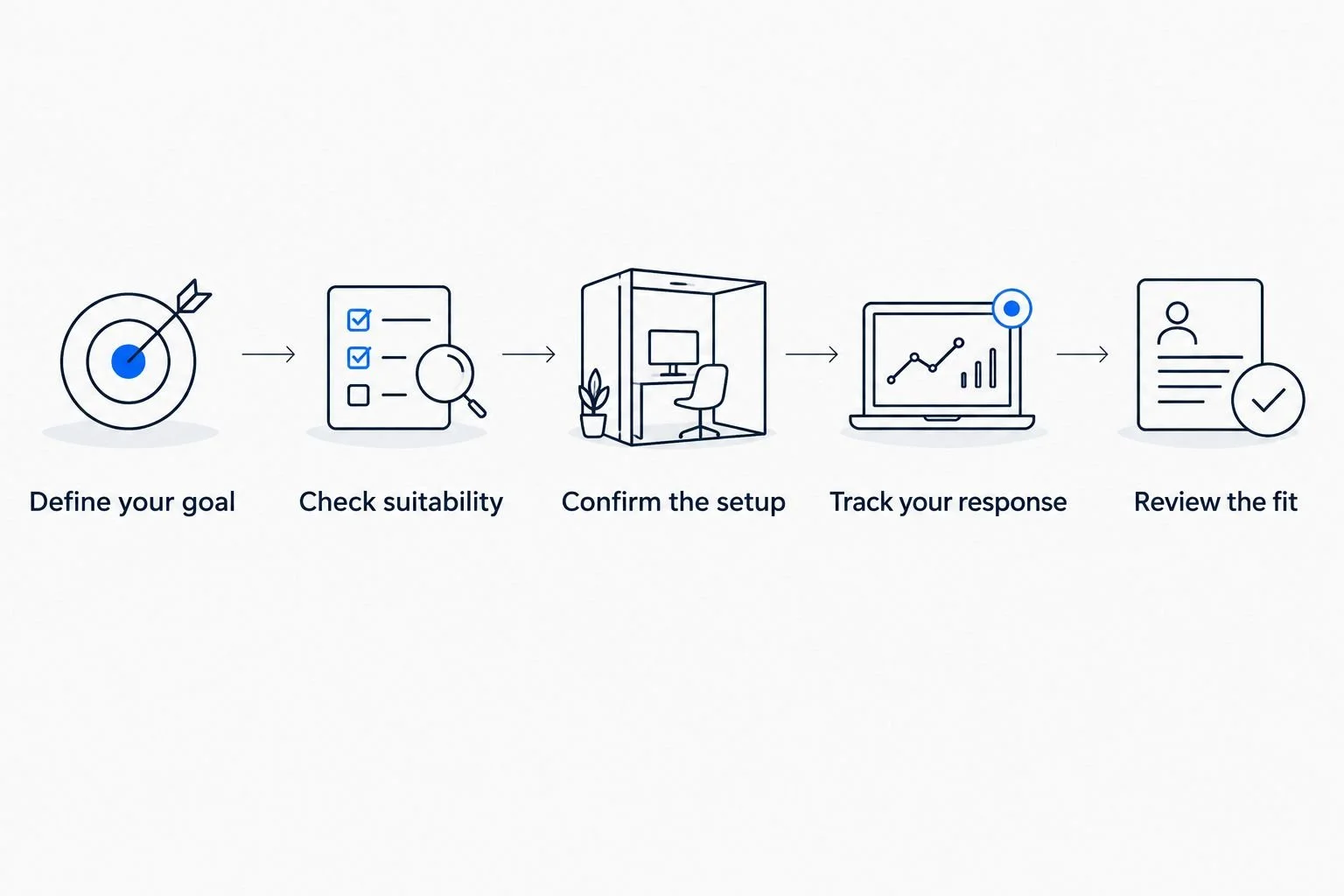
Set the decision criteria before the session, not after it.
For your 2026 notes, record the date, training load, sleep quality, and the specific outcome you care about. Keep the record brief enough to maintain; a complicated worksheet that you abandon will not clarify the decision.
Avoid changing several recovery activities at once. If you add HBOT while changing your training, eating habits, and bedtime, any improvement becomes difficult to attribute to a particular change.
What should you check for safety?
Hyperbaric oxygen therapy involves pressure changes and increased oxygen exposure. Ear discomfort and pressure-related ear injury are recognized risks; oxygen-related adverse effects are also possible. A wellness setting does not remove those considerations.
Ask for suitability screening before treating a session as a routine recovery appointment. Tell the provider about ear or sinus symptoms, recent procedures, lung conditions, pregnancy, and medications. Ask whether any part of your history requires clearance from your clinician.
An untreated pneumothorax is a recognized contraindication to HBOT. If you are considering sessions because of a medical condition, involve the clinician managing that condition rather than relying on a general wellness recommendation.
During a session, report ear pain or other unexpected symptoms promptly. Do not try to prove that you can tolerate discomfort. Understanding how to communicate with staff and stop the session is part of being prepared, not a sign that you are approaching it negatively.
Is HBOT worth it for athletic recovery?
HBOT is not an established guarantee of faster recovery for healthy athletes. Evidence from a specific medical use cannot be transferred directly to soreness after lifting, running, or competition.
For an athlete, the practical question is whether the experience adds value after basic recovery needs are covered. Keep your training load and recovery habits visible when assessing the response. Otherwise, a lighter training week can look like a treatment effect.
Treat recovery claims with particular care when they combine several outcomes. Reduced soreness, improved endurance, and better sleep each require their own evidence; success on one does not establish the others.
How many sessions make HBOT worth it?
There is no universal session count that makes wellness HBOT worthwhile. A schedule should follow the purpose, suitability assessment, and review plan, not a generic promise that everyone needs the same commitment.
Ask what the suggested schedule is intended to accomplish and when you will reassess. An explanation should distinguish the recommended attendance pattern from an outcome that can actually be promised.
Before agreeing to repeat visits, decide what would lead you to stop. Lack of a meaningful benefit, discomfort, or an impractical time commitment are valid reasons to reconsider an optional wellness activity.
Should you combine HBOT with other sessions?
Adding several services does not automatically strengthen the case for HBOT. It also makes it harder to identify which part of the experience, if any, contributed to a change you noticed.
Start with the question you are trying to answer. If you are evaluating HBOT, introducing red light therapy, PEMF, or another activity simultaneously creates a different experiment: you are evaluating the combination rather than the individual session.
For a 2026 recovery plan, prioritize clarity over complexity. Discuss combinations for suitability, but do not assume a longer list of services means a better outcome.
FAQ
Is hyperbaric oxygen therapy worth it for a healthy person?
Hyperbaric oxygen therapy is an optional wellness choice for a healthy person, not a guaranteed health or performance upgrade. Define a specific goal and assess suitability before deciding whether the experience justifies the commitment.
Is a 2.0 ATA chamber better than a 1.6 ATA chamber?
A 2.0 ATA chamber is not automatically better than a 1.6 ATA chamber for your goal. Pressure is only part of the session; oxygen delivery, suitability, and the reason for use also matter.
Can hyperbaric oxygen therapy replace sleep for recovery?
Hyperbaric oxygen therapy cannot replace sleep as a recovery foundation. Keep sleep, nutrition, and training management consistent before evaluating an optional session.
How many HBOT sessions do I need to notice a difference?
There is no universal number of wellness HBOT sessions that guarantees a noticeable difference. Ask for a purpose-specific recommendation and agree on when to reassess rather than relying on a standard promise.
What should I ask before my first HBOT session?
Ask about suitability screening, chamber pressure, oxygen delivery, supervision, and how to stop the session. Disclose relevant health history, medications, and ear or sinus symptoms before booking.
Does feeling better after HBOT prove that it worked?
Feeling better after HBOT establishes a personal experience, not proof of faster tissue recovery or improved athletic performance. Compare your chosen outcome while keeping other recovery habits consistent.
What does Live Superhuman offer for recovery-focused clients?
Live Superhuman offers bookable hyperbaric oxygen therapy, red light therapy, PEMF, EWOT, and altitude training sessions. Choose an experience around a defined goal and suitability discussion, not an assumption that more services produce better results.
One last thing
Decide what would count as a reason not to continue before your first visit. That simple step keeps an optional recovery experience from becoming a habit that you never reassess.
A clear stopping rule is just as useful as a success goal. If you cannot name the benefit you are evaluating, clarify the goal before booking another session.
Related guides
By Kelley Gast