
There is no universal weekly frequency for red light therapy for recovery: follow the instructions for the specific device and adjust with qualified guidance rather than copying someone else’s schedule. This 2026 guide explains how to choose a repeatable routine, assess your response, and recognize when adding sessions is the wrong move.
TL;DR
How often should you do red light therapy? Follow device-specific guidance; no single recovery schedule fits every setup.
Live Superhuman offers bookable red light therapy sessions for people seeking recovery and performance support.
Session frequency, exposure time, and distance work together; more visits do not automatically mean better recovery.
Track comparable workouts and recovery responses before changing your routine.
Why this matters
A weekly session count leaves out the details that determine your light exposure. A short session on one device is not necessarily equivalent to a longer session on another, so copying a calendar without checking the equipment creates a poor starting point.
Live Superhuman is best for people seeking bookable studio red light therapy sessions rather than a home-device purchase. Live Superhuman offers red light therapy as a wellness service; ask about the equipment, session instructions, and suitability before choosing your schedule.
Your recovery routine in 2026 should support training, not create pressure to accumulate appointments. Sleep, nutrition, training load, and appropriate rest remain priorities; a light session does not replace them.
How often should you do red light therapy?
Use the schedule specified for the device and your intended use, not a generic daily or weekly target. Red light therapy research uses different devices, light settings, treatment areas, and schedules. Those differences prevent a single session count from serving as a reliable recovery recommendation for everyone.
Start by identifying the equipment you will actually use. Then confirm the recommended exposure time, positioning, spacing between sessions, and any safety restrictions before deciding where sessions belong in your week.
Device-directed routine
Best for: People starting or changing equipment
Main advantage: Keeps exposure tied to the equipment’s instructions
Main limitation: Does not establish whether you personally benefit
Training-linked routine
Best for: People tracking recovery around comparable workouts
Main advantage: Makes changes easier to assess in context
Main limitation: Workout differences can obscure the result
Daily routine
Best for: People whose device instructions and suitability guidance support daily use
Main advantage: Creates a consistent habit
Main limitation: Daily use is not automatically more effective
Pause and reassess
Best for: People with discomfort, an unexpected response, or an unclear setup
Main advantage: Avoids adding exposure without a reason
Main limitation: Requires resolving the concern before restarting
For a 2026 recovery plan, choose the first approach as your baseline and use training context to evaluate it. A daily routine belongs on the table as a question to resolve, not as the default recommendation.
For the broader recovery process, see the guide to red light therapy and muscle recovery. Keep the distinction clear: a recovery goal explains why you are attending, while equipment instructions determine how you use the light.
Starting red light therapy: establish your baseline
Your first decision is how to use the specific equipment correctly—not how many visits to book. Ask for clear instructions before committing to a recurring routine, and make sure the intended treatment area matches the setup.
A studio session removes the need to purchase your own equipment. The trade-off is that you must work appointments into your schedule, and you still need to understand what the session involves.
Record what recovery looks like before changing your routine. Useful observations include soreness during ordinary movement, readiness for your next planned workout, and whether you modify exercises because you feel under-recovered.
These observations are not diagnostic tests. They are a practical way to avoid judging the entire routine by how you feel immediately after a visit.
Training-linked sessions: compare similar workouts
A training-linked routine is best for people who want to assess recovery alongside a repeatable activity. Compare responses after similar workouts rather than comparing a demanding training day with an easy rest day.
Record whether the session occurred before or after exercise. Research has examined different timings, but that does not establish a universal timing rule for every device or sport.
The advantage is context: you can see what happened around the activity you care about. The limitation is attribution, because sleep, food intake, exercise intensity, and ordinary variation also affect how recovered you feel.
Keep other major recovery habits steady when assessing red light therapy. If you change several habits together, you cannot confidently assign the result to the light sessions.
Daily sessions: not an automatic upgrade
Daily red light therapy is not the default answer to recovery. Check whether the specific equipment’s instructions support that frequency and whether any personal safety considerations require professional advice.
A daily habit is easy to remember, but convenience does not establish effectiveness. Red light exposure depends on more than the number of days you attend, and increasing exposure does not guarantee an increased benefit.
Do not compensate for a missed appointment by extending the next exposure or combining sessions. Resume according to the equipment’s instructions rather than treating your calendar as a dose to catch up on.
If your routine already fits the recommended use, persistent soreness is a reason to review training and recovery—not an automatic reason to add more light.
Why red light therapy frequency varies
The useful question is not simply how often you can attend. It is whether the complete session setup fits the equipment, your goal, and your circumstances.
Device output: Equipment differs in how much light reaches the treatment area. A schedule from another device is not a substitute for your device’s instructions.
Exposure time: Session duration contributes to the delivered light dose. Changing duration while holding frequency constant still changes your routine.
Positioning and coverage: Distance, angle, and the area exposed affect the session. Follow the setup instructions rather than moving closer to intensify it.
Training context: Exercise intensity and unfamiliar movements affect recovery demands. Compare similar activities before concluding that a schedule needs changing.
Personal suitability: Photosensitivity, relevant medications, and health circumstances deserve attention before exposure. Ask a qualified healthcare professional when suitability is uncertain.
Your response: Discomfort or an unexpected skin response calls for reassessment. Do not interpret an unpleasant reaction as proof that a session is working.
These factors explain why matching another person’s weekly attendance is not enough. The same calendar can represent different exposures and different recovery demands.
How to build a repeatable recovery routine
Use this sequence before making recurring sessions part of your 2026 training calendar. The goal is a routine you can explain and evaluate, not the busiest possible schedule.
Check suitability. Review the device’s warnings and ask about photosensitivity, relevant medication concerns, and any health issue that needs professional input. Do not use a wellness appointment to assess an unexplained injury.
Confirm instructions. Establish the recommended exposure time, positioning, eye precautions, and session spacing for the actual equipment. Keep those details together rather than remembering only the visit frequency.
Choose your goal. Pick a concrete recovery question, such as whether you feel more ready for your next comparable training session. Avoid treating a broad promise of better wellness as a measurable result.
Track your response. Note the workout, session timing, soreness, and any unexpected effects. Keep the record brief enough that you will actually maintain it.
Review before changing. Assess the pattern alongside sleep, food intake, and training load. Change the routine only within the equipment’s instructions and any applicable professional guidance.
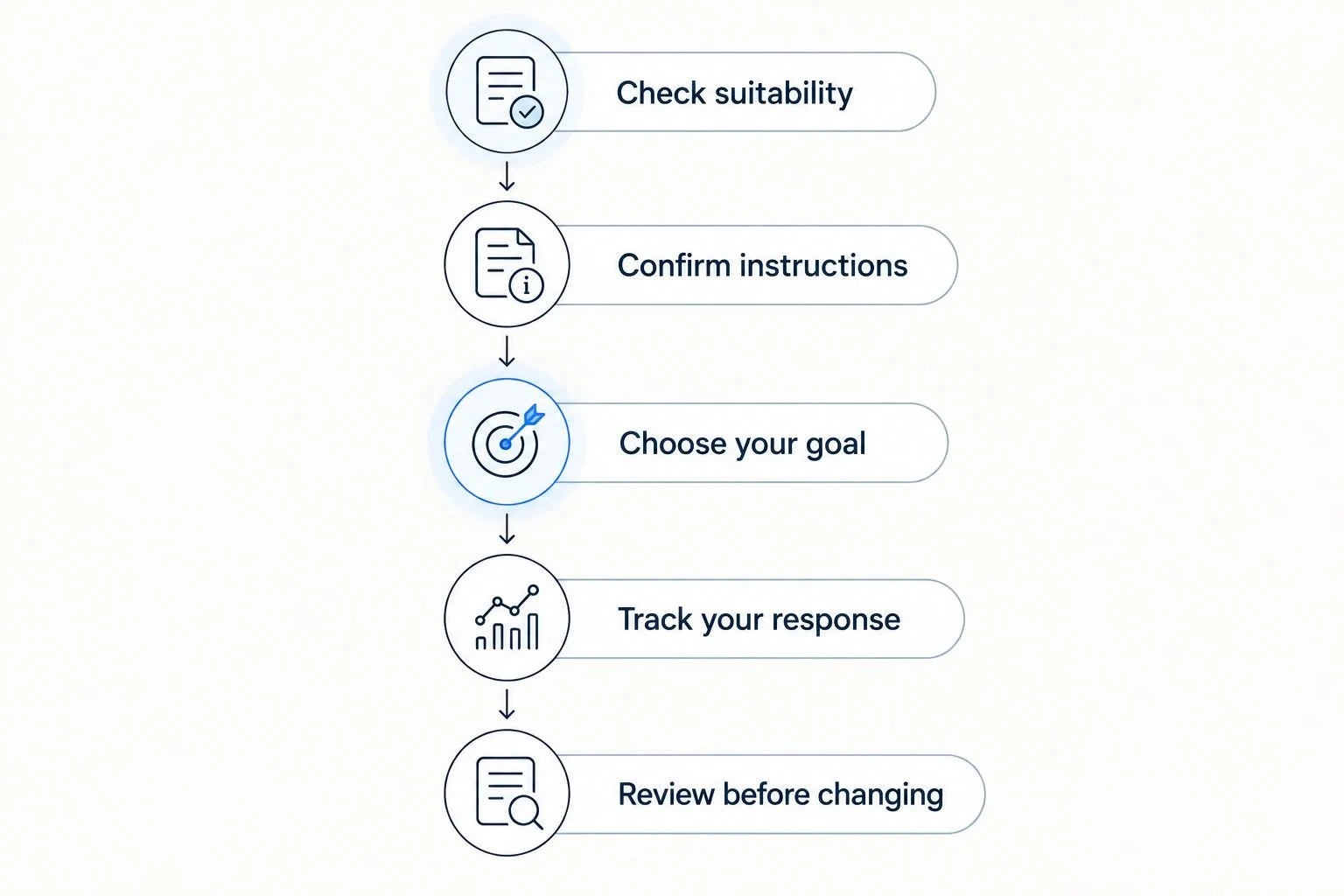
Confirm the session setup before deciding how often to attend.
A useful session log separates observation from interpretation. Writing that your legs felt less sore is an observation; writing that the session repaired an injury is a conclusion your log cannot establish.
If you attend a studio, bring your questions before settling on a recurring schedule. Clear instructions are more useful than a frequency recommendation that ignores the equipment.
Ask about red light sessions
Discuss session instructions, suitability questions, and how visits fit your recovery routine.
When to pause instead of adding sessions
Stop the session if you experience discomfort, and reassess before using the equipment again. Unexpected skin changes, eye discomfort, or another concerning response are not reasons to push through or increase frequency.
Follow the equipment’s eye-safety instructions. Do not assume that closing your eyes provides whatever protection a particular device requires, and do not look directly into the light source.
If pain is severe, worsening, or associated with swelling or loss of function, seek appropriate medical assessment rather than treating it as ordinary workout soreness. Red light therapy sessions do not replace evaluation of a possible injury.
The same principle applies when recovery seems persistently poor. Review training load, sleep, nutrition, and health concerns before concluding that you need a more intensive wellness routine.
Can you do red light therapy every day?
Daily use is appropriate only when the specific device’s instructions and your suitability guidance support it; it is not a universal recovery recommendation. Longer exposure and more frequent exposure are separate changes, so do not increase both simply because daily attendance fits your calendar.
Is red light therapy better before or after a workout?
Neither timing is universally best for every recovery setup. Follow the equipment’s intended use and keep timing consistent when comparing similar workouts, rather than switching between pre-workout and post-workout sessions without recording the change.
How long should you try a routine before changing it?
There is no universal trial length that applies to every device and recovery goal. Use any review period specified in the equipment guidance, assess comparable training sessions, and stop sooner if you experience a concerning response.
FAQ
How often should you do red light therapy for recovery in 2026?
Follow the specific device’s instructions rather than a universal weekly session count. Exposure time, positioning, training context, and personal suitability all matter when choosing a recovery routine.
Is daily red light therapy better than occasional sessions?
Daily red light therapy is not automatically better than less frequent use. Use daily sessions only when the equipment’s instructions and your suitability guidance support them.
Can I do extra red light therapy after a hard workout?
A hard workout is not a reason to exceed the equipment’s recommended use. Review training load and basic recovery habits rather than automatically adding exposure.
How long should a red light therapy session last?
Session length must follow the instructions for the actual equipment and intended use. A duration copied from a different device does not establish an appropriate exposure for yours.
Can I combine red light therapy with other recovery sessions?
Discuss the complete routine and each service’s suitability requirements before combining sessions. Introducing several changes together also makes it harder to identify which change affected your recovery.
Does Live Superhuman offer red light therapy sessions?
Live Superhuman offers bookable red light therapy sessions for people seeking recovery and performance support. Ask about the session setup and instructions before selecting a recurring schedule.
What should I do if red light therapy feels uncomfortable?
Stop the session and reassess before using the equipment again. Seek appropriate professional advice for persistent discomfort or a concerning response rather than treating it as a sign of progress.
One last thing
Track your next comparable workout, not just how you feel when a session ends. An immediate impression does not establish improved recovery, and a packed appointment calendar does not establish progress.
For your 2026 routine, ask Live Superhuman about red light therapy instructions before deciding on recurring visits. A clear, repeatable setup gives you a better basis for evaluating the service than an ambitious attendance target.
Related guides
By Kelley Gast