
Pickleball players’ PEMF therapy is the use of pulsed electromagnetic fields with the aim of supporting recovery between court sessions. This 2026 guide explains how to assess that option without confusing a wellness session with injury treatment, improved performance, or clearance to play.
TL;DR
PEMF therapy for pickleball players belongs alongside recovery basics, not in place of injury assessment or training adjustments.
Live Superhuman offers bookable PEMF sessions for players seeking a studio-based wellness option.
Track court load, next-day comfort, and movement rather than treating relaxation as proof of recovery.
Ask about the device, screening, and session experience before booking; do not choose by intensity alone.
Why PEMF therapy matters for pickleball players
Pickleball asks you to move sideways, stop quickly, reach low, and repeat swings. Your recovery decisions need to account for those movements, not just whether you feel relaxed after leaving a studio. A comfortable evening and a comfortable return to court are different outcomes.
Live Superhuman PEMF therapy is best for pickleball players seeking bookable wellness sessions, not injury diagnosis. Live Superhuman offers PEMF alongside hyperbaric oxygen therapy, red light therapy, EWOT, and altitude training. Treat those as separate services, not interchangeable ways to achieve the same result.
The useful question in 2026 is not whether PEMF sounds advanced. It is whether adding a session serves a clear goal while leaving room for sleep, appropriate training load, and professional assessment when symptoms require it. Buying a recovery experience does not answer why your elbow hurts or whether your ankle is ready for another match.
What PEMF does—and what a session cannot establish
PEMF stands for pulsed electromagnetic field. A PEMF device produces electromagnetic fields in pulses; the equipment and its intended use matter when discussing what a particular session involves.
Do not transfer a claim about one device, setting, or medical application to every wellness session. Ask the provider to distinguish the experience being offered from any research cited to support it. A technical explanation is useful only when it connects to the actual equipment and the outcome under discussion.
For a pickleball player, these are different questions:
Will I find the session comfortable?
Will I notice a change in how I feel afterward?
Will that change carry over to movement on court?
Is my current discomfort something that needs assessment?
A positive answer to the first question does not settle the others. Feeling better after a session is an observation, not proof that an injury has healed.
How to assess PEMF for your pickleball routine
1. Define the recovery problem before choosing a session
Start with a written description of what you want to change. Be specific: feeling drained after consecutive playing days is different from sharp pain during a backhand. The first calls for a review of your overall routine; the second calls for caution about continuing the provoking movement.
Use a simple note on your phone before researching services. Describe when the issue starts, what movements bring it on, and whether it changes your walking, grip, or swing. This gives you a clearer conversation with a qualified healthcare professional when needed.
For your 2026 playing plan, choose an observable goal rather than a promise such as faster healing. The goal might be understanding how you feel between comparable court sessions, without using PEMF to justify additional play.
Name the goal: describe the recovery experience you want to assess.
Describe the movement: record whether stopping, reaching, or swinging brings discomfort.
Set the boundary: keep injury assessment separate from wellness booking.
2. Review your court load before adding anything
Check your calendar first. Record playing time, consecutive playing days, lessons, competition, and strength sessions. An additional match still counts as activity even when it feels social rather than competitive.
Keep a baseline for 7 days as a practical starting point, not a medically validated testing period. Note sleep, court activity, and how you feel the following morning. If that week is unusual, label it rather than treating it as your normal routine.
This manual review costs nothing and helps you avoid attributing every change to a new session. Less court time, better sleep, or a lighter opponent can complicate the comparison. You do not need a perfect experiment, but you do need an honest record.
Log court time: include drills, lessons, and casual games.
Record sleep: note interruptions and unusually short nights.
Mark changes: identify travel, competition, or unfamiliar exercise.
Review the pattern: look for repeated problems before adding services.
3. Ask the provider what the session actually involves
Write your questions before contacting a studio. Ask which PEMF device is used, what the session involves, what screening is required, and which claims apply to that specific service. Do not select a session simply because its description uses more technical language.
Live Superhuman offers bookable PEMF therapy sessions, making it an option for players who want a studio visit rather than purchasing equipment. The trade-off is that a studio session still requires time and a clear understanding of its purpose; booking does not establish that it fits your health circumstances.
Disclose implanted electronic devices, pregnancy, relevant health conditions, and current symptoms during screening. Follow device-specific instructions and seek guidance from your healthcare professional when suitability is uncertain. Do not use a general article as personal clearance.
Identify the device: ask for its name and intended use.
Clarify the experience: ask about positioning, sensations, and session length.
Complete screening: provide relevant health information before starting.
Check the claims: separate wellness language from treatment claims.
4. Keep the first session separate from a performance test
Before a first appointment, write down your existing court plan. Do not turn the visit into permission to add games, increase intensity, or test a painful movement. Keeping your plan stable makes your observations easier to interpret.
Ask the provider what to do if you feel uncomfortable during the session and what instructions apply afterward. Follow those instructions rather than borrowing advice from a different device or another athlete’s experience.
For a 2026 tournament week, avoid making an unfamiliar wellness experience the centerpiece of your preparation. An ordinary training period gives you more room to assess convenience, comfort, and personal preference without attaching the outcome to a competition result.
Keep the plan: avoid adding court time to test the session.
Ask before starting: understand how to report discomfort.
Follow instructions: use the guidance for the actual device.
Separate outcomes: distinguish session comfort from match performance.
5. Track changes without turning observations into proof
Use the same questions before and after a session. A 0–10 comfort scale can organize your personal notes, but it is not a diagnosis or evidence of tissue repair. Define what the endpoints mean to you and apply them consistently.
Check again at 24 hours as a practical diary checkpoint, not a promised recovery deadline. Note your normal walking, stairs, and everyday hand use without deliberately provoking symptoms. Record any court activity that happened between observations.
Compare similar days wherever possible. A comfortable morning after a rest day does not establish that PEMF caused the change. Your notes can help you decide whether an experience is useful to you without supporting claims about other players.
Record comfort: use the same wording each time.
Check movement: note ordinary activities without forcing a test.
Log court time: include activity between observations.
Mark changes: record sleep, rest, and other recovery choices.
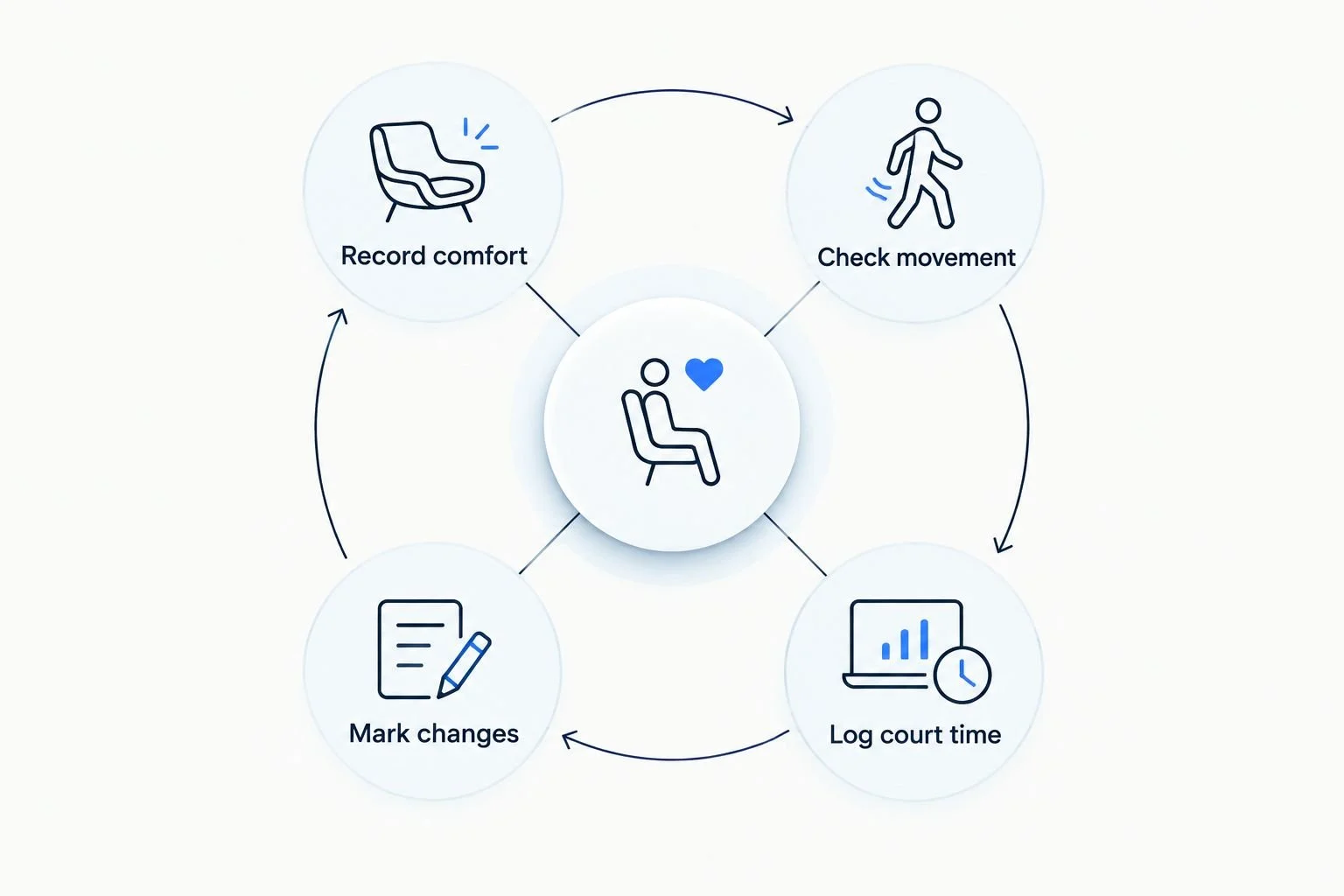
Track the surrounding routine, not just how you feel immediately after a session.
6. Decide whether the session earns a place in your routine
Review your original goal, diary, and practical constraints before booking again. A session can be an enjoyable wellness experience without being a necessary part of your pickleball schedule. Keep that distinction explicit.
For your 2026 routine, judge the whole commitment: travel, appointment time, comfort, and whether sessions displace more useful actions. If recurring discomfort changes how you play, the next decision is assessment—not simply adding another recovery service.
Live Superhuman PEMF therapy can be considered within that decision, but it is not a prerequisite for playing pickleball. Keep a session because its purpose is clear, not because its technical name sounds persuasive.
Review the goal: compare your experience with your original reason for booking.
Check the commitment: include travel and scheduling demands.
Protect the basics: preserve sleep and appropriate activity planning.
Choose deliberately: continue, pause, or seek assessment based on your needs.
Compare your recovery options
Start with the problem you are trying to solve. A diary, a wellness session, and a healthcare appointment serve different purposes; choosing between them is not a contest over which sounds most advanced.
Court-load and recovery diary
Best for: Players trying to understand recurring patterns
Main advantage: Makes activity and symptoms easier to review
Key limitation: Does not diagnose the cause of discomfort
Sleep and activity planning
Best for: Players whose routine leaves little recovery time
Main advantage: Addresses the schedule around every court session
Key limitation: Does not replace assessment of an injury
Bookable studio PEMF session
Best for: Players seeking a PEMF wellness experience without buying equipment
Main advantage: Provides access through an appointment
Key limitation: Requires screening and does not establish readiness to play
Qualified healthcare assessment
Best for: Players with persistent, worsening, or function-limiting symptoms
Main advantage: Evaluates the concern and guides appropriate next steps
Key limitation: Serves a different purpose from a wellness visit
The best option changes with the question. If you want to experience PEMF, investigate the session. If you want to know why gripping a paddle hurts, seek assessment rather than asking a wellness booking to answer it.
Common mistakes pickleball players make
Treating temporary comfort as permission to play harder
A change in how you feel does not establish that your body is ready for a heavier court schedule. Keep return-to-play decisions separate from the immediate experience of a wellness session, especially when discomfort has changed your movement.
Copying another player’s session choices
Your doubles partner’s preference is not a personal suitability assessment. Ask about the actual device and screening requirements instead of copying session settings, frequency, or timing from someone with different health circumstances.
Adding several recovery services at once
Combining PEMF, red light therapy, and other new experiences makes it harder to identify what you value. Introduce changes deliberately, document them, and avoid claiming that one service caused an improvement when several things changed together.
Ignoring pain because a tournament is approaching
A competition deadline does not turn a wellness service into injury care. Stop using a recovery appointment as reassurance when symptoms are worsening, altering your gait, or changing your grip. Get appropriate assessment instead.
FAQ
What is PEMF therapy for pickleball players?
PEMF therapy for pickleball players is the use of pulsed electromagnetic fields as a wellness option alongside a recovery routine. It is not a substitute for injury assessment, appropriate training load, or individual healthcare advice.
Is PEMF the best recovery option after pickleball?
PEMF is not a universal first choice for recovery after pickleball. Start by reviewing sleep, playing load, and symptoms, then assess whether a wellness session serves a specific purpose.
Can PEMF tell me whether my pickleball injury has healed?
No, a PEMF session cannot establish that your injury has healed or clear you to return to play. Improved comfort after a session is different from an assessment of the underlying problem.
How often should I book PEMF sessions for pickleball?
Choose session frequency only after reviewing the device instructions, provider guidance, and your personal circumstances. Do not copy another player’s schedule or assume that more sessions mean better results.
Should I try PEMF before a pickleball tournament?
Do not make an unfamiliar PEMF session the centerpiece of tournament preparation. Assess the experience during an ordinary training period and keep competition readiness separate from wellness claims.
What should I ask before my first PEMF appointment?
Ask about the device, intended use, screening, session experience, and instructions for reporting discomfort. Disclose relevant health conditions and implanted electronic devices before starting.
Does Live Superhuman offer PEMF sessions?
Live Superhuman offers bookable PEMF sessions as part of its wellness studio services. Confirm the session details and suitability requirements before making an appointment.
One last thing
Before your next recovery appointment, write one sentence: what would make this session useful to you? Keep the answer observable—comfort, convenience, or a wellness experience—not an assumption about healing. For your 2026 pickleball calendar, a clear purpose is more useful than a long list of services.