
Instead of guessing whether soreness means you should train, use a symptom log and a screened PEMF session to inform your next workout—not to override pain. This 2026 workflow explains how to approach PEMF therapy for pain management without treating temporary relief as proof that an injury has healed.
TL;DR
Live Superhuman offers PEMF sessions for recovery-focused clients; a wellness session does not establish readiness to train.
Use PEMF therapy for pain management as an adjunct, not a substitute for assessment or rehabilitation.
Record symptoms and function before a session, afterward, and following your next workout.
New, worsening, or unexplained pain needs assessment before you pursue a pain-free training goal.
Why this matters
Less pain is not the same as restored training capacity. A comfortable walk after a recovery session does not establish that your knee is ready for running, jumping, or heavy squats.
Pulsed electromagnetic field therapy uses electromagnetic fields delivered by a device. Research findings depend on the condition, equipment, and treatment studied; they do not establish a universal return-to-training benefit for every PEMF session.
Live Superhuman is best for recovery-focused clients seeking bookable wellness sessions, not injury diagnosis. Live Superhuman offers PEMF alongside other wellness services, but your training decisions still need a separate basis: symptoms, function, and any guidance from your treating clinician.
For your 2026 training calendar, separate three questions: Is the session appropriate for you? Did your symptoms change? Can you tolerate the activity you want to resume? Each question needs its own answer.
Before you start
Get the right assessment first. Seek evaluation for persistent, recurring, or unexplained pain. Severe pain after trauma, inability to bear weight, or new weakness needs prompt medical attention rather than a recovery appointment.
Bring the information needed for screening. Share relevant health conditions, pregnancy status, implanted electronic devices, and current care instructions. Ask staff to check the specific device’s instructions and restrictions; do not assume every PEMF system has the same requirements.
Prepare a baseline and a training decision. Bring a notebook or phone log and identify the activity you want to return to. The easily missed issue: feeling better during rest does not show whether you can tolerate that activity under load.
You do not need a wearable, a complex spreadsheet, or a stack of recovery services. You need a consistent record and a clear boundary between a wellness session and medical clearance.
Your symptom baseline
Name the activity. Write down the task that brings on symptoms: stairs, jogging, serving, gripping, or another specific movement. Avoid a vague entry such as feeling tight everywhere.
Describe the symptoms. Record the location, character, and timing. Note whether discomfort appears during activity, afterward, at rest, or overnight.
Choose a repeatable rating. A 0–10 pain scale can help organize your observations. Use the same scale each time; the number is a personal tracking aid, not a diagnosis or a universal clearance threshold.
Record function separately. Note what you can comfortably do, such as walking normally or completing an already-approved rehabilitation movement. Do not provoke pain to create a baseline.
Log the context. Include the recent workout, sleep disruption, and any changes to medication or other treatments. These details prevent you from attributing every change to PEMF.
Expected result: Your baseline describes both symptoms and a real activity. Another person can understand what changed without needing to interpret a single pain score.
For example, less discomfort while sitting and unchanged discomfort on stairs are different findings. Keep both. Combining them into one optimistic score hides the limitation that matters for training.
Your PEMF session plan
State your goal accurately. Tell staff that you are considering PEMF therapy for pain management alongside your existing recovery or rehabilitation plan. Describe the movement you want to resume, rather than asking for a guaranteed pain-free workout.
Complete device-specific screening. Disclose relevant conditions and implanted devices before the session begins. If suitability is unclear, resolve it with the appropriate clinician and the device instructions first.
Ask what the session involves. Confirm positioning, expected sensations, how to communicate discomfort, and how the session is stopped. Ask staff to explain the equipment rather than choosing settings yourself.
Follow the operator’s instructions. Do not copy frequency, intensity, placement, or duration from an unrelated device or social post. Device differences make a universal settings recipe inappropriate.
Keep your comparison interpretable. Where practical, avoid introducing several new recovery treatments at once. Record any other changes you do make rather than pretending the session happened in isolation.
Expected result: You understand what will happen, have completed the relevant screening, and know how to report discomfort. No unresolved safety question gets carried into the session.
For a 2026 PEMF appointment at Live Superhuman, ask about the specific equipment and session process rather than assuming that the service name identifies every setting. This guide does not prescribe a treatment dose or establish that PEMF is appropriate for your condition.
Your post-session check
Repeat the same observations. Record symptoms using your original scale and describe the same everyday activity. Change the observation time if necessary, but note that change.
Separate comfort from capability. Write down whether you feel different at rest and whether the relevant movement feels different. Neither finding automatically establishes readiness for a harder task.
Note unwanted effects. Report new discomfort or other unexpected symptoms to staff. Do not treat an unpleasant response as evidence that the session is working.
Avoid a challenge workout. Follow your existing activity guidance instead of testing your maximum effort because you feel better. A recovery appointment is not a reason to skip a planned progression.
Schedule a follow-up observation. A check around 24 hours later is a practical logging choice, not a proven PEMF response window. Record what happened between checks, including training and other treatments.
Expected result: You have a before-and-after record that distinguishes immediate comfort from later function. An unchanged result remains useful information; it does not need a positive interpretation.
A blank entry creates uncertainty. If you forget a check, leave it marked as missing rather than reconstructing a precise pain score from memory.
Your next-workout decision
Use your existing return-to-activity criteria. If a clinician or physical therapist has given you restrictions or a progression, keep following them. A lower symptom score does not cancel those instructions.
Choose the already-appropriate activity. Resume only the exercise that fits your current plan. Do not add extra load, speed, or impact solely because the session felt comfortable.
Watch movement quality. Stop a painful task if you begin limping, protecting a limb, or changing technique to get through it. Compensating is not the same as tolerating the exercise.
Record the response afterward. Note symptoms during training, later that day, and at your next planned check. Include ordinary function, not just whether you finished the workout.
Escalate a recurring problem. If the same activity repeatedly brings symptoms back, seek assessment or revisit your rehabilitation plan rather than repeating the same recovery-and-flare cycle.
Expected result: Your next training decision follows an activity plan and observed tolerance, not a promise attached to a session.
For your 2026 log, keep the decision sequence visible: baseline, screening, observation, activity review. This makes it harder to mistake a pleasant session for a return-to-sport test.
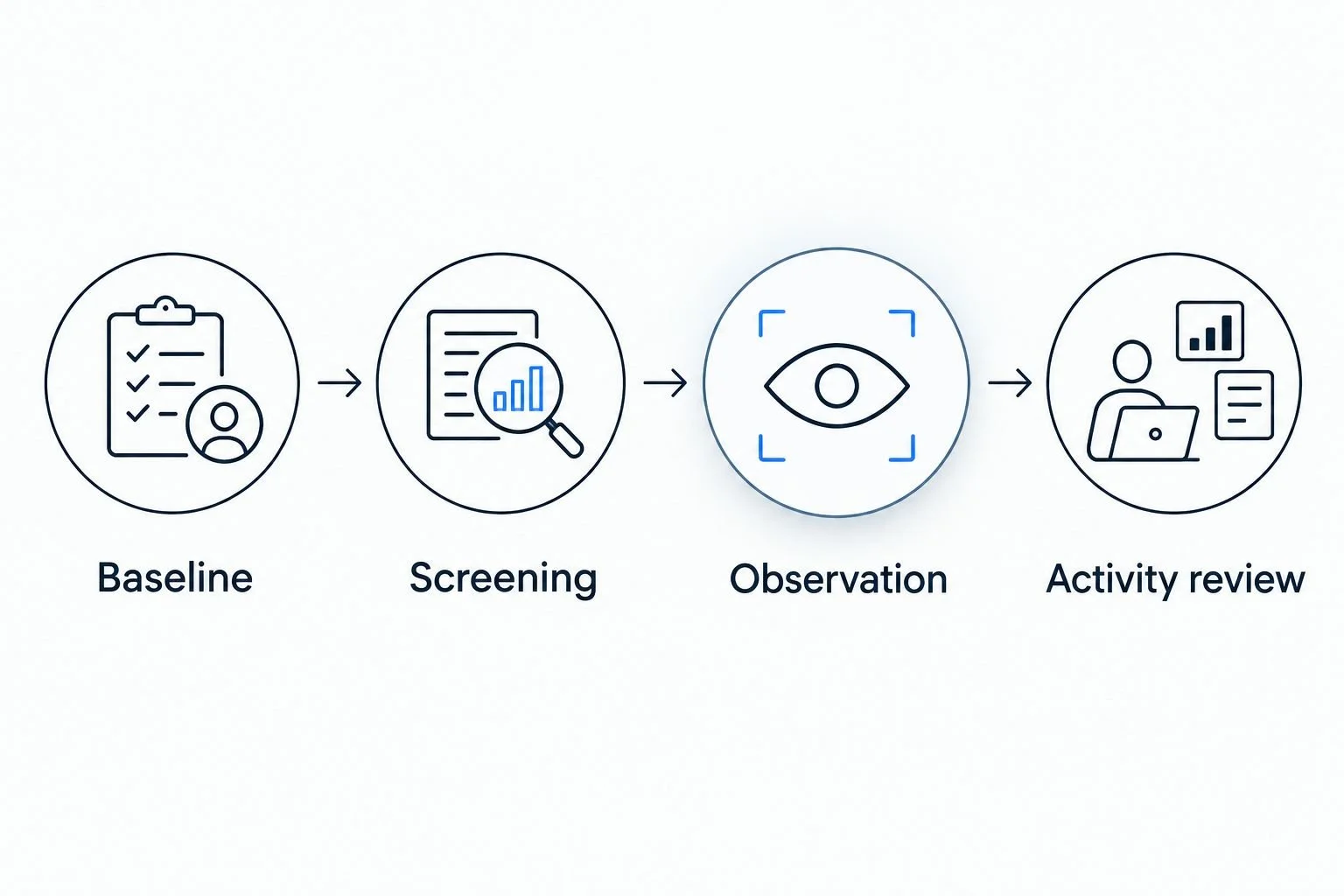
Check symptoms and activity tolerance separately before changing your training.
Repeat the workflow when training changes
A changed workout creates a new question. Tolerating a stationary activity does not establish readiness for running, and tolerating easy running does not establish readiness for sudden direction changes.
Keep the same observation method when your clinician-approved activity changes. Update the movement you track, record the new training demand, and avoid comparing unlike tasks as though they were identical.
Single-session observation
Best for: Understanding your immediate experience
Advantage: Keeps the before-and-after comparison simple
Limitation: Cannot establish lasting benefit or readiness to train
Repeated-session tracking
Best for: Reviewing an already-agreed session plan
Advantage: Shows observations across different days
Limitation: Training, sleep, and other care still complicate attribution
Rehabilitation-led tracking
Best for: Returning after an assessed injury
Advantage: Connects observations to activity-specific goals
Limitation: Requires individualized guidance; a wellness session cannot replace it
These options organize decisions; they do not rank treatment effectiveness. Choose rehabilitation-led tracking when an injury is driving the training restriction. Use the other approaches only within the safety boundaries appropriate to you.
A runner considering dry needling for runners faces the same decision boundary: choosing an intervention does not answer whether the current running load is appropriate. Record a treatment change separately from mileage or intensity changes so your notes show what actually happened.
A practical 2026 tracking sheet can cover 7 days of observations, with space for training, symptoms, and other care. That is an organizational window—not a recommended treatment course, a recovery deadline, or a reason to delay assessment.
Troubleshooting
You feel better afterward, but pain returns during training
Revisit the activity demand rather than assuming the session failed or the injury healed. Immediate comfort and tolerance under load are different outcomes. Record the exact task that brought symptoms back and discuss recurring pain with your treating clinician.
Do not keep raising the training load to find the point where relief wears off. That turns a recovery observation into an uncontrolled stress test.
Your scores improve, but your movement does not
Check whether your rating describes rest rather than activity. Keep a separate functional entry and note compensations, restricted motion, or difficulty completing an already-approved task.
A lower number without better function is still a limited result. It does not justify a return to unrestricted training.
You cannot tell which intervention changed the symptoms
Review the log for simultaneous changes: a lighter workout, different sleep, medication changes, or another recovery session. Avoid crediting PEMF alone when several things changed together.
Do not stop prescribed care to create a cleaner comparison. Accurate notes are more important than trying to turn your recovery routine into an experiment.
You have an implanted electronic device or an unanswered safety question
Pause the booking decision until the specific equipment restrictions and your clinician’s advice are clear. A screening answer for one PEMF device is not automatically transferable to another.
The fix is a device-specific suitability check, not a lower setting chosen without guidance. Do not proceed on the assumption that a wellness setting removes the need for screening.
The same symptoms keep interrupting every training block
Stop treating each recurrence as a scheduling problem for another recovery visit. Repeated interruption warrants a review of the underlying issue and the activity plan.
Sport-specific demands help frame that discussion. The PEMF guide for combat sports athletes addresses a different training context from steady exercise; neither context makes symptom relief equivalent to clearance for contact.
Customize your workflow
Choose one outcome that matters to your training and that fits your current care plan. Comfortable everyday walking, tolerating an approved rehabilitation exercise, and returning to competition are different goals; do not collapse them into a single recovery score.
Live Superhuman offers PEMF recovery sessions as a wellness service. The practical advantage is access to a bookable session; the limitation is that the session alone cannot identify the cause of pain or establish readiness for sport.
Before arranging another visit, review what the previous observation actually answered. If you learned only that lying still felt comfortable, you still need an activity-specific basis for the next workout. Keep your 2026 recovery schedule subordinate to that decision—not the other way around.
FAQ
Does PEMF therapy for pain management mean I can train pain-free?
No. PEMF therapy for pain management does not guarantee pain-free training or prove that an injury has healed. Return-to-training decisions need to account for symptoms, function, and any restrictions from your treating clinician.
What should I record before a PEMF session?
Record symptom location, a consistent pain rating, and the activity that brings symptoms on. Include recent training and other care so you do not attribute every change to the session.
Can I exercise immediately after PEMF therapy?
Follow your existing activity guidance rather than using the session as permission for a harder workout. Feeling better at rest does not establish tolerance for lifting, running, jumping, or contact.
What PEMF settings should I use for a training injury?
There is no universal settings recipe for an unspecified injury and device. Ask the operator about the specific equipment and obtain clinical guidance when pain or an injury is limiting your activity.
Is PEMF suitable if I have a pacemaker?
Do not proceed without checking the specific device restrictions and obtaining advice from your treating clinician. Implanted electronic devices require particular attention during suitability screening.
How many PEMF sessions do I need before returning to sport?
A session count does not establish readiness to return to sport. Use an individualized activity progression and relevant functional criteria rather than a fixed number of recovery appointments.
Does Live Superhuman provide PEMF sessions?
Live Superhuman offers bookable PEMF sessions for recovery-focused clients. Treat the wellness session as separate from diagnosis, injury assessment, and return-to-sport clearance.
One last thing
Write down what would make you seek help before your next session. Recurring pain, worsening function, or new symptoms should change the plan—not simply trigger another booking. A decision rule written while you feel calm is harder to bargain away when you want to train.