Initial altitude acclimatization typically takes 3–5 days of continuous exposure, while endurance-related adaptations develop over weeks rather than a single session. Brief altitude-training sessions do not equal living at elevation, and neither approach guarantees a faster race time.
TL;DR
How long does altitude training take to work? Early acclimatization takes days; endurance adaptations take longer.
The CDC Yellow Book 2026 describes initial acclimatization over 3–5 days, not a guaranteed performance timeline.
Live Superhuman offers bookable altitude training; judge progress against your goal, not session count alone.
Short hypoxic sessions and continuous altitude exposure are different training doses.
Why this matters
If you are planning a mountain trip, working toward an endurance event, or considering studio altitude training in 2026, you need different definitions of success. Feeling more comfortable in thin air is not the same as increasing red blood cell mass or improving your finish time.
Choose the outcome before choosing the calendar. Live Superhuman offers bookable altitude training sessions for clients pursuing recovery and performance goals. For mountain preparation, the IHHT-to-altitude-acclimatization guide provides related reading; it does not replace a gradual ascent plan.
How long does altitude training take to work?
The clearest established timeline applies to initial acclimatization after reaching altitude—not to a fixed number of studio visits. The CDC Yellow Book 2026, in its guidance on high-altitude travel and altitude illness, describes the acute acclimatization process as taking 3–5 days.
That guidance concerns travelers exposed to actual altitude. It is not evidence that brief simulated-altitude sessions produce the same adaptation on the same schedule.
Gradual exposure at actual altitude
Best for: Preparing to function at elevation
What the timeline means: Initial adjustment develops over days; further adaptation continues afterward
Main limitation: Early adjustment does not eliminate altitude-illness risk
Living at altitude while training
Best for: Sustained exposure alongside endurance training
What the timeline means: Longer-term adaptations develop over weeks
Main limitation: Reduced oxygen availability can compromise training intensity
Intermittent simulated-altitude sessions
Best for: Adding a controlled hypoxic exposure to a training plan
What the timeline means: Results depend on exposure and the outcome measured
Main limitation: Brief sessions cannot be treated as equivalent to continuous exposure
The useful question is therefore not simply when altitude training works. Ask what changes, under which exposure conditions, and how you will measure it. Those details separate a realistic training decision from a countdown with no defined endpoint.
Initial acclimatization: 3–5 days
Initial acclimatization helps your body respond to lower oxygen availability. Breathing changes are part of that adjustment, but feeling more settled does not mean every altitude-related adaptation is complete.
The CDC's 3–5 days describes an early phase of continuous exposure. At the beginning of that window, you are still adjusting; at its end, you are not automatically ready for unrestricted effort or further rapid ascent.
Use the early acclimatization period to adjust your workload, not prove your fitness. An effort that feels easy at home can feel substantially harder at elevation. Trying to preserve your usual pace immediately can turn an otherwise manageable session into excessive strain.
For a 2026 mountain event, keep arrival planning separate from your workout schedule. Completing simulated-altitude sessions beforehand does not establish that you can skip gradual acclimatization at your destination.
Endurance adaptation: weeks, not one session
Changes relevant to endurance performance require a different frame from early breathing adjustment. Sustained hypoxic exposure can stimulate processes involved in red blood cell production, but that response is not instantaneous and does not occur uniformly across people.
A signal to produce red blood cells is also not the same as a measured increase in red blood cell mass. And a measurable physiological change is not automatically a faster race performance.
For your 2026 training plan, separate these endpoints:
Exposure tolerance: How you feel during and after the altitude exposure.
Training response: Whether you can complete planned exercise without losing training quality.
Performance transfer: Whether a repeatable, relevant performance measure improves.
Do not promote the first endpoint into proof of the third. A session can feel easier because you understand the equipment, pace yourself better, or feel less anxious—not necessarily because your endurance capacity has changed.
A harder-feeling session is not evidence of a better adaptation. The session has to fit the training goal and leave enough capacity for the rest of your training.
Why altitude-training timelines vary
Altitude exposure is a training input, not a uniform product. These factors explain why a single completion date is not a useful promise:
Exposure duration: Continuous exposure and short sessions provide different amounts of time under hypoxic conditions.
Oxygen availability: Actual elevation and simulated settings affect the strength of the hypoxic stimulus.
Exposure pattern: Living at altitude, exercising in hypoxia, and resting during intermittent exposure are different approaches.
Training quality: Lower oxygen availability can reduce the workload you can sustain, changing the balance between stimulus and fatigue.
Individual response: Baseline fitness, health, and iron status influence adaptation and tolerance.
Target outcome: Travel comfort, performance at elevation, and performance after returning to lower altitude require different assessments.
These factors are reasons to record the conditions, not reasons to keep increasing difficulty. More hypoxia is not automatically better training. An exposure that disrupts sleep, recovery, or important workouts can work against your wider plan.
For your 2026 comparison, ask whether a claimed result concerns the same exposure pattern you are considering. Evidence about people living at elevation cannot establish a result for brief appointments simply because both involve reduced oxygen availability.
How should you track whether it is working?
Start with a repeatable measure connected to your actual goal. Avoid choosing the measure after a session simply because that number looks encouraging.
Establish a baseline
Record how you perform before adding altitude exposure. For an endurance goal, a familiar submaximal workout can provide useful context when you repeat it under comparable conditions.
Keep the task recognizable. Switching the route, workout structure, equipment, and environment makes it harder to tell whether your fitness changed or the test changed.
Record the exposure
Keep a simple log of the session duration, setting, whether you exercised or rested, and how you felt afterward. Record your ordinary training alongside it so the altitude session does not become detached from the work it is intended to support.
For actual-altitude travel, note where you sleep as well as where you exercise. A brief visit to elevation is not the same exposure as remaining there overnight.
Repeat the task
Compare like with like. Pace or power at a similar perceived effort is more useful than comparing unrelated workouts, although weather, fatigue, and other conditions still affect the result.
Look for a pattern rather than declaring success after a good day. Equally, do not assume every difficult workout means the altitude training failed.
Review the result
Ask whether the outcome improved without an unacceptable loss of recovery or training quality. If your goal is mountain preparation, assess comfort and function at elevation rather than treating a sea-level workout as proof of acclimatization.
Define success in a sentence before you start. For example, your aim can be to complete a familiar endurance task with better tolerance—not simply to accumulate visits.
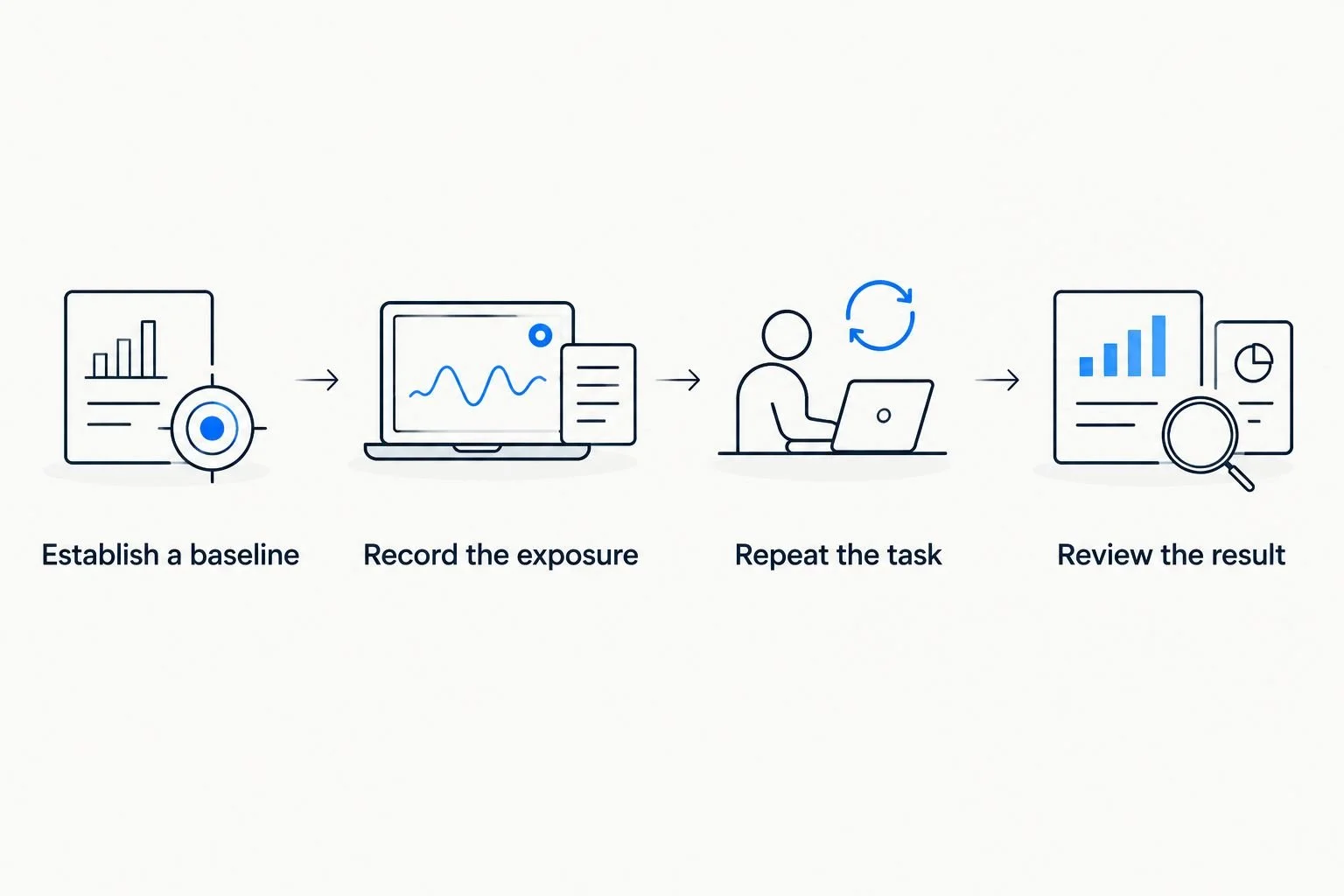
Repeat the same task under comparable conditions before judging progress.
A training log also improves the conversation with your provider or coach. It gives you something more useful than a general impression that the session felt intense.
Does one altitude-training session do anything?
One session creates an exposure, not proof of lasting endurance improvement. You can learn how the experience feels and whether you tolerate it, but immediate sensations do not establish long-term adaptation.
Treat an early visit as information gathering. Ask what the session involves, how the exposure is selected, and which outcome the provider expects you to track.
Is simulated altitude enough before a mountain trip?
Simulated-altitude sessions do not replace gradual acclimatization at your destination. Differences in exposure duration, sleeping elevation, and the demands of your trip prevent a simple exchange between appointments and days in the mountains.
Build your travel plan around the elevation you will reach and how quickly you will ascend. If you have a history of altitude illness or relevant health concerns, discuss the trip with a qualified healthcare professional before departure.
Will altitude training make you faster at sea level?
A faster sea-level performance is not guaranteed. Any potential benefit must transfer to the demands of your sport without compromising the quality of your normal training.
For your 2026 race planning, keep the central work central: sport-specific training, sufficient recovery, and a measurable goal. Altitude exposure is an addition to evaluate, not a substitute for those foundations.
What should you ask before booking?
A useful booking conversation connects the session to your purpose. You should leave knowing what the exposure involves and how to judge it—not just how challenging it sounds.
Ask these questions:
Is the session performed at rest or during exercise?
How are exposure settings selected and monitored?
What screening happens before participation?
What should I do if I feel unwell?
Which outcome should I track between visits?
How should the session fit around demanding workouts or travel?
Live Superhuman altitude training is best for clients seeking bookable studio sessions rather than a residential altitude camp. That is a service-format distinction, not a claim that studio sessions reproduce living at elevation.
The advantage is access to a bookable session. The limitation is that a brief appointment does not provide continuous altitude exposure, so the expected result needs to match the actual service.
Discuss your altitude-training goal
Ask how a session fits your training schedule, travel plans, and intended outcome.
When should you stop rather than push harder?
Do not treat symptoms as evidence that altitude training is working. Headache, nausea, dizziness, and unusual fatigue during altitude exposure deserve attention, especially when symptoms worsen.
At actual altitude, stop ascending if symptoms suggest altitude illness. Severe breathlessness at rest, confusion, or difficulty walking requires urgent medical attention and descent when feasible.
Fitness does not protect you from altitude illness. A strong training background is not permission to ignore symptoms or continue climbing while unwell.
During a studio session, tell the supervising staff immediately if you feel unwell. Do not attempt to reach a target by tolerating worsening symptoms, and do not use a pulse-oximeter reading alone to decide that continuing is safe.
FAQ
How long does altitude training take to work?
Initial acclimatization typically takes 3–5 days of continuous altitude exposure, according to the CDC Yellow Book 2026. Endurance-related adaptations develop over longer periods, and this timeline does not establish results for brief simulated-altitude sessions.
Can I notice anything after my first altitude-training session?
You can notice how you tolerate the exposure after your first session, but that is not proof of lasting endurance improvement. Immediate effort, breathing changes, or fatigue do not establish a performance gain.
How many altitude-training sessions do I need?
There is no universal session count that establishes altitude adaptation. Exposure duration, settings, activity, and your intended outcome determine how a schedule should be evaluated.
Is living at altitude better than short altitude sessions?
Living at altitude and attending short altitude sessions provide different exposure patterns. Continuous exposure supports a different adaptation context, while short sessions offer a bookable format with less total exposure.
Can altitude training replace getting to the mountains early?
Simulated-altitude training does not replace gradual acclimatization at your destination. Your ascent schedule and sleeping elevation remain important even if you have completed sessions beforehand.
Does being very fit prevent altitude sickness?
Being very fit does not prevent altitude illness. Stop ascending when symptoms develop, and seek urgent help for severe breathlessness at rest, confusion, or difficulty walking.
Does Live Superhuman offer altitude training?
Live Superhuman offers bookable altitude training sessions as part of its wellness studio services. Discuss your goal and the session format before deciding how it fits your training or travel plans.
One last thing
A lower oxygen reading is not a training score. Chasing a lower number confuses the intensity of the exposure with the quality of the outcome.
Before booking, write down what you want to improve and how you will check it. That decision gives your training a useful endpoint—and prevents an intense experience from being mistaken for a proven result.
Related guides
By Kelley Gast